Strategic Expansion of Brazil’s Naval Fleet: The Launch of the Tamandaré Frigate
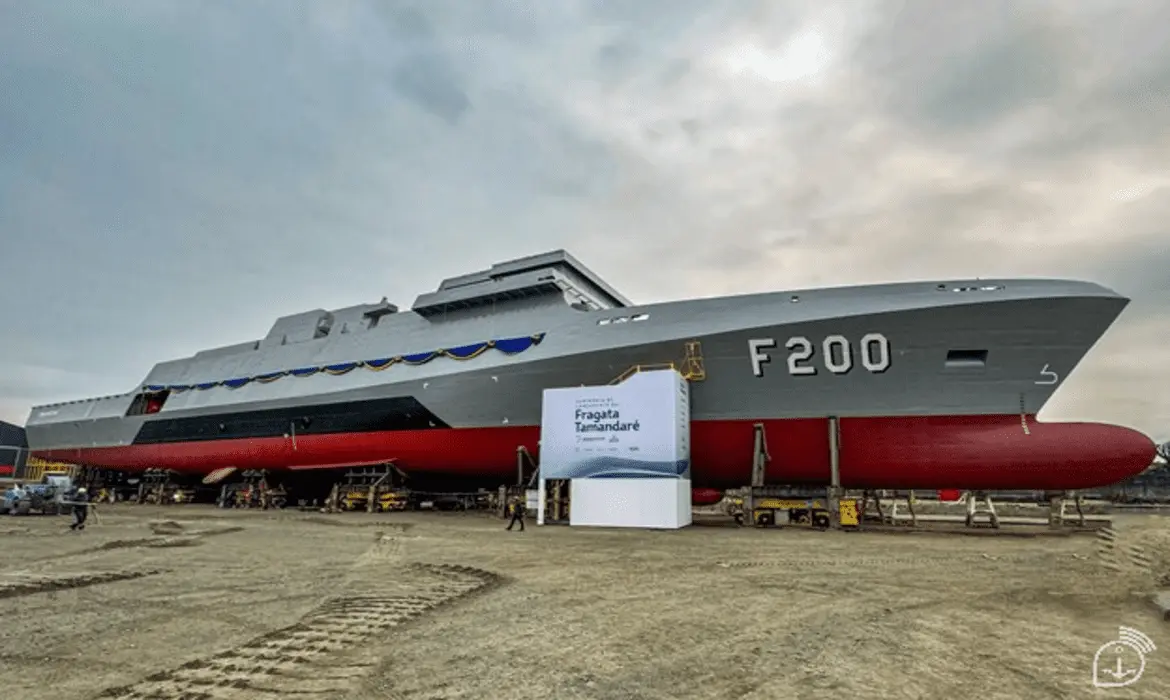
On a recent Friday, the Brazilian Navy, alongside the Special Purpose Society Águas Azuis, celebrated the launch of the first Tamandaré-class frigate.
This event took place in Itajaí, Santa Catarina, and marks the beginning of a planned four-frigate series. This milestone event signifies a significant boost in Brazil’s maritime defense capabilities.
In his address, Admiral Marcos Sampaio Olsen emphasized the critical role of the maritime sector in Brazil’s economy. He noted that over 90% of the country’s commerce relies on sea routes and ports.
He pointed out the aging of the naval fleet and the urgent need for modernization to maintain operational capability.
President Luiz Inácio Lula da Silva supported the expansion, highlighting the naval industry‘s potential to drive national employment and economic growth.
He indicated plans to double the number of new frigates, suggesting a strategic push to enhance Brazil’s maritime sovereignty and defense.
Advanced Technology and Strategic Impact
The F200 Tamandaré, named after a notable Brazilian naval hero, embodies advanced naval technology. It is set to join the fleet by 2025.
It will be crewed by a crew of 130, specially trained to operate the ship with high efficiency and safety.
These frigates come equipped with state-of-the-art weapons systems, capable of engaging threats across surface, air, and submarine combat environments.
The project is a collaboration with major corporations such as ThyssenKrupp Marine Systems and Embraer Defense and Security. It is part of a broader strategy to revitalize Brazil’s naval forces and bolster its defense industry.
The construction of these ships not only modernizes Brazil’s fleet but also has significant economic implications; it is projected to create about 23,000 jobs across various sectors.
In short, this initiative underscores Brazil’s commitment to protecting its maritime interests and enhancing its global maritime stature. This is crucial for a nation so reliant on maritime trade.
This article was produced by The Rio Times’ automated newsroom system. How we use AI · Report an error · Editorial responsibility: Matthias Camenzind, Editor-in-Chief
Read More from The Rio Times