
Key Facts
—Result. President Lula won Sunday’s runoff with 51.79% of valid votes, about 4.4 million ahead of Senator Flávio Bolsonaro.
—Dispute. Flávio Bolsonaro, son of the former president, says he will ask courts to annul the vote.
—Congress. Flávio’s Liberal Party holds the biggest bench in the lower house, so Lula faces a harder Congress.
—Next. The electoral court (TSE) issues Lula’s diploma by 18 December; he takes office on 5 January 2027.
—Prediction markets. Polymarket, a crypto betting market, gave 99.4% to turnout in the 80–82% range; the count showed 80.8% (7:50 a.m. ET, 26 October).
—Power Index. Brazil ranks 1st of 14 in The Rio Times Latin America Power Index, with 75.0 points (October 2026 edition).
Live tonight
Brazil’s runoff, live
The official TSE count for Flávio Bolsonaro and Lula, updated every minute (voting closed at 7 p.m. Brasília, 6 p.m. ET).
Brazil runoff polls · Polymarket and Kalshi odds · When results come · Brazil election poll data (CSV)
Prediction markets · who wins the runoff
Implied chance of winning Brazil’s presidency on 25 October, from traders’ prices.
Polymarket
Flávio Bolsonaro – · Lula – (US$249 million traded)
Kalshi (regulated in the US by the CFTC)
Flávio Bolsonaro 0.4% · Lula 99.6%
As of 25 October, 11:40 pm ET (03:40 Lisbon), updated every 20 minutes. Prices are bets, not polls, and can move fast.
Why we show this: prediction markets turn real-money bets into a live probability that moves within minutes of the news, which is why investors, campaigns and newsrooms in the United States now follow them closely. We show them next to polls and official results, never instead of them.
Brazil woke up to a president it did not expect and a loser who will not accept it. Here is how the count, the court fight and the world outside Brazil fit together.
In Plain English
- Runoff: A second round held when no candidate wins more than half of valid votes in the first round.
- Valid votes: Ballots cast for a candidate; blank and spoiled ballots are not counted in the percentages.
- TSE: The Superior Electoral Court, which runs Brazil’s elections and publishes the official results.
- Prediction market: An online platform where traders buy contracts that pay out if an event happens.
Brazil Stayed Up Late and Woke Up Split
Luiz Inácio Lula da Silva, Brazil’s 80-year-old president, won a fourth term on Sunday 25 October 2026. He took 51.79% of valid votes, or 64,256,232 ballots, against 48.21%, or 59,826,041, for Senator Flávio Bolsonaro.
The gap was about 4.4 million votes, or 3.58 percentage points. Flávio, 45, is a conservative and the son of former president Jair Bolsonaro.
Lula’s total is the most any Brazilian presidential candidate has received, above his own 60,345,999 in 2022. Of 158.7 million eligible voters, about 128.2 million turned out, and abstention, the share who stayed home, was 19.22%.
Two Extra Hours Became the Fight
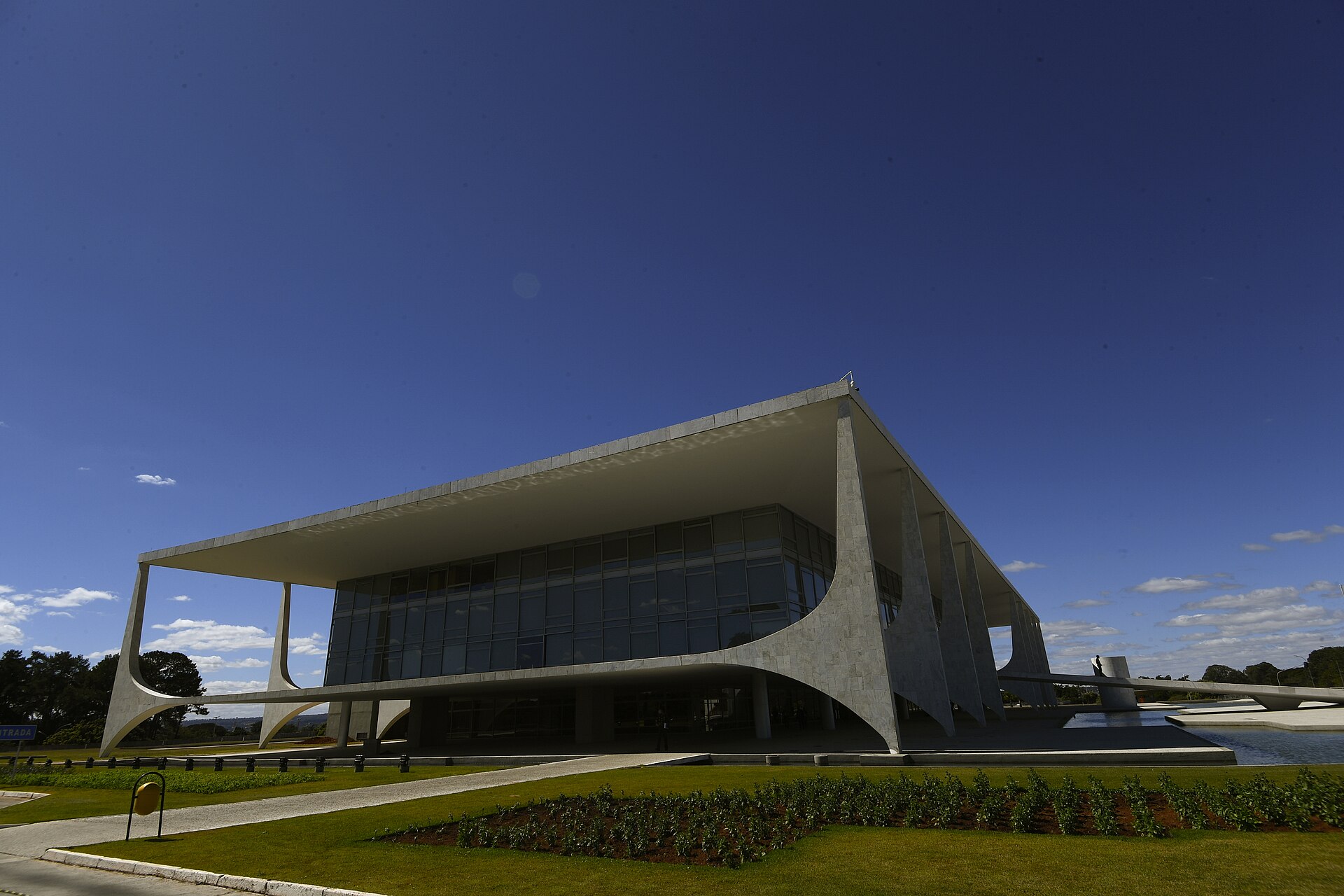
Voting was due to close at 5:00 p.m. Brasília time (4:00 p.m. ET). Justice Cristiano Zanin of the Supreme Federal Court, Brazil’s top court, ordered polling places nationwide to stay open until 7:00 p.m.
Lula’s side cited transport problems and Flávio’s side asked for 17 towns, so both campaigns asked for more time.
Flávio now calls the extension unfair, refuses to recognise the result and says he will seek annulment. The electoral court (TSE) runs Brazil’s elections and issues the official result.
As of Monday morning we found no ruling by any court that accepts Flávio’s challenge. To cancel a presidential vote, a court would need to find an illegality that changed who won.
Live Market IntelligenceBrazil — Live Market Board
Rio Times · Live Market Intelligence
Brazil — Live Market Board
+0.47%
205,082.56
+0.47%
69,879.62
-0.01%
10,746.36
-0.31%
3,017,221
—
2,540.10
+0.46%
57,021.19
+0.13%
| Instrument | Last | Change | YoY | Prev. | High | Low | Volume |
|---|---|---|---|---|---|---|---|
| IBOV | 205,082.56 | +0.47% | +21.85% | 204,120.12 | 168,310 | 167,142 | — |
| USD/BRL | 5.16 | +0.01% | -5.13% | 5.16 | 5.18 | 5.14 | — |
| SELIC | 14.00% | — | — | — | — | — | |
| PETR4 | 41.64 | -0.05% | +35.19% | 41.66 | 41.97 | 41.15 | 41,499,400 |
| VALE3 | 72.97 | +0.83% | +30.75% | 72.37 | 73.54 | 72.66 | 17,658,000 |
| ITUB4 | 38.60 | -1.03% | +4.57% | 39.00 | 39.34 | 38.39 | 29,487,800 |
| BBDC4 | 16.85 | +0.36% | +3.50% | 16.79 | 16.90 | 16.67 | 19,416,900 |
| BBAS3 | 19.37 | +0.47% | +0.73% | 19.28 | 19.44 | 19.16 | 11,069,200 |
| B3SA3 | 14.26 | -0.21% | +12.73% | 14.29 | 14.47 | 14.11 | 33,037,800 |
| ABEV3 | 14.89 | -0.80% | +21.91% | 15.01 | 15.07 | 14.81 | 16,453,100 |
| WEGE3 | 47.59 | +0.49% | +29.99% | 47.36 | 48.08 | 47.36 | 3,364,600 |
| PRIO3 | 59.14 | -0.19% | +50.67% | 59.25 | 59.81 | 58.74 | 3,325,600 |
| SUZB3 | 41.33 | +2.35% | -23.55% | 40.38 | 41.48 | 40.35 | 3,914,900 |
| RENT3 | 34.68 | -0.09% | +0.84% | 34.71 | 34.96 | 34.35 | 7,979,100 |
| AZZA3 | 15.89 | -2.63% | -53.76% | 16.32 | 16.42 | 15.82 | 1,330,300 |
| CSNA3 | 4.30 | +0.47% | -42.65% | 4.28 | 4.41 | 4.26 | 10,076,100 |
| GGBR4 | 24.69 | +2.19% | +51.38% | 24.16 | 24.85 | 24.18 | 7,047,600 |
| ENEV3 | 24.21 | -1.38% | +70.49% | 24.55 | 24.64 | 23.99 | 9,297,000 |
A Country Split State by State
Lula led in 13 states and among voters abroad. Flávio led in 13 states and the Federal District, the area around the capital.
Lula’s strongest ground was the poorer Northeast, while Flávio’s was the South and the Center-West. Minas Gerais, a large swing state, went to Lula by a narrow margin of 50.43% to 49.57%.
Even New Zealand Voted for Lula
In Wellington, Brazilians voting gave Lula 418 votes to Flávio’s 101, or about 80.5%.
Overseas votes are a tiny share of the total, but they show how far apart voters inside and outside Brazil’s polarised core can be.
What Prediction Markets Say
On Polymarket, an online market where people bet real money on events, the turnout market for the runoff gave 99.4% to turnout of 80–82%, with US$92,578 traded. The count showed turnout of 80.8%, so the market had priced it correctly.
This is a market on turnout, not on who wins. Prices are real-money bets, not polls.
Why we show this: prediction markets turn real-money bets into a live probability that moves within minutes of the news, which is why investors, campaigns and newsrooms in the United States now follow them closely. We show them next to polls and official results, never instead of them.
What Washington and Investors Will Watch
Flávio’s Liberal Party (PL) won 121 of 513 seats in the lower house in the first round, up from 99 in 2022. That makes it the largest party, so Lula starts with a harder Congress.
A 25% US tariff under Section 301, a US trade law against unfair practices, has applied to many Brazilian goods since 22 July. Washington’s treatment of the result may shape talks over easing it.
What Links These Stories
All four reports ask one question: is this result settled? The count says yes by a wide margin, and the dispute over the two extra hours is about who accepts it.
They are one story at three levels: the numbers, the fight over the rules, and the reaction outside Brazil.
The reports behind this Big Read
What It Means for US Readers
US investors with Brazilian exposure will see the first full market reaction when trading resumes. The 25% tariff matters to US importers of Brazilian goods.
Washington’s reaction is still open. A contested result would complicate trade talks between the two countries.
What to Watch Next
Watch whether any court accepts Flávio’s request and how Washington responds. The electoral court’s diploma, the official certificate of victory, is due by 18 December, and Lula’s inauguration is on 5 January 2027.
What Is Not Known
We do not know how many votes were cast between 5:00 and 7:00 p.m. Brasília time. We found no evidence that the extension changed the outcome.
Whether Flávio will file a formal request, and when, is not yet known.
Sources
Superior Electoral Court (TSE) · Polymarket · The Rio Times · The Rio Times · The Rio Times · The Rio Times
Editorial responsibility: Matthias Camenzind, Editor-in-Chief · Editorial standards · Report an error
Frequently Asked Questions
Who won Brazil’s 2026 presidential runoff?
Lula won with 51.79% of valid votes, or 64,256,232 ballots, against 48.21% for Flávio Bolsonaro, or 59,826,041.
Why is Flávio Bolsonaro challenging the result?
He objects to a Supreme Court order extending voting by two hours. Both campaigns had asked for more time, and the electoral court’s president says it changed nothing in the count.
When does Lula take office?
He takes office on 5 January 2027. The electoral court issues his diploma by 18 December.