The Battle for Public Security in Brazil: Why It Matters for 2026
(Analysis) Brazil is heading towards the 2026 presidential election with public security emerging as the top concern for voters.
Recent opinion polls show that 30 percent of Brazilians now see security as their main worry, ahead of social issues (22 percent), the economy (19 percent), corruption (13 percent), health (10 percent), and education (6 percent).
This marks a shift from previous years, when corruption and the economy dominated public anxiety. The rise in crime, high-profile violent incidents, and the growing influence of organized crime have made security the central theme in political debates and campaigns.
The main political divide is between the left, led by President Luiz Inácio Lula da Silva (PT), and the right, with former President Jair Bolsonaro (PL) and other conservative leaders vying for influence.
While it is still uncertain who will lead each side in 2026, the contest over public security is already shaping the strategies and rhetoric of both camps.
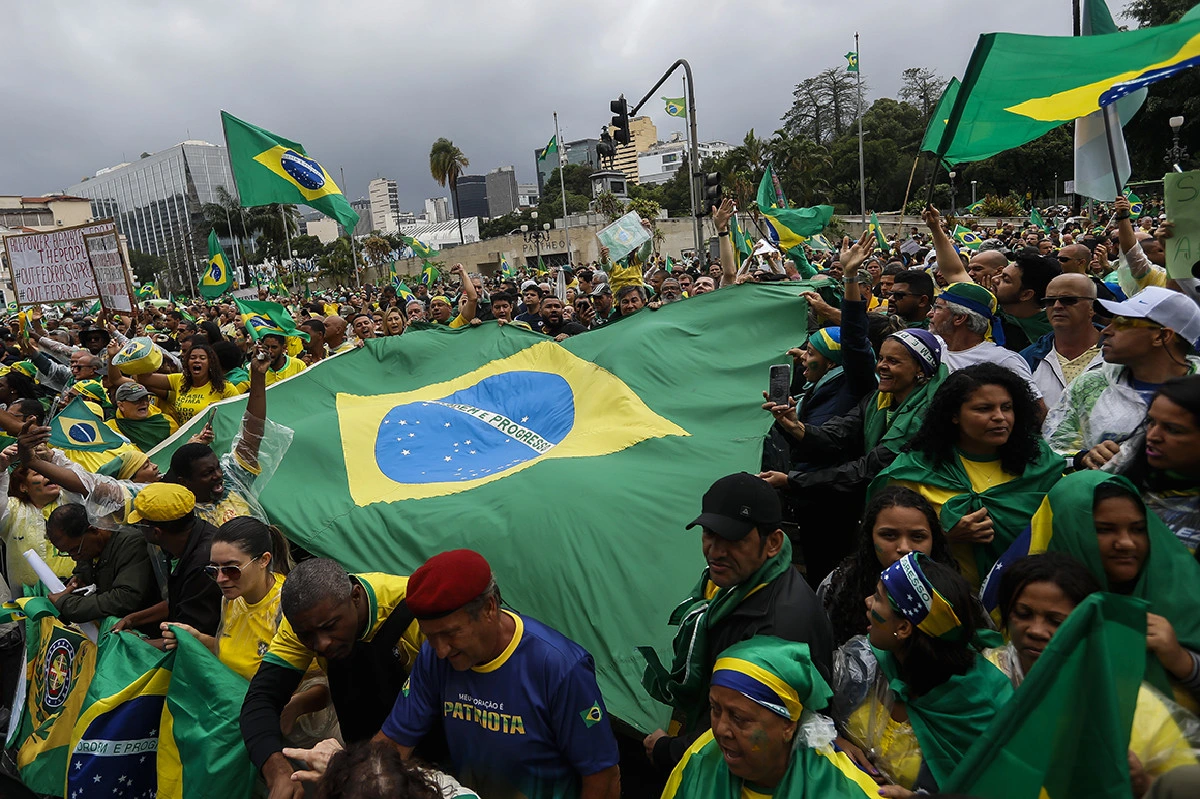
Why Public Security Is Now the Main Issue
- Rising Crime and Public Fear: Brazilians are increasingly alarmed by violent crime, organized criminal groups, and the perceived inability of authorities to guarantee safety.
- Political Opportunity: The right-wing opposition, including figures like Ronaldo Caiado (Goiás) and Tarcísio de Freitas (São Paulo), have adopted tough-on-crime stances, promising harsher penalties and more police action. This message resonates with voters who feel vulnerable and demand immediate solutions.
- Government Response: President Lula has tried to respond by proposing a constitutional amendment (PEC da Segurança Pública) to reorganize national security policy. However, critics argue that Lula’s approach is too focused on social causes of crime and lacks the clear, punitive measures that much of the electorate wants.
Key Developments and Figures
- PEC da Segurança Pública: Lula’s government sent this constitutional amendment to Congress, aiming to give the federal government more power to coordinate security policy nationwide. The proposal faces resistance from state governors, especially those with presidential ambitions, who see it as an attempt to centralize authority in Brasília.
- State-Level Initiatives: Governors like Caiado and Tarcísio have positioned themselves as defenders of state autonomy and effective security management. Caiado, for example, openly criticizes Lula’s plan, arguing that it strips states of their constitutional rights and will not solve local security problems.
- Municipal Action: In Rio de Janeiro, Mayor Eduardo Paes launched an elite division of the municipal guard, empowered by a Supreme Court decision that expanded the role of cities in public security. This unit is armed, trained, and focused on preventing theft and robbery in public spaces, aiming to restore a sense of order and safety.
Facts and Figures
- Public Perception: In May 2024, 59.2 percent of Brazilians identified security as a major national problem. Over half (53 percent) rated the federal government’s performance on security as poor or very poor, the worst among six policy areas.
- Crime Trends: In São Paulo, while homicides and robberies have decreased, deaths caused by police have surged (from 256 in 2022 to 649 in 2023). Cases of sexual violence have also increased, raising concerns about both crime and police conduct.
- Political Realignment: The right and center-right are uniting around security as a campaign issue. Parties like PP, União Brasil, PSD, PL, and Podemos are forming alliances, with security as a key point of convergence.
Why This Matters
- Impact on Democracy: Public security is more than a campaign slogan—it affects daily life, public trust in institutions, and the stability of democracy. If people feel unsafe, they may support more authoritarian approaches, risking abuses of power and erosion of civil liberties.
- Governance Challenge: Brazil’s federal system gives states primary responsibility for policing, but organized crime operates nationally and internationally. Effective action requires coordination, but political rivalry and mistrust between federal and state governments make this difficult.
- Electoral Stakes: Whoever can convincingly address public security will likely gain a decisive advantage in 2026. The issue is not just about crime, but about who controls the narrative, resources, and levers of power in Brazil.
In Simple Terms: Why You Should Know This
Public security in Brazil is now the number one concern for most people. This is not just about crime, but about who gets to lead the country and how power is shared between Brasília and the states.
The right is gaining ground by promising tougher measures, while the left is struggling to show results. The outcome will affect not only safety on the streets, but also the future of democracy and the way Brazil is governed.
Understanding this debate helps explain the choices voters will face in 2026 and the direction Brazil might take.
More: Brazil news in English, every day from The Rio Times.
This article was produced by The Rio Times’ automated newsroom system. How we use AI · Report an error
Read More from The Rio Times