Spain’s Election Candidate Lists Due Monday

Spain’s election campaign has not even begun, yet its parties are already racing the clock. They have until 11:59 p.m. Madrid time on Monday, 26 October (6:59 p.m. ET), to register candidates for the 29 November vote, as our Spain Election 2026 dossier tracks.
The biggest open question is whether the PP and Vox will coordinate in the Senate. No deal had been announced by Monday morning.
Key Facts
- Deadline: Parties must file Congress and Senate candidates by 11:59 p.m. Madrid time Monday (6:59 p.m. ET).
- Senate: The right-wing PP and Vox have announced no Senate pact; the left has joint lists in 47 constituencies.
- Next: Spain publishes the official lists on Wednesday, 28 October; the campaign runs 13 to 27 November.
- Polls: The latest private poll gives the PP 32.9%, the Socialists 25.8% and Vox 19.0%.
- Prediction markets: Kalshi priced Feijóo at 82% to be prime minister on 26 October at 9:22 a.m. ET.
This story is part of our coverage of the Spain Election 2026. Dates, times and how to follow it are in our guide.
In plain English
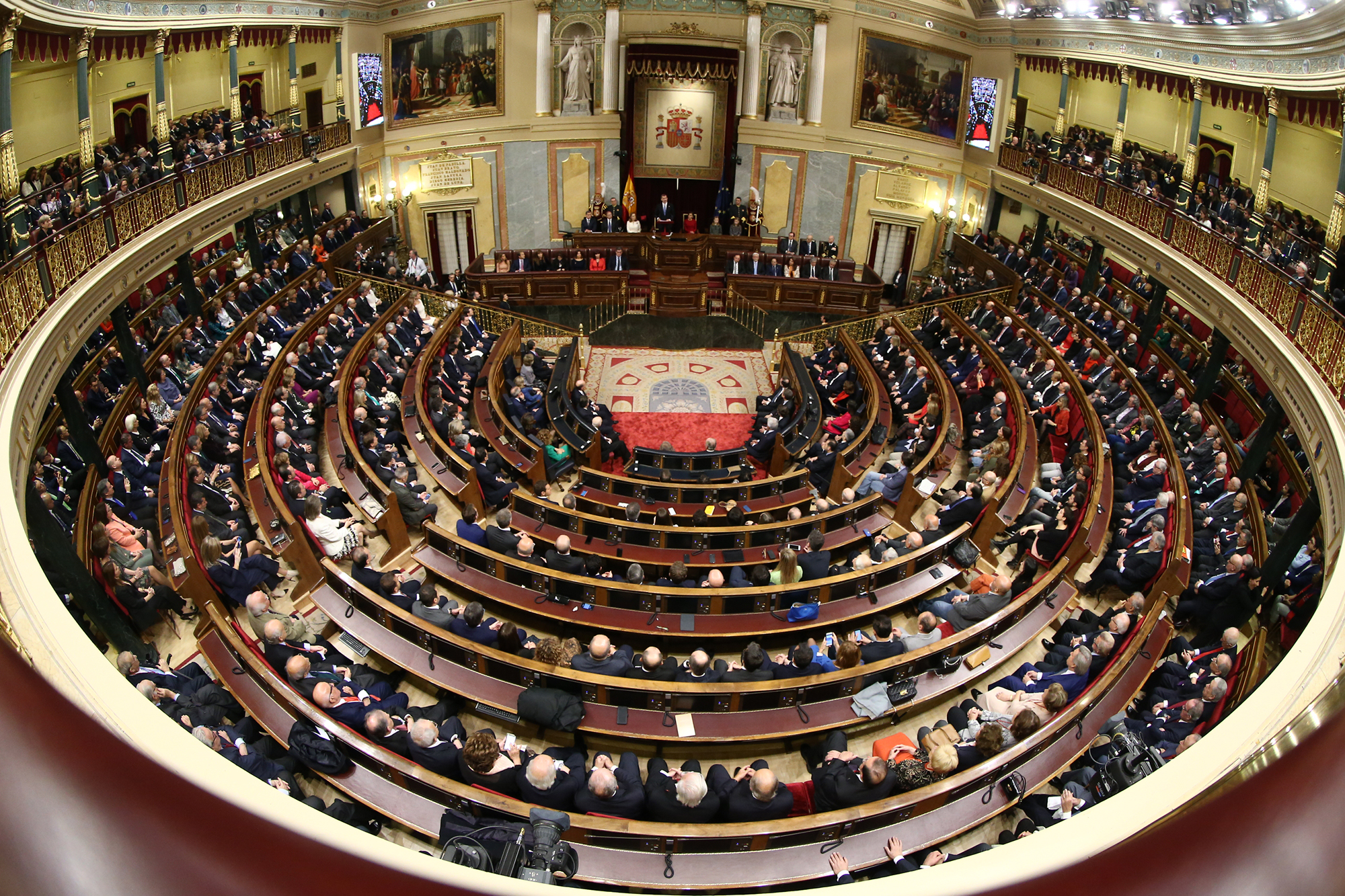
Spain elects a new parliament on Sunday, 29 November. Voters fill two chambers: the 350-seat Congress of Deputies, where governments are made, and the Senate, which can delay laws.
The People’s Party (PP) is Spain’s main conservative party, and the Socialist Workers’ Party (PSOE) of Prime Minister Pedro Sánchez is the main centre-left one. Vox is a right-wing party and the PP’s likely partner.
Why the Senate Deal Matters
Senate seats are decided province by province, so two allies running against each other can lose seats that both would win together. That is why the PP and Vox are talking about coordinating their Senate lists in some places.
On the left, the Socialists and allied parties plan joint Senate lists under the name “Senado de Progreso” in 47 constituencies, though not everywhere. The partners include United Left (Izquierda Unida), Más Madrid, Compromís and Chunta Aragonesista, all smaller left-wing and regional parties.
In the lower house the picture is more fragmented. The PSOE, PP and Vox are expected to run under their own labels across the country.
Who Is In, Who Is Out
The PP named Susana Camarero, vice-president of Valencia’s regional government, to lead its Senate list in Valencia. She replaces Alma Alfonso, who had been the lead candidate.
On Sunday, Francisco Martín, the central government’s delegate in Madrid, resigned after being left off the PSOE’s lists. In the Balearic Islands, Podemos, a left-wing party, agreed to join the regional coalition Ara Més–Front Ampli, and its coordinator there, Lucía Muñoz, will run third on the Congress list.
What the Polls Say
The latest private poll, by NC Report, a Spanish pollster, gives the PP 32.9%, the PSOE 25.8% and Vox 19.0%. A Sigma Dos survey, from another Spanish pollster, projects 128 seats for the PP and its partner UPN (a conservative party from Navarre), 68 for Vox and 107 for the PSOE.
In that projection the PP and Vox together reach 196 seats, above the 176 needed for a majority in Congress. Seat counts depend heavily on how votes fall in each province, so they are estimates, not results.
What Prediction Markets Say
On Kalshi’s market “Prime Minister of Spain after the next election?”, traders priced Alberto Núñez Feijóo, the PP leader, at 82%, Sánchez at 19% and Vox leader Santiago Abascal at 3% on 26 October at 9:22 a.m. ET. Kalshi is regulated in the US by the Commodity Futures Trading Commission (CFTC), and 24,483 contracts had traded.
On Polymarket, a crypto-based exchange, the PP was priced at 81% to win the general election, with US$206,190 traded. These prices are bets, not polls, and each contract is priced separately, so they need not add to 100%.
Why we show this: prediction markets turn real-money bets into a live probability that moves within minutes of the news, which is why investors, campaigns and newsrooms in the United States now follow them closely. We show them next to polls and official results, never instead of them.
What It Means for US Readers
A right-wing government in Madrid would be a notable shift in one of the European Union’s larger members. The Senate pacts decide how comfortable such a majority would be.
What Is Not Known
We do not know whether the PP and Vox will agree on Senate coordination, or in which provinces it would apply. The final candidate lists stay unconfirmed until Wednesday’s publication, and the polls say little yet about how votes will turn into Senate seats.
Frequently Asked Questions
When must Spanish parties register candidates?
The deadline is 11:59 p.m. Madrid time on Monday, 26 October (6:59 p.m. ET). The official lists are published on Wednesday, 28 October.
Why does the Senate matter in this election?
The Senate can delay laws, and its seats are decided province by province. Coordination between allies can change how many seats a bloc wins.
Published Monday, 26 October, 9:25 am ET (2:25 pm Madrid). Sources: Spain’s Official State Gazette (BOE), parties’ announcements, regional governments, pollsters’ releases, Kalshi, Polymarket. More: Spain Election 2026.
This article was produced by The Rio Times’ automated newsroom system. How we use AI · Report an error · Editorial responsibility: Matthias Camenzind, Editor-in-Chief
Spain's Election and Pedro Sánchez
- How Spain Got Here: Pedro Sánchez’s Eight Years in Power
- Why Spain’s Prime Minister Pedro Sánchez Could Lose His Job
- Spain’s Next Leader? Meet Alberto Núñez Feijóo
- Spain Explained 2026, How It Ranks in Europe