South Koreans Head to Polls After Martial Law Crisis
South Koreans will choose a new president on Tuesday, following last year’s failed martial law attempt that triggered the country’s worst constitutional crisis in decades.
The vote, announced after former President Yoon Suk Yeol’s removal, comes at a time of deep political division and economic uncertainty.
Official sources confirm that Yoon’s martial law declaration on December 3, 2024, suspended the National Assembly and free press, and ordered arrests of political opponents.
Within hours, lawmakers overturned the decree, and the Constitutional Court upheld Yoon’s impeachment on April 4, 2025. This political shock left South Korea with three acting presidents in six months, eroding public trust and shaking investor confidence.
The Bank of Korea’s consumer sentiment index dropped to 88.2 in December, its lowest since the pandemic, before rebounding to 101.8 by May as the country prepared for new leadership.
The crisis exposed vulnerabilities in South Korea’s democratic system and intensified longstanding ideological divisions. The main candidates, Lee Jae-myung of the Democratic Party and Kim Moon-soo of the People Power Party, offer contrasting approaches.
Lee, a former labor lawyer, leads the polls with promises to expand public investment, support workers, and reduce the influence of powerful conglomerates.
Kim, a pro-business conservative, pledges deregulation and lower taxes to boost growth. Both candidates agree that the nation’s current economic model needs reform, but they differ on how to balance social equity and business freedom.
South Korea’s export-driven economy faces new risks. The United States, a key trading partner, imposed tariffs of 15% to 25% on Korean goods in April 2025, targeting semiconductors, electric vehicles, and industrial equipment.
These tariffs threaten South Korea’s competitiveness and could trigger a mild recession if not addressed. Policymakers and business leaders have already begun to adapt, but uncertainty remains high.
Social tensions also run deep. The country’s birth rate, at 0.75 in 2024, remains the lowest in the world, far below the replacement level of 2.1. Gender inequality persists, with non-regular workers making up 38% of wage earners last year.
These issues, combined with regional and generational divides, make national unity a pressing challenge. Foreign policy stands at a crossroads.
Lee calls for a balanced approach, strengthening ties with both the United States and China while seeking dialogue with North Korea. Kim favors closer alignment with Washington and a tougher stance on Pyongyang.
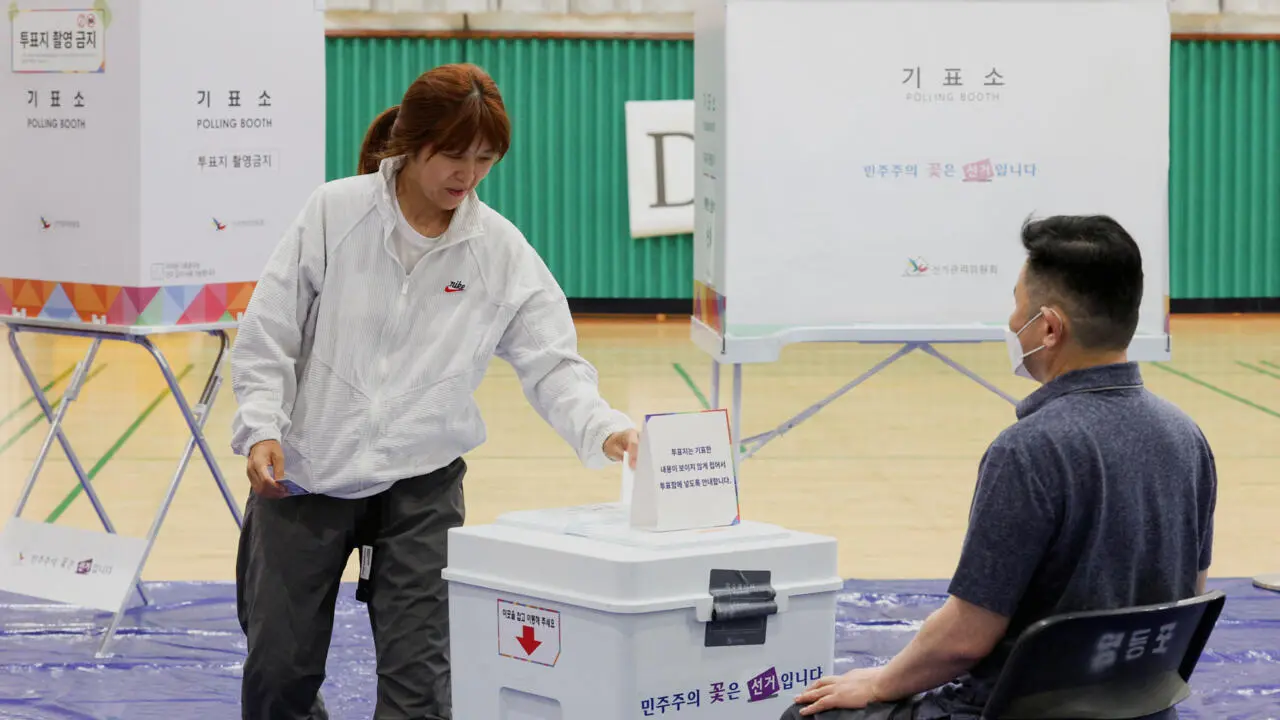
Both recognize the need to reset South Korea’s diplomatic strategy after months of political paralysis. Voter turnout is expected to be high, with more than a third of the 44 million eligible voters casting ballots early.
The next president will inherit a fractured society, an economy under pressure, and the task of restoring confidence at home and abroad. South Korea’s future direction hinges on this election, as the nation seeks stability and renewed growth after months of turmoil.
This article was produced by The Rio Times’ automated newsroom system. How we use AI · Report an error
Read More from The Rio Times