NATO Eastern Flank Countries and Nordics Sound Alarm on Russia at Vilnius Summit
On June 2, 2025, leaders at the Vilnius Summit issued a dire warning about Russia’s threat, exposing deep fears among NATO’s eastern flank and Nordic countries that clash with some analysts’ claims of minimal risk to the EU and NATO.
Presidents Gitanas Nausęda of Lithuania, Andrzej Duda of Poland, Volodymyr Zelensky of Ukraine, Niku Šordán of Romania, Prime Minister Mette Frederiksen of Denmark, and NATO Secretary General Mark Rutte united in viewing Russia’s war in Ukraine, Baltic Sea aggression, and war preparations as grave dangers.
This alarm fuels three decisions—5% GDP defense spending, G7-level sanctions, and U.S. commitment assurances—driven by a mercantile strategy to boost defense industries, disrupt Russia’s economy, and secure investments, with the Hague Summit in three weeks set to test this resolve.
Frederiksen, citing Danish intelligence, warned that Russia sees itself in conflict with the West and prepares for war against NATO. Rutte called the security environment the most dangerous in decades, citing Russia’s war and terrorist threats.
Nausęda, Duda, Šordán, and Zelensky highlighted Russia’s hybrid and conventional threats across the High North, Baltic, and Black Sea, with Šordán emphasizing Black Sea security and Moldova’s vulnerability.
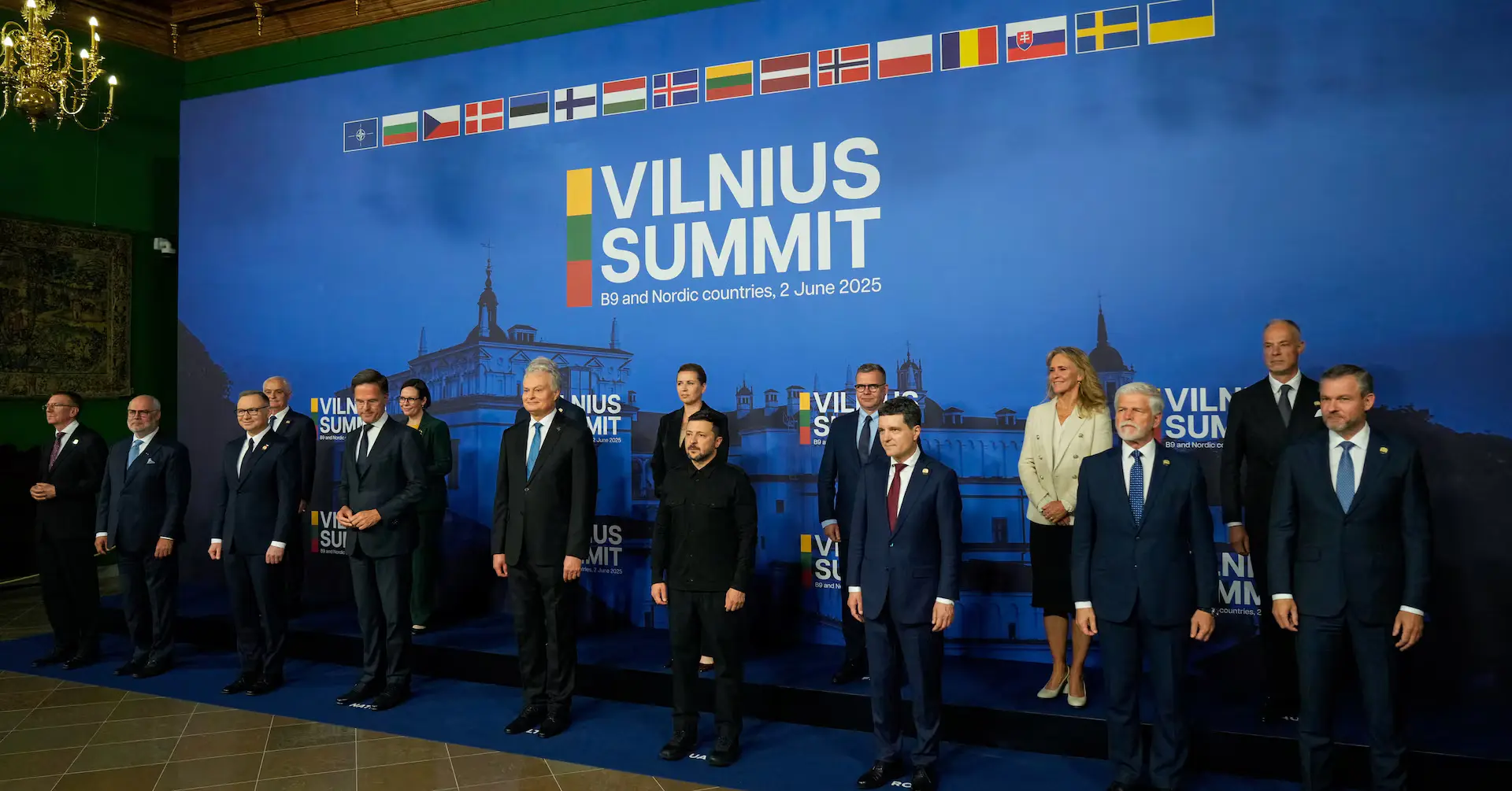
This consensus, rooted in Russia’s actions, drives urgent action, contradicting analysts who downplay the threat. The leaders’ fear spurs a 5% GDP defense spending target.
Nausęda announced Lithuania’s 4% in 2025 and 5-6% from 2026, funding a National Heavy Division and German Brigade infrastructure. Duda, escalating his 2024 3% proposal, confirmed regional support for 5%.
Šordán proposed 3.5% plus 1.5% for investments, while Frederiksen stressed capabilities over targets. This surge strengthens arms industries, especially drones, and supports Ukraine’s defense sector, creating jobs and markets amid Russia’s perceived threat.
G7’s Unified Front
Zelensky and Frederiksen pushed G7-level sanctions targeting Russia’s shadow fleet, oil trade, banks, and financial sector. Frederiksen, citing Russia’s war plans, urged lowering the oil price cap and ending reliance on Russian energy.
Zelensky, noting Russia’s manipulative Istanbul peace talks, called for secondary sanctions and tariffs. These measures aim to choke Russia’s war economy, redirecting energy trade to non-Russian suppliers and boosting Ukraine’s leverage.
Nausęda added a goal of 2 million EU-supplied shells for Ukraine, while Zelensky offered partners priority access to restock arsenals post-war, enhancing defense exports.
Rutte, Duda, and Nausęda reaffirmed U.S. commitment to NATO, dismissing troop reduction fears despite Trump’s Asia focus. Rutte noted 1,000 U.S. troops in Lithuania and Trump’s Article 5 support, while Nausęda offered to host more.
This stability secures transatlantic defense contracts, positioning the eastern flank as a defense hub. Zelensky stressed that Russia must not dictate NATO expansion, warning that a weak Hague Summit could embolden Putin.
This economic pragmatism—fueled by fear of Russia—drives defense spending to grow arms markets, sanctions to open energy trade, and U.S. assurances to stabilize investments.
Yet, economic constraints may limit the 5% target, G7 sanctions need global support, and U.S. reliability hinges on Trump’s consistency. The Hague Summit will decide if this vision reshapes global security and trade.
This article was produced by The Rio Times’ automated newsroom system. How we use AI · Report an error · Editorial responsibility: Matthias Camenzind, Editor-in-Chief
Read More from The Rio Times