Senegal Assembly to Examine Budget Decree
Two Assembly committees are due to examine a draft resolution on a budget the president enacted by decree after lawmakers rejected it, and its text, its force and any court challenge are still unknown.

Politics: Senegal
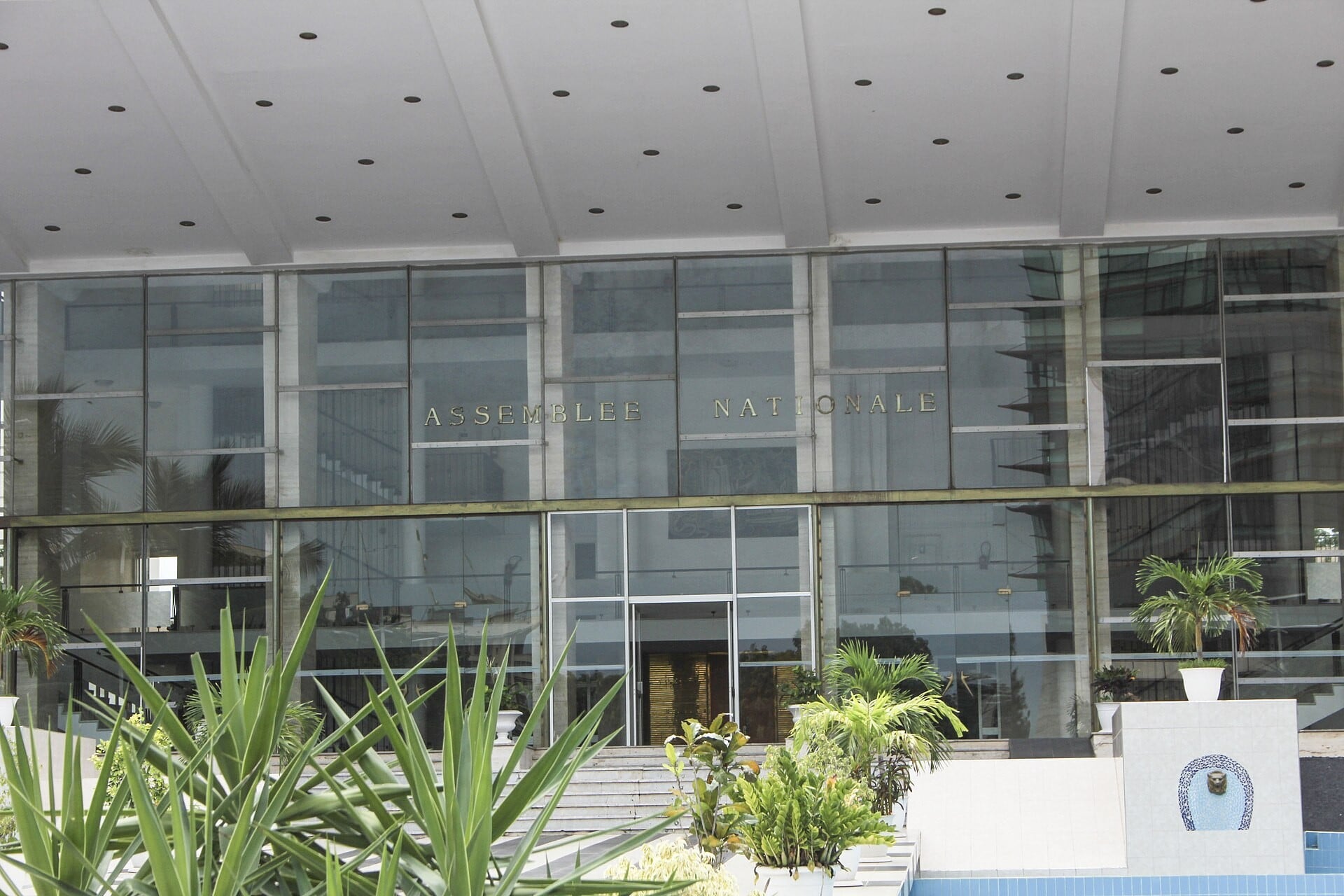
Senegal’s National Assembly is due to examine, on Tuesday 24 November 2026, a draft resolution on the president’s decision to put a rejected revised 2026 budget into force by decree. Two parliamentary committees are to meet at 10:00 GMT in Dakar to discuss it, along with who is responsible for carrying the decree out.
That decree, issued on 19 November, enacted a bill the Assembly had thrown out on 3 November. Two committees are due to take it up, and the text of the draft resolution has not been made public.
Key Facts
- Who. Finance Committee chairman Alphonse Mané Sambou called the meeting; President Bassirou Diomaye Faye issued the decree.
- What. Committees will examine a draft resolution on decree no. 2026-2416, which enacted the rejected budget.
- Where and when. Marie Joséphine Diallo room, National Assembly, Dakar, Tuesday 24 November 2026, 10:00 GMT.
- As of. 24 November 2026, 08:04 GMT
Two Assembly committees are due to examine a draft resolution on a budget the president enacted by decree after lawmakers rejected it, and its text, its force and any court challenge are still unknown.
The signed convocation from Alphonse Mané Sambou, which the Senegalese daily Le Soleil published on 24 November, names him as chairman of the Finance and Budget Control Committee, lists as its agenda a draft resolution on decree no. 2026-2416 and on the “responsibilities arising from” carrying it out. He called a joint meeting, an intercommission, with the Laws, Decentralisation, Labour and Human Rights Committee in the Marie Joséphine Diallo room of the Assembly’s new building.
The bill is a revised finance law, known in French as a loi de finances rectificative, and the government deposited it on 18 September 2026. On Tuesday 27 October the plenary sent it back to committee at the request of Finance Minister Cheikh Diba, and the Finance Committee rejected it again on Friday 30 October.
On Tuesday 3 November the Assembly adopted a procedural motion under Article 83 of its rules, called a question préalable, which ends debate and rejects a bill without a vote on its content. The motion was raised by lawmaker Amadou Ba of Pastef, the party that holds the Assembly majority, and passed; the Assembly later corrected the count the same day, adding 17 proxy votes that a technical fault had left out, which brought the votes for rejection to 126.
Several lawmakers said they lacked the information needed to judge the government’s economic and financial assumptions, and Ba questioned how sincere the forecasts were. Finance Minister Diba defended the coherence of the adjustments and rejected the criticism.
On Thursday 19 November a Presidency communiqué, signed by Oumar Samba Ba, minister and secretary-general of the Presidency, said Faye had decided to put the bill into force by decree. The text calls the president “guardian of the Constitution” and says he acted for the continuity of the State.
A government legal note, which the Senegalese daily Le Soleil reported on 19 November, rests the decree mainly on Article 68 of the Constitution, which lets a decree put a finance bill into force if it is not definitively voted when the 60-day period expires. The note says the bill was deposited on 18 September and had no final vote by 17 November.
The note adds that the rule also covers revised budgets, citing Article 5 of the organic finance law and Article 88 of the Assembly’s rules. It calls the procedure distinct from Article 86, which governs government accountability.
The note also cites Article 58 of directive 06/2009 of the West African Economic and Monetary Union. The prime minister countersigned the decree.
In the figures of the Budget Directorate, the finance ministry’s budget office, the revision cuts expected state revenue by about 5.5% from the original plan and lifts the forecast deficit to 7.6% of gross domestic product (GDP), up from 5.4%. Pastef is in open conflict with its former ally, President Faye.
Constitutional lawyer Mouhamadou Ngouda Mboup, quoted by the Senegalese news site Ndarinfo, disputes the decree and bases his challenge on Article 68 of the Constitution. The government’s note reads the same article the other way.
The decree lands in the middle of talks with the International Monetary Fund (IMF). On 1 September 2026 the IMF announced a staff-level agreement, still subject to its board’s approval, on a new 36-month programme of about US$2.2 billion.
IMF spokesperson Julie Kozack said in Washington on Thursday 12 November that the Fund expects Senegal to implement the agreed policies, including completing a budget framework, and that the IMF is not a party to the talks between the government and the Assembly. The Fund’s view of a budget enacted by decree has not been reported.
The budget fight is wider than one bill. The first part of the 2027 budget was rejected in plenary on Wednesday 18 November, by 126 votes to 18.
Article 87 of the Constitution bars dissolving the Assembly in the first two years of a legislature, and this one was installed on 2 December 2024, so the earliest date is December 2026. No dissolution has been announced.
The content of the draft resolution is not public, and it is not known whether it would have legal force or go to a plenary vote. No referral of the decree to the Constitutional Council has been reported.
The 10:00 meeting is the only dated step in the record so far. Its outcome is not yet known.
Frequently Asked Questions
What is the Senegalese Assembly due to examine?
A draft resolution on the presidential decree that put the rejected revised budget into force, and on who bears responsibility for carrying it out. Its text has not been made public.
Can a president enact a budget by decree?
The government’s legal note says the Constitution allows it when a finance bill is not definitively voted within the deadline. Constitutional lawyer Mouhamadou Ngouda Mboup disputes that reading.
Why does the dispute matter for the IMF programme?
The IMF has said it expects Senegal to implement the agreed policies, including a completed budget framework. How the Fund views a budget enacted by decree has not been reported.
Sources
Published Tuesday 24 November 2026 · Source: signed convocation of the Finance and Budget Control Committee for 24 November; Presidency communiqué of 19 November; government legal note reported 19 November; Assembly vote of 3 November; IMF briefing of 12 November · Senegal’s President Forces Budget by Decree · IMF Says Senegal Must Finish Budget for Loan
Connected Coverage
Senegal news · Senegal Debt Crisis and IMF Talks Explained · Senegal Presidency Spokesman on Article 52 · IMF Says Senegal Must Finish Budget for Loan
This article was produced by The Rio Times’ automated AI newsroom. Editorial responsibility: Matthias Camenzind, Publisher and Editor-in-Chief. The Rio Times also runs Ask Rio Times, which answers from 100,000+ of our own articles, the daily Latin America Power Map, and prediction-market odds on elections and markets.. How we use AI · Report an error