RWANDA · POPULATION
Key Facts
- People About 14.4 million in mid-2026 (projection); the census counted 13,246,394 on 15 August 2022.
- Age 49% of residents were under 20 in 2022; the median age was 21.
- Where 27.9% lived in towns and cities in 2022; density was 503 people per square kilometre.
- Language Kinyarwanda is the national language; Kinyarwanda, English and French are official.
- Faith Catholic 39.9%, Protestant churches about 36%, Adventist 12.2%, Muslim 2.0%, no religion 3.0% (2022 census).
- Ethnic groups Hutu, Tutsi and Twa were about 85%, 14% and 1% in 1994; the 2022 census reports carry no ethnic count.
- Refugees The UN refugee agency counted 115,794 refugees in Rwanda at the end of 2025, and 244,415 Rwandan refugees abroad.
The Rwanda population is about 14.4 million people in 2026, and nearly half of them are under 20. This guide shows who Rwandans are, what they speak and believe, and how they live together after the 1994 genocide.

Rwanda Population in Plain English
Rwanda is a small, hilly country in East Africa that borders Uganda, Tanzania, Burundi and the Democratic Republic of the Congo. Its capital is Kigali, and its people share one language, Kinyarwanda.
The country’s modern story starts in 1994, when the genocide killed more than one million people, the United Nations estimates. The terms below explain the names and numbers used in this guide.
- NISR: the National Institute of Statistics of Rwanda, which ran the 2022 census and the 2025 health survey.
- Census 2022: the Fifth Population and Housing Census, counted on the night of 15 August 2022.
- RDHS 2025: the 2025 Rwanda Demographic and Health Survey, a national household survey on family life and health, with its final report published in 2026.
- Kinyarwanda: the national language, spoken across the country.
- ADEPR: the Association of Pentecostal Churches in Rwanda, the country’s first Pentecostal church.
- UNHCR: the United Nations refugee agency, which counts refugees hosted in Rwanda and Rwandans who fled abroad.
- Hutu, Tutsi, Twa: the three groups into which Rwandans were long divided; the state now stresses one shared Rwandan identity.
- Diaspora: Rwandans and their children who live abroad.
How Many People Live in Rwanda
The 2022 census counted 13,246,394 residents on the night of 15 August 2022, which was 2,730,421 more than in 2012. That is growth of 2.3% a year over the decade.
Rwanda’s statistics institute projects 14,418,145 people in mid-2026 and about 15.7 million in 2030. By 2052 it expects around 23.8 million, nearly double the 2022 count.
Growth slowed to 1.2% a year from 1991 to 2002 because of the genocide. It then rebounded to 2.6% a year between 2002 and 2012.
The Rwanda population is crowded, with 503 people per square kilometre at the 2022 census. The institute projects 903 by 2052 and calls land pressure a significant threat to development.
Women make up 51.5% of residents, or 6,817,068 people against 6,429,326 men. The gap has narrowed from 91 men per 100 women in 2002 to 94 in 2022.
A Young Country, Age and Births
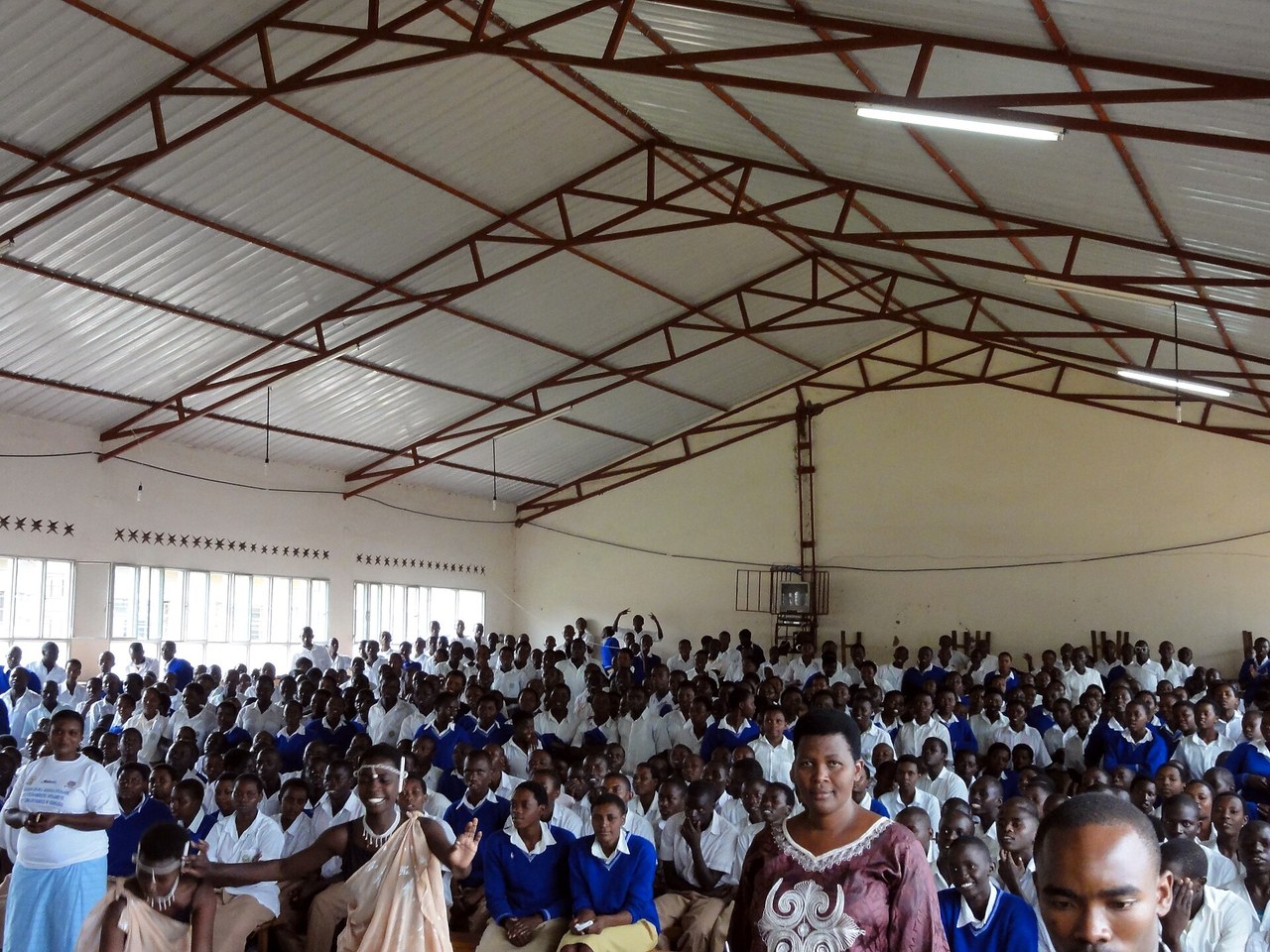
The Rwanda population is young: 49% of residents were under 20 at the 2022 census, and the median age was 21. Only 6.5% were 60 or older.
Women had 3.6 children on average in 2022, down from 5.9 in 2002. The 2025 health survey put the figure at 3.7, with 4.0 in the Eastern Province and 3.1 in the City of Kigali.
Rural women have 3.9 children on average and urban women 3.4. Schooling matters too: women with more than secondary education have 2.6 children, against 4.0 for those with primary schooling.
Infant deaths fell from 118 per 1,000 live births in 1991 to 29 per 1,000 in 2022. Life expectancy at birth was nearly 70 years in 2022, and the institute expects 78.0 years by 2052.
About 367,312 babies were born in 2022. At the current growth rate of 2.3%, the institute says, the population would double in 30 years.
Town and Countryside
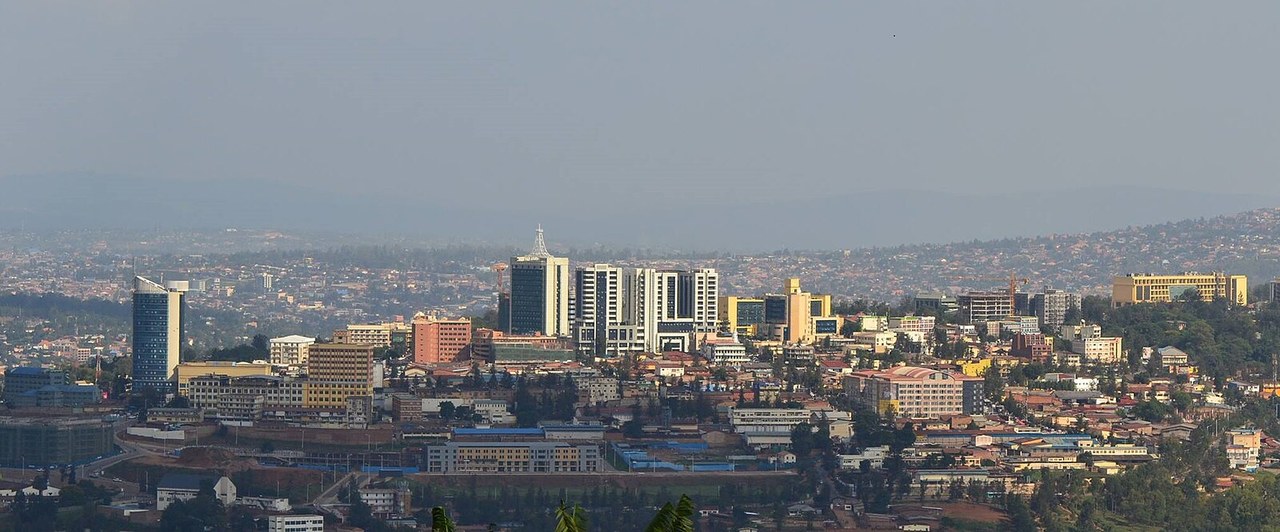
Most of the Rwanda population still lives in the countryside. The 2022 census found 3,701,245 people (27.9%) in urban areas and 9,545,149 in rural areas.
The Vision 2050 plan aims for 70% urban by 2052, which would lift urban residents from 3.7 million to 16.6 million. Rural residents peak near 9.6 million in 2026, then fall to 7.1 million.
Kigali is the magnet: 48.8% of its residents were lifetime migrants, meaning nearly half were born outside the city. It also has the lowest fertility of any province, at 3.1 children per woman.
Moving is common in Rwanda. Among women who moved within the past five years, 41% went from countryside to town, the 2025 health survey found.
Rwanda had 3.3 million households in 2022, averaging 4.3 people each. The institute expects 5.3 million households by 2032.
Ethnic Groups, Hutu, Tutsi and Twa
Rwandans have long been described as belonging to three groups: the Hutu, the Tutsi and the Twa. The United Nations puts their shares before 1994 at roughly 85%, 14% and 1% of more than 7 million people.
Before colonial rule, the UN says, a Hutu with many cattle or other wealth could join the Tutsi group. It describes the Nyinginya, a Tutsi clan, as the most powerful clan.
In the late 1950s the Hutu political movement gained strength, since majority rule would favour it. Parts of the Tutsi establishment resisted democratization and the loss of their privileges, the UN records.
In 1994 more than one million people were killed, the UN estimates, and the victims were primarily Tutsi civilians and moderate Hutus. The constitution calls it the genocide committed against Tutsi.
The state now stresses one Rwandan identity. Its constitution cites “one country, a common language, a common culture and a long shared history”.
The constitution also commits the state to fighting “divisionism and discrimination based on ethnicity, region or any other ground”. The 2022 census reports on population, religion and migration carry no ethnic count.
Language and Faith
Article 8 of the constitution makes Kinyarwanda the national language and names Kinyarwanda, English and French as official languages. Official documents may be in one, two or all three.
Rwanda is overwhelmingly Christian: 92.81% of residents named a Christian church in the 2022 census. Catholics are the largest group at 39.91%.
Protestant churches together make up about 36%, led by the Pentecostal ADEPR at 21.29% and other Protestants at 14.56%. Seventh-day Adventists follow at 12.17%, other Christians at 4.18% and Jehovah’s Witnesses at 0.7%.
Muslims make up 2.00% and people with no religion 3.04%, while traditional African religions account for 0.02%. Muslims are the exception to a rural pattern, because more of them live in towns than in the countryside.
Catholics lead in the Northern Province (51.59%), while ADEPR is strongest in Kigali (26.69%) and the Western Province (25%). The Catholic share has fallen since 2002, while ADEPR, other Protestant churches and Muslims have grown.
The 2025 health survey of adults aged 15 to 49 found 97% of women and 94% of men Christian. Muslims were 2% of women and 3% of men, and the constitution defines Rwanda as a secular republic.
Migration, Refugees and the Diaspora
Few people in Rwanda come from abroad. Foreign nationals were 0.89% of residents at the 2022 census, and residents born abroad were about 2.8%.
Congolese made up 54.88% of foreign nationals and Burundians 34.60%. The census report says most Congolese live in refugee camps, while most other foreigners live in Kigali and other towns.
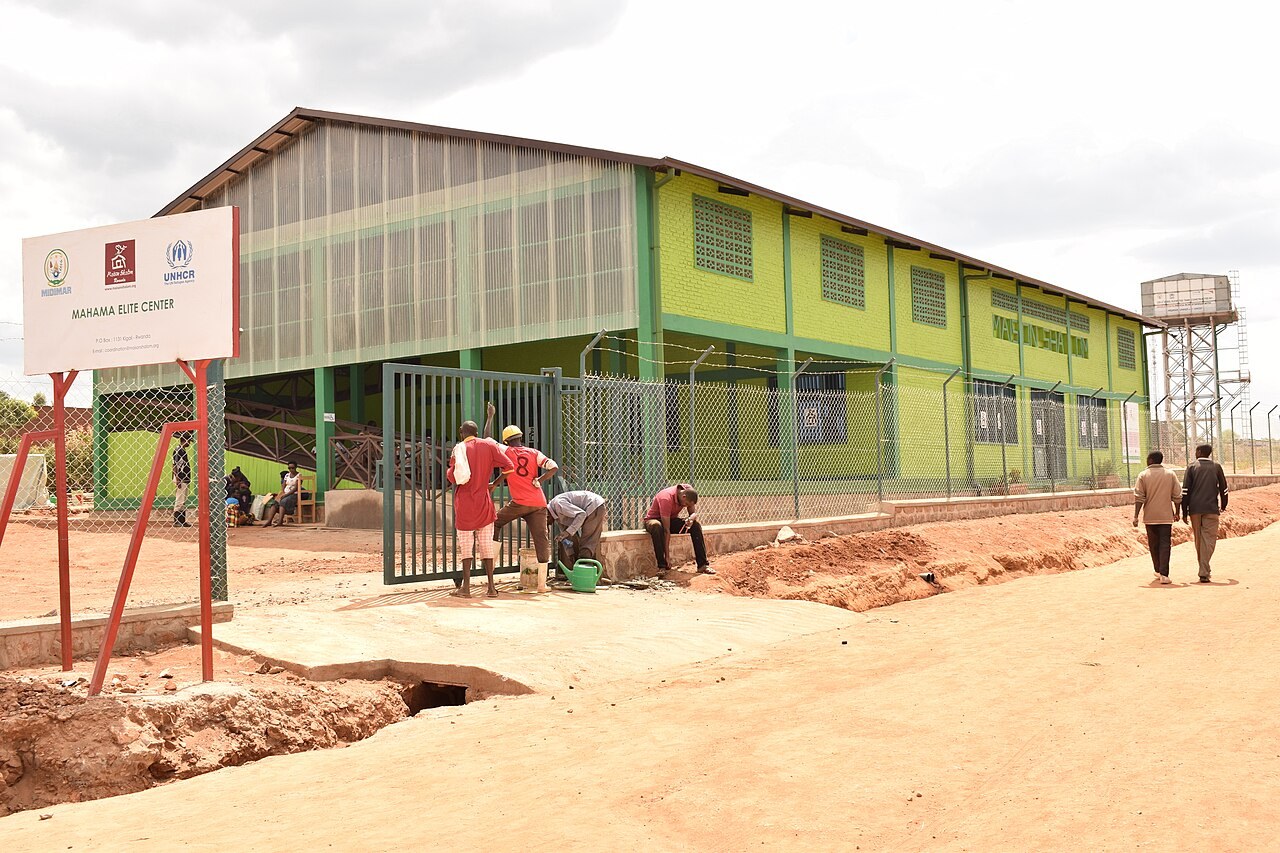
UNHCR counted 115,794 refugees in Rwanda at the end of 2025. Of them, 64,192 came from the Democratic Republic of the Congo and 50,746 from Burundi.
A further 15,251 asylum seekers were waiting for decisions on protection. Rwandans also flee abroad, and UNHCR counted 244,415 Rwandan refugees at the end of 2025.
About 198,000 of them were in the Democratic Republic of the Congo and 23,000 in Uganda. The rest were spread across other countries.
Money flows home too. The World Bank recorded US$517 million of personal remittances received by Rwanda in 2024, equal to 3.42% of economic output.
The constitution allows dual nationality and says people of Rwandan origin and their descendants may ask for Rwandan nationality. That opens a legal door for the diaspora to keep or regain its ties.
How the Groups Live Together
Daily life rests on one shared language and shared institutions. The constitution names peace, security, unity and reconciliation as the pillars of development.
The law also limits parties that divide people. Political parties must reflect the unity of Rwandans, and the President and the Speaker cannot share a party.
The sharper gaps in the data run between town and countryside. Secondary school attendance is 36.2% in towns against 27.7% in rural areas.
Internet use shows the same divide. In the past year, 49% of urban women used it against 14% of rural women.
Our guides cover Rwanda’s politics and key players, Rwanda’s economy and Rwanda’s culture and key figures. The Rwanda hub collects all coverage, and Rwanda and its neighbours in East Africa shows the regional setting.
What It Means for US Readers
The Rwanda population of 14.4 million is young and mostly rural, and 56% of residents were of working age in 2022. Economic output per person was about US$1,124 in 2025, the World Bank estimates, so employers meet a growing workforce with modest incomes.
Rwanda hosts 115,794 refugees, almost all from the Democratic Republic of the Congo and Burundi. For the security background, read Rwanda’s geopolitics and who the foreign players are.
What Is Not Known
The 2022 census is the latest full count, so every later figure is a projection. Estimates already differ: the statistics institute projects 14.1 million for mid-2025, while the World Bank lists 14.6 million.
The 1994 shares remain the latest split of Rwandans by group. The 2022 census reports on population, religion and migration carry no ethnic count.
Rwandans abroad are hard to count. The US Census Bureau’s main birthplace table does not list Rwanda by name, so it gives no figure for Rwandan-born Americans.
Frequently Asked Questions
What is the population of Rwanda?
The 2022 census counted 13,246,394 people. Rwanda’s statistics institute projects 14,418,145 for mid-2026.
What are the main ethnic groups in Rwanda?
Rwandans have been described as Hutu, Tutsi and Twa, roughly 85%, 14% and 1% before 1994. The 2022 census reports carry no ethnic breakdown, and the state stresses one Rwandan identity.
What language do Rwandans speak?
Kinyarwanda is the national language, and Kinyarwanda, English and French are official. Official documents may use one, two or all three.
What religion is most common in Rwanda?
Christianity: 92.81% of residents in the 2022 census. Catholics are 39.91%, Protestant churches about 36%, Adventists 12.17% and Muslims 2.00%.
How young is Rwanda’s population?
In 2022, 49% of residents were under 20, and the median age was 21. Women had 3.6 children on average.
How many Rwandans live in cities?
The 2022 census found 27.9% in urban areas. The government’s Vision 2050 plan aims for 70% by 2052.
How many refugees does Rwanda host?
UNHCR counted 115,794 at the end of 2025, mostly from the Democratic Republic of the Congo (64,192) and Burundi (50,746).
Sources: National Institute of Statistics of Rwanda, Fifth Population and Housing Census 2022, Thematic Report: Population Projections, 2025-02; National Institute of Statistics of Rwanda, Fifth Population and Housing Census 2022, Thematic Report: Socio-cultural characteristics of the population (religion and nationality), 2025-02; National Institute of Statistics of Rwanda, Fifth Population and Housing Census 2022, Thematic Report: Migration and spatial mobility, 2025-02; National Institute of Statistics of Rwanda and Ministry of Health, Rwanda Demographic and Health Survey 2025, Final Report, 2026-08; United Nations Outreach Programme on the 1994 Genocide against the Tutsi in Rwanda, Rwanda: A Brief History of the Country, 2026-10-31; United Nations Outreach Programme on the 1994 Genocide against the Tutsi in Rwanda, International Day of Reflection 2026, 2026-10-31; Constitution of Rwanda 2003, revised 2015 (Preamble, Articles 4, 8, 10, 56, 62 and nationality provisions), 2015; UNHCR Refugee Population Statistics database, Rwanda as country of asylum and of origin, end of 2025, 2026-10-31; World Bank, World Development Indicators for Rwanda (population, remittances, GDP per person), 2026-10-08; US Census Bureau, American Community Survey table B05006, place of birth for the foreign-born population, 2024-12.
This article was produced by The Rio Times’ automated newsroom system. How we use AI · Report an error · Editorial responsibility: Matthias Camenzind, Editor-in-Chief
Expat Guide to Rwanda
What The Rio Times publishes for foreigners who live in or move to Rwanda.
Start here
Understand Rwanda
Brazil runoff date: Sunday, October 25, poll closing times and when results start · Brazil runoff polls: Flávio 51%, Lula 49% · Kalshi and Polymarket odds
Rotate for Best Experience
This report is optimized for landscape viewing. Rotate your phone for the full experience.
You've reached your free article limit
Subscribe to The Rio Times for unlimited access to our reporting from across Africa.
Keep reading for free
Your first article was on us. Register with your email address to read 6 free articles every month. You will also receive Africa Intelligence: African markets, politics and business, every weekday morning.
Expat Guide to Rwanda
What The Rio Times publishes for foreigners who live in or move to Rwanda.
Start here
Understand Rwanda