
RWANDA · AGRICULTURE
Key Facts
- The country A landlocked East African nation where farming is the main livelihood for 88.4% of farm households.
- Why it matters Most Rwandan farmers are women, but households headed by women use fewer improved seeds and less fertilizer.
- Why now The national statistics office posted its 2024 farm survey gender report on 29 October 2026.
- What happened Women are 57.1% of farmers; 50.1% of women-led households use improved seeds versus 69.7% of men-led ones.
- What it means for you US buyers, donors and investors in Rwandan farming should watch the input and credit gap for women.
In Plain English
NISR is Rwanda’s National Institute of Statistics, the government agency that runs the national surveys and publishes the official figures. A female-headed household is one headed by a woman, and an agricultural household is one with at least one member in crop or livestock work that brings in family income.
Inorganic fertilizer is factory-made, while organic fertilizer is manure or compost. Improved seeds are certified varieties bred for higher yields, as opposed to seed saved from the last harvest.
Women make up 57.1% of Rwanda’s estimated 3.6 million farmers, but households headed by women use fewer improved seeds, less fertilizer and fewer bank services than those headed by men. Rwanda’s National Institute of Statistics (NISR) posted these findings on its website on 29 October 2026, in a gender report on its 2024 Agricultural Household Survey.
For US readers the link is trade: the United States ranked fifth among buyers of Rwanda’s domestic exports in August 2026, taking US$9.26 million of goods against US$2.08 million a year earlier. The same office puts August domestic exports of food and live animals, the trade category that includes coffee and tea, at US$57.01 million, a 19.45% share of the total, and the wider Rwandan economy and its key players are covered separately.
What the Survey Counted
The 2024 survey counts about 2.2 million agricultural households, of which 25.7% are headed by women and 74.3% by men. The report is dated June 2026 and its foreword thanks UN Women and the European Union for supporting Rwanda’s gender statistics.
The survey’s table of farmers by sex shows about 2.05 million women and 1.54 million men among 3.59 million farmers. Women were 59.8% of farmers in 2017 and 56.6% in 2020, so the female majority has held across three surveys.
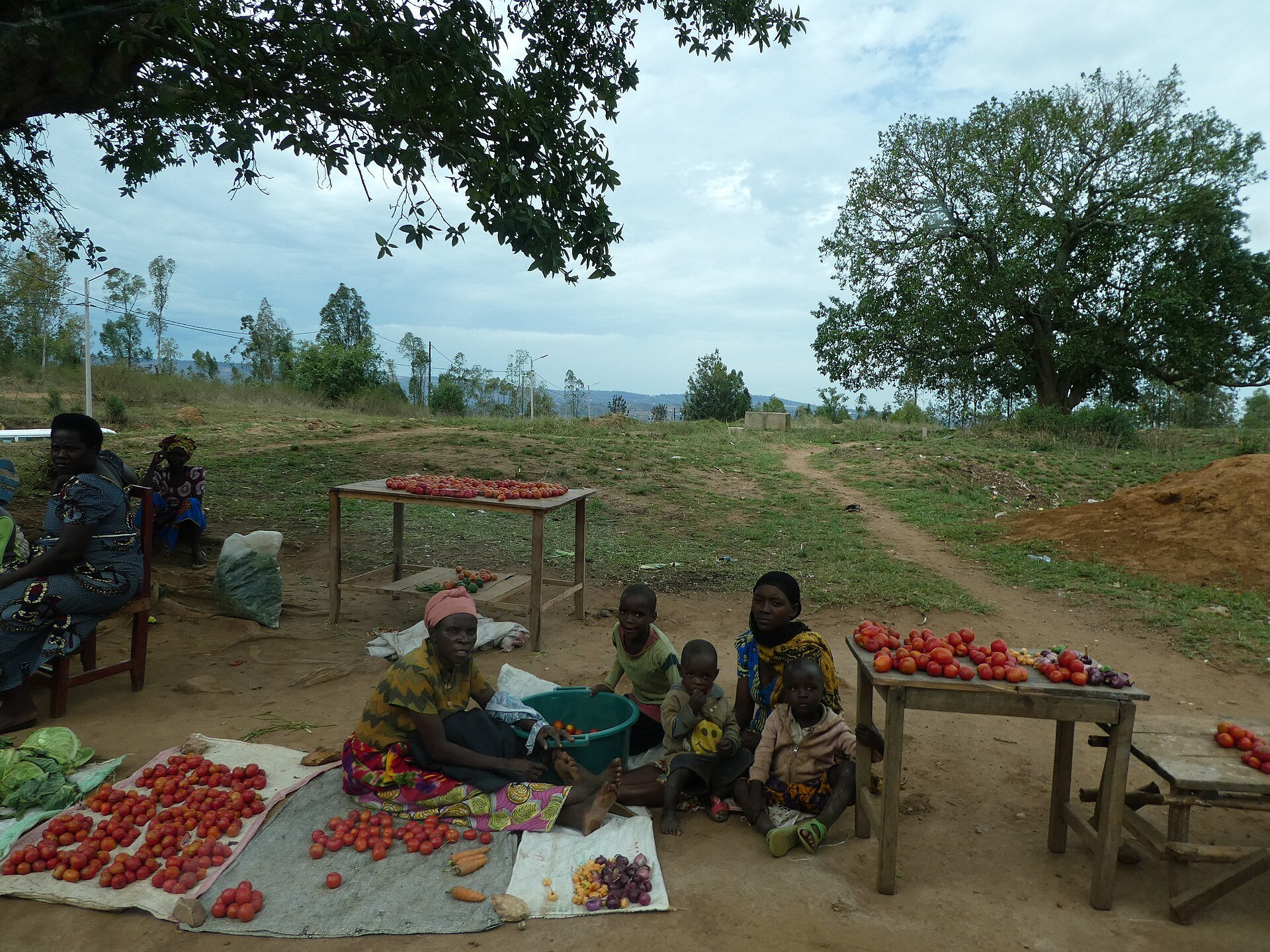
Seeds, Fertilizer and Pesticide
Improved seeds are used by 50.1% of female-headed farm households against 69.7% of male-headed ones, and inorganic fertilizer by 50.7% against 72.0%. Pesticide is the least used input for both groups, at 28.9% for women-led households and 46.7% for men-led ones.
Irrigation reaches 8.4% of women-led households and 16.1% of men-led ones, and erosion control measures 86.9% against 92.5%. Organic fertilizer is nearly even at 91.7% against 94.8%.
Agro-dealers are the main fertilizer source for both groups, at 50.9% for women-led and 49.5% for men-led households. Men-led households rely more on non-governmental organisations (39.7% against 32.7%) and farm cooperatives (7.0% against 5.2%).
Credit, Savings and Poverty
At least one member holds a bank account in 56.5% of women-led households against 64.9% of men-led ones, and 41.3% of women farmers personally own an account against 52.6% of men. Savings and credit cooperatives make up 77.7% of the account types held by women-led households, against 71.6% for men-led ones.
A member of 65.4% of women-led households asked for a loan, against 73.1% of men-led households, and women-led households turn to relatives or friends more often (29.5% against 23.9%). Commercial banks are the source for 4.3% of requested loans in women-led households against 6.9% in men-led ones.
Poverty follows the same line, with 28.7% of female-headed agricultural households classed as poor against 25.2% of male-headed ones and 25.9% overall. The poverty rate is 30.7% on farms smaller than half a hectare and 9.0% on farms of one to five hectares.
Land Rights Are Close to Equal
Land ownership is about 92% for both male- and female-headed households, and 82.7% of women farmers can use household land against 79.2% of men. The right to sell land or use it as loan security is held by 71.5% of women farmers and 68.8% of men, while the right to bequeath it is 68.7% for women and 69.3% for men.
The gap shows up in rented land, which 42.9% of women-led households use against 53.2% of men-led ones. Among adults aged 16 and over in farm households, 14.8% of women have no schooling against 9.8% of men.
What It Means for You
US importers of Rwandan farm goods, and US donors and investors in African farming, can read the survey as a map of where output could rise, because inputs, credit and bank access reach women least. Women-led households are 25.7% of all farm households, so closing the input gap would touch about one in four.
The United States received US$9.26 million of Rwanda’s domestic exports in August 2026, ranking fifth, up from US$2.08 million in August 2025 but down from US$16.66 million in July. Those trade figures are preliminary and cover formal trade only, so they do not show how much came from farms.
What Is Not Known
The survey does not measure harvests or yields by sex, so the size of any productivity gap in Rwanda is not shown. Its introduction cites research that such gaps in sub-Saharan Africa arise from unequal access to land and inputs, not from women being less efficient.
Its conclusion calls for a more transformative approach to land, finance and technology but names no budget or target date. The survey covers 2024 only, so it is not known whether the gaps have narrowed since.
Frequently Asked Questions
What share of Rwanda’s farmers are women?
Women are 57.1% of Rwanda’s estimated 3.6 million farmers in the 2024 Agricultural Household Survey. Households headed by women make up 25.7% of agricultural households.
Do Rwandan women farmers use less fertilizer than men?
Households headed by women apply inorganic fertilizer in 50.7% of cases against 72.0% for those headed by men. Improved seed use shows a similar gap, at 50.1% against 69.7%.
How much does the United States buy from Rwanda?
The United States ranked fifth among buyers of Rwanda’s domestic exports in August 2026, at US$9.26 million, down from US$16.66 million in July. The trade report does not say how much of that was farm goods.
Do women in Rwanda have equal land rights?
The survey finds land ownership at about 92% for both male- and female-headed households. Women farmers hold the right to sell land or use it as loan security at 71.5%, against 68.8% for men.
Sources: NISR, Agricultural Household Survey 2024 Gender Thematic Report, page and PDF updated 29 October 2026; NISR homepage, latest releases, 30 October 2026; NISR, Formal External Trade in Goods, August 2026, updated 3 October 2026; Rio Times Rwanda coverage.
This article was produced by The Rio Times’ automated newsroom system. How we use AI · Report an error · Editorial responsibility: Matthias Camenzind, Editor-in-Chief