Costa Rica’s Grynspan Leads Third UN Chief Straw Poll
Key Facts
The United Nations is choosing a new leader while it cuts its budget and struggles to stop wars. Costa Rica’s Rebeca Grynspan has moved back to the front of that race after a third informal vote.
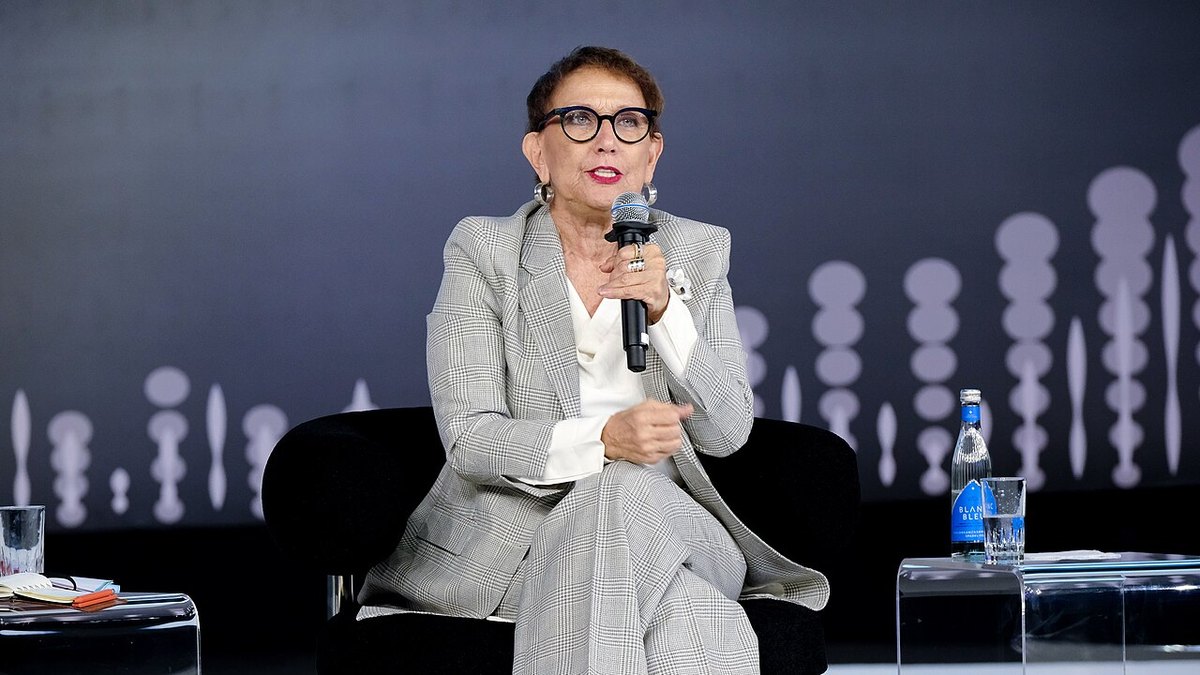
Rebeca Grynspan, who runs the UN’s trade and development agency, led a Security Council straw poll on 18 September 2026. She received nine encourage votes from the 15-member Council, one more than Guyana’s UN ambassador, Carolyn Rodrigues-Birkett.
Why This Matters Beyond Costa Rica
The UN secretary-general runs the organisation’s staff, speaks for it in crises and can bring threats to peace before the Security Council. António Guterres, the Portuguese former prime minister who holds the job now, ends his second five-year term on 31 December 2026.
His successor will take over an organisation under financial strain, with fewer staff and less money. In October 2025 Guterres proposed a 2026 regular budget of US$3.238 billion, 15.1% below the 2025 level, UN News reported.
The same proposal cut 18.8% of posts, from 13,809 to 11,594, as member states fell behind on their dues. Guterres called the situation “a race to bankruptcy” when he presented those numbers.
The race also carries two symbolic questions that matter to Latin American readers. No woman has led the UN since its founding in 1945, and five of the eight candidates are women.
Why Latin America Claims the Job
An unwritten custom rotates the post among the UN’s regional groups, although no rule requires it. Many diplomats treat 2026 as the turn of the Latin American and Caribbean group, which the UN calls GRULAC.
The only Latin American to hold the office so far was Peru’s Javier Pérez de Cuéllar, from 1982 to 1991. Six of the eight candidates this year come from Latin America or the Caribbean, which shows how strongly the region is pushing.
That crowding also splits the region’s support, because Council members can encourage several candidates at once. Two of the region’s candidates come from Ecuador, and one each from Costa Rica, Guyana, Argentina and Chile.
Who Rebeca Grynspan Is
Grynspan, born in San José in 1955, is an economist and a former vice president of Costa Rica. She was vice president from 1994 to 1998 and also held cabinet posts for housing and social affairs, her UN CV states.
From 2010 to 2014 she was associate administrator of the UN Development Programme, the UN’s main development agency. She then led the Ibero-American General Secretariat, which links Spain, Portugal and Latin American governments, from 2014 to 2021.
In 2021 she became the first woman to lead UNCTAD, the UN body that deals with trade, investment and development. Her CV credits her with a decisive role in the 2022 Black Sea grain deal, which let Ukrainian grain reach world markets.
Costa Rica formally nominated her in a letter to the UN dated 3 March 2026. In her April hearing before member states, she said that “trust in the U.N. is fading”, according to The Tico Times.
What the Third Straw Poll Showed
In a straw poll, each Council member marks every candidate as encouraged, discouraged or giving no opinion. The ballots are secret, and the Council does not publish results, so the figures come from diplomatic sources quoted in the press.
Grynspan received nine encourage votes, five discourage votes and one no opinion, according to The Tico Times and The National. Rodrigues-Birkett, Guyana’s ambassador to the UN, followed with eight encourage, six discourage and one no opinion.
Legit.ng published a full breakdown in which Rafael Grossi, Argentina’s head of the UN nuclear agency, had five encourage and eight discourage. In the same breakdown, former Senegalese president Macky Sall had five encourage and nine discourage.
Olara Otunnu, a former Ugandan foreign minister, had five encourage and seven discourage in that table. Michelle Bachelet, Chile’s former president, had one encourage and eleven discourage, according to Legit.ng.
How the Race Has Shifted Since July
Grynspan led the first straw poll on 30 July with ten encourage votes and one discourage, Wikipedia’s tally of reported results shows. In the second poll on 21 August, Rodrigues-Birkett took the lead with eight encourage votes, Al Jazeera reported.
Grynspan fell to seven encourage votes in that round, while her discourage votes rose to four. She has now regained the lead, but her discourage count has grown from one to five over three rounds.
Bachelet’s campaign weakened after Chile’s new government withdrew its support on 24 March 2026. Brazil and Mexico, her other nominating states, kept her in the race, the campaign group 1 for 8 Billion reported.
Ecuador’s Ivonne A-Baki, a former ambassador to Washington, joined in August after a nomination from Tonga. She received no encourage votes in either the second or third poll, according to the reported tallies.
How the Selection Works
Under Article 97 of the UN Charter, the General Assembly appoints the secretary-general on the Security Council’s recommendation. The procedure for this cycle rests on General Assembly resolution 79/327, adopted on 5 September 2025.
A candidate needs at least nine of the Council’s 15 votes and no veto from a permanent member. The five permanent members are the United States, China, Russia, the United Kingdom and France.
So far all 15 members have voted on identical ballots, so outsiders cannot see how the permanent members voted. Security Council Report, a New York research group, says later rounds will use colour-coded ballots for permanent members.
What the Big Powers Want
None of the five permanent members has publicly endorsed a candidate, and none has announced a veto. A State Department official told The National that Washington wants “a practical, driven, and reform-focused candidate”.
That language echoes the budget and staff cuts Guterres began in 2025. Costa Rica’s foreign minister, Manuel Tovar, said the government would keep pushing the candidacy through the final stage, The Tico Times reported.
What It Means If You Follow Latin America
For readers in Costa Rica, a win would make Grynspan the first Costa Rican to lead the UN, The Tico Times noted. For investors and trade specialists, Grynspan’s UNCTAD record signals a focus on debt, development finance and trade rules.
A Latin American secretary-general would not change the UN’s budget limits, which member states set. Anyone tracking the race should watch discourage votes, because a rising count can signal quiet opposition from a permanent member.
What Is Not Yet Known
It is not known which Council members discouraged Grynspan, because the ballots do not identify voters. No date for the fourth straw poll had been announced by 19 September, according to the reports reviewed.
It is not clear whether any candidate will withdraw before colour-coded voting begins. The Council has not said when it will send its recommendation to the General Assembly.
Frequently Asked Questions
Why does this race matter?
The next secretary-general will lead the UN from January 2027 through budget cuts and several wars. The choice may also produce the first woman and the second Latin American in the job.
Who is Rebeca Grynspan?
She is a Costa Rican economist and former vice president who has led UNCTAD since 2021. Costa Rica nominated her for UN secretary-general in March 2026.
What is a straw poll?
It is an informal, secret Security Council ballot that tests support for each candidate. Members mark each name as encouraged, discouraged or no opinion.
Can Grynspan still lose despite leading?
Yes. A single veto from the United States, China, Russia, the United Kingdom or France would block her nomination.
Sources: The Tico Times, Grynspan leads third straw poll, The National, third straw poll and US position, Legit.ng, full breakdown of the third poll, Al Jazeera, second straw poll results, Security Council Report, how straw polls work, United Nations, selection process and candidates, United Nations, Rebeca Grynspan CV, United Nations, Costa Rica’s nomination letter, UN News, the 2026 budget proposal, 1 for 8 Billion, Chile withdraws support for Bachelet, Wikipedia, 2026 selection and reported poll tallies
This article was produced by The Rio Times’ automated newsroom system. How we use AI · Report an error
Read More from The Rio Times