Peru Clears Pichincha to Buy Diners Club and Keeps Velarde at Central Bank
Key Facts
Two institutions moved on Peru’s financial system in the same week, and both moves point the same way. One reshuffles a card business, the other locks in the man who sets interest rates.
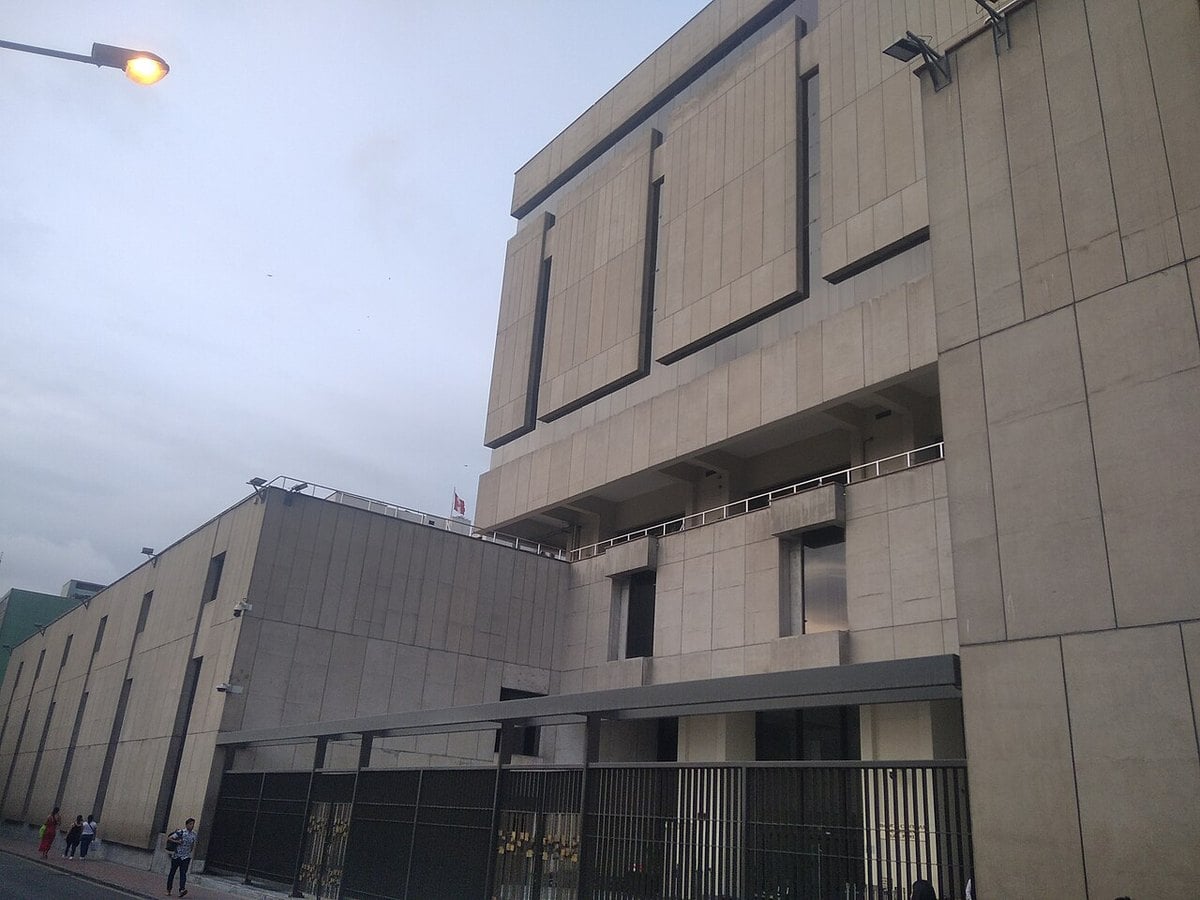
Banco Pichincha told Peru’s market regulator on 17 September 2026 that the SBS had cleared it to buy Diners Club Peru. The day before, the Senate voted 40 to 12 to keep Julio Velarde as central bank president until 2031.
What the SBS Actually Approved
The Superintendencia de Banca, Seguros y AFP is Peru’s banking, insurance and pensions regulator. Its decision is recorded in Resolution SBS 02290-2026, according to Banco Pichincha.
The bank disclosed it on 17 September 2026 in a Hecho de Importancia to the market regulator, the SMV. That filing route is the standard way a Peruvian issuer reports a material event.
The resolution allows the bank to acquire up to 100 percent of the shares of Diners Club Peru S.A. The stated purpose is that Diners Club Peru becomes a subsidiary of the bank.
RPP, citing the resolution, put the total consideration at S/23,474,937. At the BCRP banking-system selling rate of S/3.372 per US dollar on 16 September, that is about US$6.96 million.
How the Deal Got Here
The transaction did not appear this week, and the resolution sets out its history. Pichincha’s board agreed on 20 January 2026 to buy at least 94.77 percent of the shares.
On 26 May 2026 the same board ratified the decision and widened it to as much as 100 percent. The S/23.47 million figure, about US$6.96 million, attaches to that widened agreement.
The two companies were already partners before any of this. They formed a consortium in 2015 to run the credit card business together, Infobae reported.
Moody’s Local Peru put the bank’s share of that Diners consortium portfolio at roughly 27 percent. The rating agency noted the bank books 100 percent of the portfolio on its balance sheet regardless.
Why a Regulator Has to Sign Off
Peru does not let a bank buy a financial company quietly, and this is the mechanism. Law 26702, the General Law of the Financial System, governs what a bank may own.
It lets banks acquire shares in firms providing complementary or auxiliary services. It also requires prior SBS authorisation before a bank sets up a subsidiary.
The SBS reviewed the file and found the paperwork met the established procedure. The same law lists card issuance and administration among permitted banking activities.
That is the legal hook the regulator used, according to RPP’s account of the resolution. The SBS opened a separate public consultation on 15 September on procedures for buying more than 10 percent of a bank.
Who Banco Pichincha Is in Peru
The bank is older than its current name suggests, and the history explains its scale. It was constituted in 1964 as Financiera y Promotora de la Construccion, known as Finanpro.
It was authorised to operate as a bank in 1986 under the name Banco Financiero del Peru. Ecuador’s Banco Pichincha group entered the shareholder register in 1994 and built up control.
It bought NBK Bank in 2001 and America Financiera in 2011, Infobae reported. The SBS approved the change of name to Banco Pichincha in 2018.
Moody’s Local Peru reported gross loans of S/8,063 million at 30 June 2025, about US$2.39 billion. The agency affirmed the bank at A- with a stable outlook on 26 March 2026.
Mas Finanzas reported net profit of S/19.46 million in the first five months of 2026, about US$5.8 million. That was 8.16 percent below the S/21.19 million, about US$6.3 million, booked a year earlier.
The parent, Banco Pichincha C.A., is Ecuador’s largest private bank, Moody’s Local said. Grupo Pichincha held about US$31 billion in assets across eleven financial firms in six countries, Gestion reported in 2024.
What Diners Club Peru Brings
Diners Club Peru is a card issuer rather than a bank, and it sits in a narrow segment. It is supervised by the SBS and trades on the strength of the Diners Club brand.
Its card base and its latest profit figures were not disclosed in the filings reviewed for this article. The consideration of about US$6.96 million is small against a bank of Pichincha’s size.
Infobae reported that the resolution sets out no changes to the Diners Club brand. It also sets out no changes to current products or to the conditions on existing cards.
The Senate Keeps Velarde
The second decision came from the legislature rather than a regulator. The Senate plenary approved the report ratifying Julio Velarde on 16 September 2026.
The vote was 40 in favour, 12 against and no abstentions, Congress said in its own release. The term runs five years, to 2031, matching the constitutional period.
The executive had already designated him by Supreme Resolution 258-2026-PCM on 21 August 2026. Velarde has led the BCRP since September 2006, Gestion reported.
He has been ratified under Garcia, Humala, Kuczynski, Castillo and now Keiko Fujimori. Senator Patricia Juarez said Peru has had low regional inflation under his conduct of the bank.
Opponents from Juntos por el Peru questioned the distributional effect of the bank’s decisions, La Republica reported. The commission report found the candidacy met the conditions with no legal impediment, though its chair recorded his own opposition.
The board is still incomplete, and the Senate must elect three more directors. La Republica reported evaluations scheduled for 22 to 24 September and a final report by 7 October.
Peru Has a Senate Again
A foreign reader may be surprised that Peru has a Senate at all. The bicameral Congress was installed on 25 July 2026, the official gazette El Peruano reported.
It has 60 senators and 130 deputies, serving the 2026 to 2031 term. The change ended 33 years of continuous single-chamber legislature, El Peruano said.
The reform was approved through Law 31988, which restored the two chambers. Ratifying the central bank president is one of the powers the Senate now exercises.
Where Monetary Policy Stands
The man the Senate kept is running a policy that has not moved in a year. The BCRP held its reference rate at 4.25 percent on 11 September 2026, Forbes Peru reported.
Central bank series confirm the rate at 4.25 percent through August 2026. That is twelve consecutive months without a change, Infobae reported.
Inflation is not where the bank wants it. Lima metropolitan prices rose 4.44 percent in the year to August 2026, INEI said on 1 September.
The national twelve-month rate was 4.06 percent, Forbes Peru reported from the same release. The BCRP target band is 1 to 3 percent, and inflation has sat above it since March.
Inflation expectations stood at 3.01 percent in July, just above the band, Infobae reported. The bank linked the overshoot mainly to fuel prices and their effect on transport costs.
The sol has been steady through the month. The BCRP banking-system selling rate was S/3.372 per US dollar on 16 September 2026.
Consolidation and Concentration
Peruvian banking is already concentrated, and this deal does little to change that. Nineteen private banks operate in the country, La Republica reported from SBS data.
The four largest hold more than 80 percent of loans, deposits and equity, PeruCheck found using SBS figures. Those four are BCP, BBVA, Scotiabank and Interbank.
System profits reached S/14,147 million in 2025, about US$4.2 billion at the 16 September rate. That was 37 percent above the S/10,325 million, about US$3.06 billion, earned in 2024.
The same four banks took S/11,800 million of it, about US$3.5 billion, or 83 percent. BCP alone earned S/6,478 million, about US$1.92 billion.
Arturo Garcia, an economist at ESAN, told La Republica in February what high concentration does. He said entities with greater participation have greater influence in determining market rates.
He argued the SBS must be active in promoting the entry of more financial entities. The SBS has separately signalled more structural change, flagging possible fully digital banks and pension-arm absorptions.
What It Means If You Hold a Peruvian Card or Account
If you carry a Diners Club card in Peru, nothing in the resolution changes your terms. Infobae reported that the brand, the products and the card conditions are untouched by the document.
That is the position today, not a permanent commitment by the buyer. Watch the tarifario, the published fee schedule, which any issuer can revise with notice.
If you are a depositor at Banco Pichincha, the deal is small relative to the bank. About US$6.96 million is a modest outlay for a lender with roughly US$2.39 billion in gross loans.
If you borrow on cards in Peru, the concentration numbers matter more than this transaction. The average credit card rate was 74.8 percent a year, La Republica reported from SBS data.
If you hold soles, Velarde’s continuation is the more consequential of the two decisions. It signals policy continuity at an institution that has held its rate for twelve months.
If you are an investor, the Senate’s remaining three board picks are the open variable. A central bank president sets direction, but the board votes on the rate each month.
What Is Not Yet Known
Several things stayed unanswered after both decisions. The exact date the SBS signed Resolution 02290-2026 was not stated in the filings reviewed here.
Peru Retail reported the authorisation as dated 16 September and published the following day. Banco Pichincha disclosed it on 17 September, and that date is firm.
Diners Club Peru’s card base, its portfolio size and its latest results were not disclosed. Nor was any timetable given for closing the share purchase itself.
Whether the Diners Club brand survives in the medium term is not addressed anywhere in the resolution. The three outstanding BCRP directorships are also unresolved, with the process running into October.
Frequently Asked Questions
Has Banco Pichincha already bought Diners Club Peru?
Not yet. The SBS authorised the purchase, and the bank still has to complete it.
Will my Diners Club card change?
The resolution sets out no changes to the brand, the products or the card conditions. Gestion and Infobae both reported that position.
How long has Julio Velarde run Peru’s central bank?
Since September 2006, according to Gestion. The Senate vote extends that to 2031.
Why does a Senate vote on the central bank?
Peru restored its bicameral Congress on 25 July 2026. Ratifying the BCRP president is one of the Senate’s powers.
Sources: RPP, SBS authorisation and Resolution SBS 02290-2026, Infobae, terms of the deal and Pichincha’s history in Peru, Congreso del Peru, Senate plenary ratifies Velarde, La Republica, what follows the Velarde vote, BCRP statistics, daily exchange rate series, Forbes Peru, BCRP holds the reference rate at 4.25 percent, La Republica, 2025 banking profits and concentration, El Peruano, installation of the bicameral Congress
This article was produced by The Rio Times’ automated newsroom system. How we use AI · Report an error
LatAm Markets: Live Signals → — real-time movers, turnover leaders and FX across Latin America.
Read More from The Rio Times