Peru Legislative Powers: Committee Draft Urges Rejecting Fujimori’s 120-Day Request
POLITICS · PERU
Key Facts
- —The country Peru, where President Keiko Fujimori took office in July 2026. Congress now has two chambers, a Chamber of Deputies and a Senate.
- —What happened On 28 September a draft opinion of the Deputies’ Constitution Committee recommended rejecting and archiving the government’s request for 120 days of decree powers (El Comercio, Gestín, Infobae).
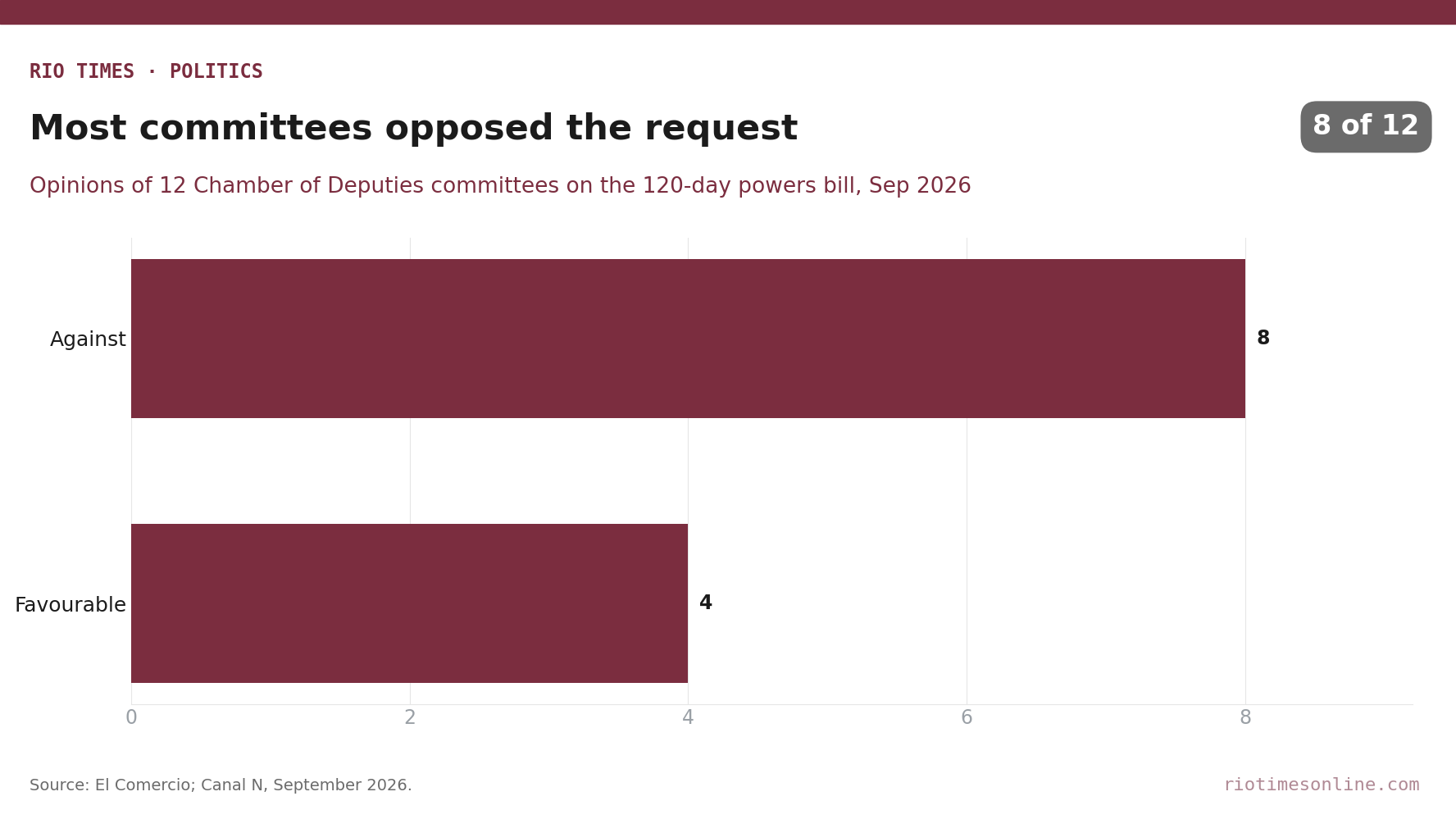
- —The numbers The request holds 66 measures in eight areas. Eight of 12 advisory committees opposed it in September, El Comercio and Canal N reported.
- —What it means for you Plans on security, small business, tax and mining would move through ordinary, slower lawmaking. Labour Minister Juan Sheput ruled out a confidence vote on 28 September.
- —Still open The committee debates on 29 and 30 September; no vote had been reported by the morning of 29 September. Allied parties are preparing narrower minority texts.
Peru legislative powers requested by President Keiko Fujimori face rejection in the Chamber of Deputies. A draft opinion of its Constitution Committee recommends refusing the 120-day request and sending it to the archive.
The government says it will not answer with a confidence vote. Allied parties want a smaller package instead, focused on security and the El Niño weather emergency.

What the Draft Opinion Says
The draft, reported on 28 September, recommends “the non-approval and archiving” of bill 00098/2026-2031-CD, Gestín reported. The document runs to more than 200 pages.
Article 104 of the Constitution lets Congress delegate lawmaking on specific matters for a fixed term. The draft says the request fails that test on precision, urgency and necessity.
It counts 66 items but finds more than 100 separate issues inside them, Infobae reported. Many use vague verbs such as “strengthen” or “optimise” without naming the laws to change.
It also argues that several measures could be taken by supreme decree or ministerial resolution. It calls plans to open protected areas and lands of isolated indigenous peoples to oil exploration unconstitutional.
Among disaster measures, it finds only one urgent, La República reported. That item would let INDECI, the civil defence agency, deliver aid directly in an emergency’s first 15 days.
How the Government and Its Allies Responded
Sheput ruled out a confidence question in a Canal N interview reported by El Comercio. If the powers are refused, “the world does not end,” he said.
The government would then send its own bills with urgency requests, he added. He promised “maximum tolerance” towards deputies until the term ends in 2031.
Prime Minister Luis Galarreta asked deputies to reconsider, Altavoz reported. “This is not saying no to Keiko Fujimori; this is saying no to Peru,” he said.
Miguel Torres of Fujimori’s Fuerza Popular, who presides over Congress, wrote that the committee should “debate, adjust and decide, not reject everything.” Rejecting even urgent items “would be turning our back on the country,” he added.
Renovación Popular, a conservative party, plans a minority report keeping about 40 of the 66 measures, spokeswoman Roxana Rocha told Gestín. Fuerza Popular is drafting its own minority text, El Comercio reported.
Who Opposes the Request
The committee is chaired by Giannina Avendaño of Juntos por el Perú, a left-wing party. With Obras and Ahora Nación, it has tied support to a new, narrower request, Canal N reported.
Criticism also comes from the right, so the split is wider than government against opposition. Renovación Popular leader Rafael López Aliaga said Fujimori does not need “so many powers,” La República reported.
He also said his party would not “boycott any delegation of powers.” That leaves room for a trimmed package if the full request fails.
What It Means for Investors and Residents
The Peru legislative powers request carried much of Fujimori’s agenda on security, small business, tax, mining and housing. A rejection would leave current rules in place and slow the pace of change.
Sheput’s refusal to force a confidence vote lowers the temperature between the branches. In 2019 a clash over such a vote ended with then-president Martín Vizcarra dissolving Congress.
Background on the original bid is in Peru Asks Congress for 120-Day Legislative Powers Over Tax and Security. The wider programme is covered in Peru’s Galarreta Sets Out Security and Tax Plan.
What Is Not Yet Known
How the committee will vote is not yet known. The session opens on the afternoon of 29 September and resumes at 09:00 on 30 September, Andina reported.
If the draft is approved, the request is archived in committee and never reaches the plenary, experts told El Comercio. If it fails, a minority text could go to the Deputies’ plenary and then the Senate.
La República noted that the draft still has blanks for the session date and the names of voters. Only the chair’s signature appears on it.
Frequently Asked Questions
What did Peru’s Constitution Committee draft recommend?
It recommends rejecting the government’s request for 120 days of decree powers and archiving it. It finds the 66 measures too vague, not urgent and often possible without a new law.
Is the rejection final?
No. The committee debates the Peru legislative powers request on 29 and 30 September, and government allies are preparing narrower minority texts.
Will the government call a confidence vote?
Labour Minister Juan Sheput ruled it out on 28 September. He said the government would send ordinary bills with urgency requests instead.
Sources: Gestión, Infobae and La República on the draft opinion, 28 September 2026; El Comercio (Sheput on Canal N) and El Comercio (procedure), 29 September 2026; Altavoz; Agencia Andina; Canal N on committee opinions, September 2026.
Read More from The Rio Times