Nuclear Power: The Unsung Engine Driving China’s Bold A.I. Ambitions
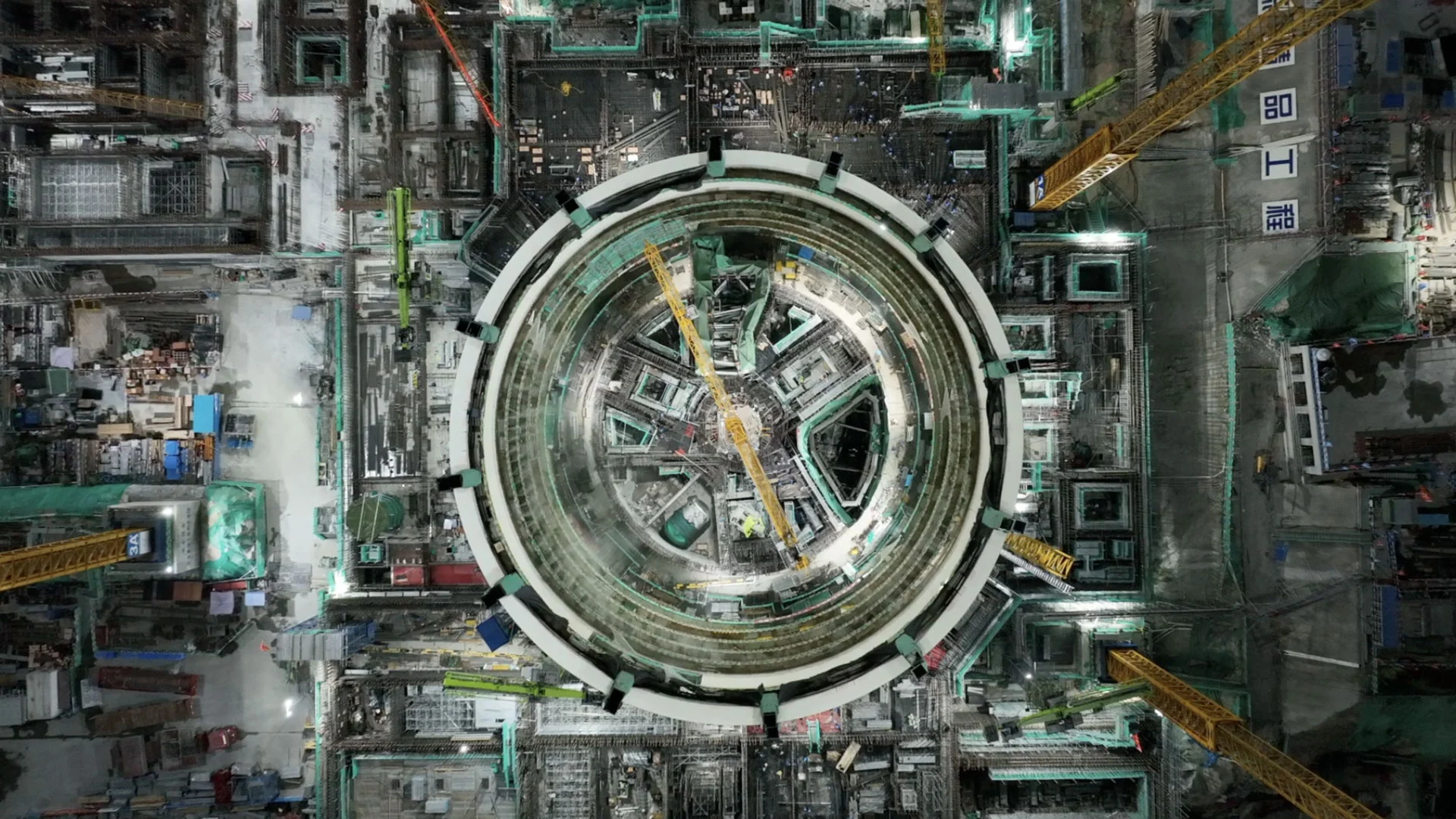
(Analysis) In the shadows of Silicon Valley’s gleaming campuses and Beijing’s bustling tech hubs, a quiet revolution is unfolding. The race for AI supremacy, it turns out, isn’t just about algorithms, semiconductors, and data – it’s about power. Literal, electrical power.
As AI models grow more complex and data centers larger and more numerous, the demand for electricity is skyrocketing. This is where nuclear power enters the picture, offering a steady, carbon-neutral stream of energy that could make or break a nation’s AI ambitions. Unlike solar or wind, nuclear can operate continuously, supporting the near-24/7 computational loads demanded by modern AI clusters.
China grasped this reality early. While the world focused on its AI research, Beijing quietly embarked on a nuclear renaissance. As of December 2024, China had 102 reactors either operational or under construction, representing a combined potential capacity of about 113 gigawatts once all are fully online.
[arve url=”https://www.riotimesonline.com/wp-content/uploads/1734/39/caption.mp4″ /]
Not all units are producing electricity yet, however. By 2025, China aims to reach 70 gigawatts of actual operational capacity, overtaking France’s 66 GW. By 2030, as additional reactors come into service, China’s nuclear output may surpass the combined capacities of France and the United States.
Ambitious targets stretch even further: building 150 new reactors between 2020 and 2035. Such staggering numbers come with staggering investments, like the approval in August 2024 of 11 new reactors at a cost of over 200 billion yuan (US$27.5 billion).
Nuclear Power: The Unsung Engine Driving China’s Bold A.I. Ambitions
Notably, China began operating the world’s first fourth-generation nuclear power plant, the 200 MW Shidaowan-1 in Shandong province, in December 2023. It’s a strategic move, aligning these powerhouses with emerging tech clusters to ensure AI development never lacks for energy.
The United States, once the undisputed leader in both nuclear technology and AI research, now finds itself in a precarious position. It still had 93 reactors at commercial power plants as of August 2023, totaling about 94.7 million kW in 2022, but new large-scale expansions face regulatory hurdles and high costs. This slowdown could jeopardize its AI edge.
Chips of Power: The Role of Semiconductors in the Battle for Global Dominance
Europe faces its own challenges, with France struggling to modernize aging reactors and Germany’s decision to abandon nuclear power potentially undermining its ability to feed large-scale AI systems all together. India and Japan, despite clear technical capabilities, remain constrained by slow expansions and public caution.
This isn’t just about bragging rights. The ability to train massive AI models, run complex simulations, and power vast data centers could determine which nations lead in fields from healthcare to finance to national security. Without reliable baseload power, future AI giants may find themselves held back.
Of course, the future remains unwritten. Innovations in renewable storage or more efficient AI hardware could shift the balance. But for now, nuclear power stands as a silent kingmaker in the world of artificial intelligence.
As we marvel at each new AI breakthrough, it’s worth remembering the infrastructure beneath it all. In the end, the nations that master this fusion of atom and algorithm may well shape the course of the 21st century.
More: Brazil news in English, every day from The Rio Times.
This article was produced by The Rio Times’ automated AI newsroom. Editorial responsibility: Matthias Camenzind, Publisher and Editor-in-Chief. The Rio Times also runs Ask Rio Times, which answers from 100,000+ of our own articles, the daily Latin America Power Map, and prediction-market odds on elections and markets.. How we use AI · Report an error
LatAm Markets: Live Signals → — real-time movers, turnover leaders and FX across Latin America.