Novo Nordisk Shares Sink Nearly 8% After Wegovy Maker’s 2030 Plan Disappoints
Denmark · Markets
Key Facts
- —What happened Novo Nordisk shares closed 7.7% lower in Copenhagen on 21 September 2026, after the company’s strategy day in London.
- —What Novo promised More than five multi-blockbuster launches by 2030 and over 150 billion Danish kroner (about US$23.1 billion) of risk-adjusted pipeline sales in 2035.
- —The catch Revenue growth to 2030 is pitched “in line with industry peers”, which one Danish strategist called well below market assumptions.
- —The patent clock US protection for semaglutide, the ingredient in Ozempic and Wegovy, expires in 2032, according to Quartz.
- —Who leads Novo Mike Doustdar, chief executive since 7 August 2025, previously ran the company’s business outside the United States.
The Danish maker of Ozempic and Wegovy promised a wave of new drugs but only average growth to 2030. Investors sold the stock hard.
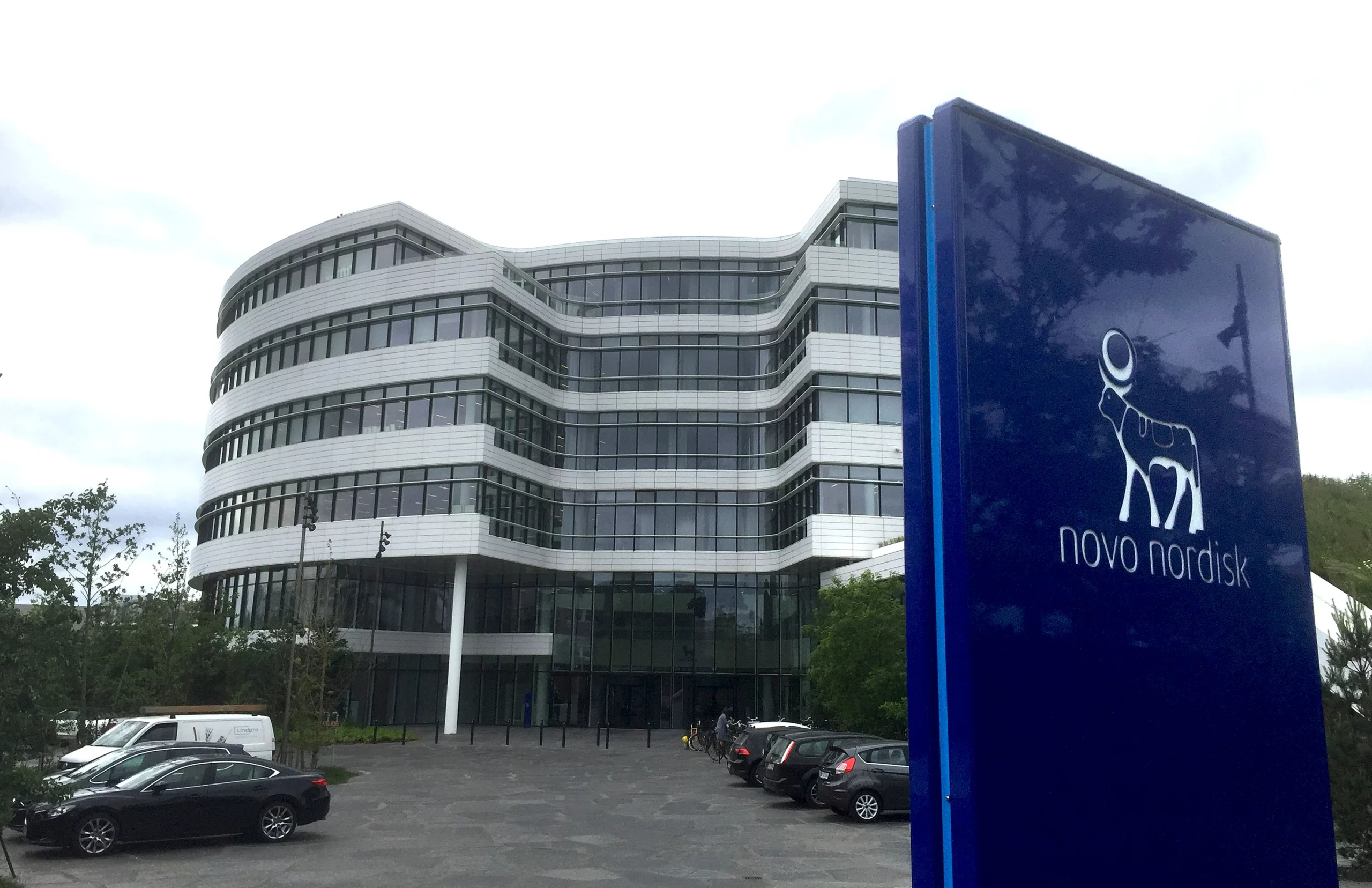
Novo Nordisk shares fell 7.7% in Copenhagen on Monday 21 September 2026, after the Danish drugmaker set out its 2030 plans. Investors had hoped for a bold growth story from the maker of Ozempic and Wegovy, and did not get one.
The company adopted “Novo” as its everyday brand name on 14 September 2026, STAT and UPI reported. Its legal name remains Novo Nordisk, according to UPI.
Novo made its pitch at a Capital Markets Day in London, a strategy briefing for investors and analysts. The headline promise was more than five new “multi-blockbusters” by 2030, meaning drugs with the potential for very large annual sales.
The problem lay elsewhere in the same announcement. Novo said its revenue should grow only in line with its large rivals until the end of the decade.
What Novo promised in London
The company said its drug pipeline should deliver more than 150 billion Danish kroner (about US$23.1 billion) of risk-adjusted sales in 2035. Risk-adjusted means each drug’s potential sales are discounted for the chance that it fails in trials.
It plans at least five final-stage, or Phase 3, trial programmes in obesity and diabetes, and at least five in other diseases. It also aims to reach more than 60 million patients worldwide by 2030.
On manufacturing, Novo wants enough capacity to serve ten times more people with obesity on GLP-1 pills. GLP-1 drugs mimic a gut hormone that curbs appetite and helps control blood sugar.
Why investors sold the stock
The sticking point was growth. Novo said revenue from 2026 to 2030 should grow at a compound annual rate “in line with industry peers”.
Its list of peers names 14 large drugmakers, including Eli Lilly, AstraZeneca, Pfizer, Novartis and Roche. It also promised a “broadly stable” operating margin and an “attractive” dividend per share.
For a company long priced as a growth leader, matching the average was a hard sell. Jacob Pedersen is an investment strategist at Middelfart Sparekasse, a Danish savings bank.
He told CNBC that benchmarking against a wide peer group signals ambition well below what the market long expected of Novo. “The investors, they are very particular in what they want from Novo, and this doesn’t add up to it,” he said.
Sydbank analyst Søren Løntoft Hansen called convincing the market “a very tough task”, the Invezz news site reported. He blamed the competition.
Pedersen also saw some comfort, the Danish news agency Ritzau reported. A broadly unchanged profit margin should dampen nervousness about significant earnings declines, he said.
How the trading session unfolded
Trade date: Monday 21 September 2026. Novo’s B shares closed at 260.00 kroner (about US$39.96) on Nasdaq Copenhagen, down 7.7% from Friday’s 281.55 kroner (about US$43.27).
They touched a low of 257.90 kroner (about US$39.64), 8.4% below Friday’s close, according to RT exchange data. Quartz had reported the fall pared to 5.4% by midday, so the selling deepened in the afternoon.
About 13.9 million shares changed hands, against 9.3 million on Friday. In New York, Novo’s dollar-denominated American depositary receipts closed 8.0% lower at US$39.80, per RT.
Conversions use a rate of 6.5061 Danish kroner to the US dollar, Danmarks Nationalbank’s reference rate for 21 September 2026.
The patent clock behind the caution
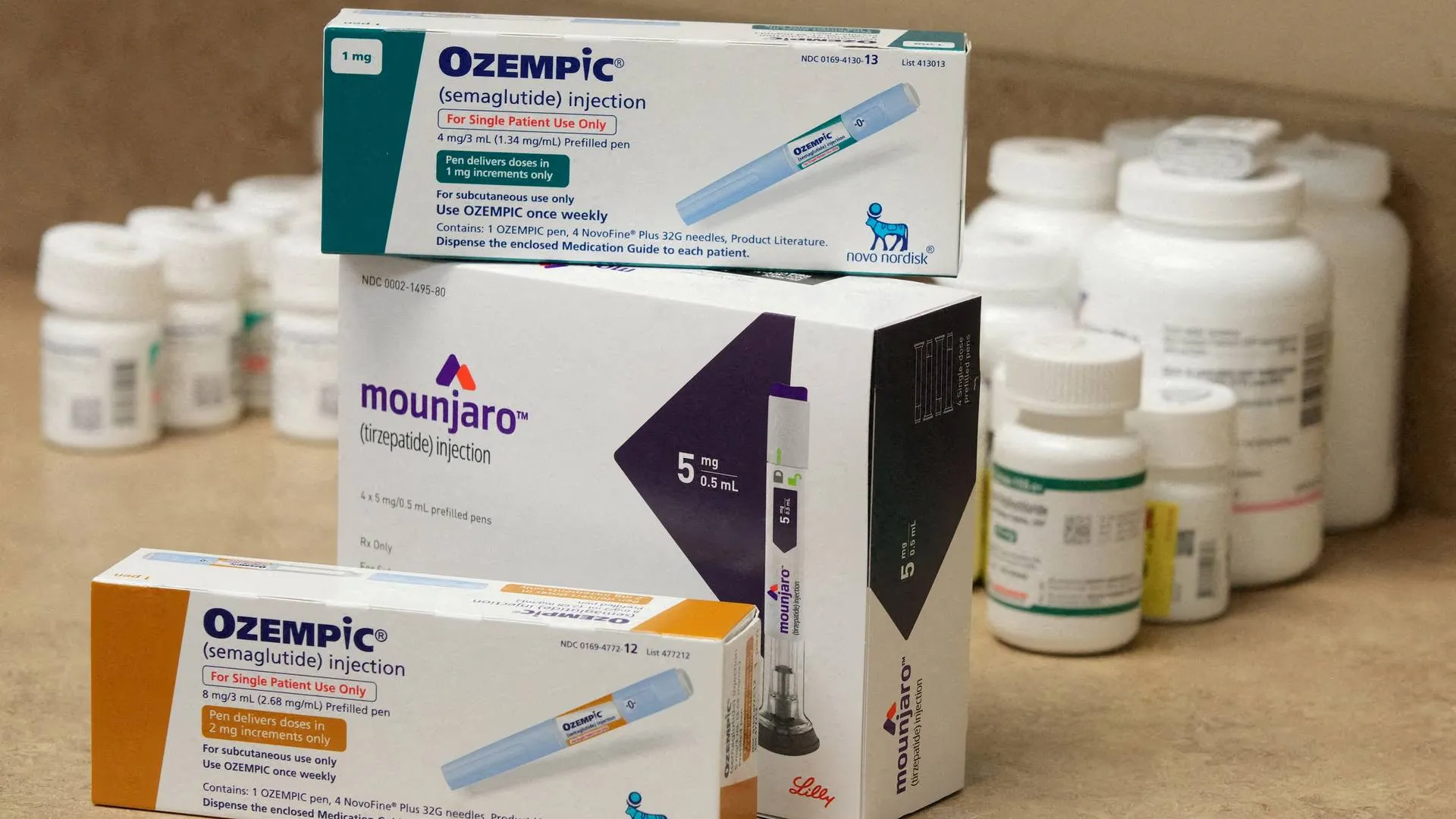
Behind the caution sits semaglutide, the active ingredient in Ozempic for diabetes and Wegovy for weight loss. Novo’s US patent protection on the molecule expires in 2032, according to Quartz and Invezz.
Doustdar called the coming loss of exclusivity the “elephant in the room”, the business site Quartz reported. Novo plans to emerge from it “as a bigger company than we are today,” Doustdar told investors.
He added that it would be “a much more diversified version of it”. In other words, Novo wants far more of its income to come from drugs other than semaglutide.
Doustdar said “almost every other single pharma company” is trying to compete in the obesity market Novo created, according to Invezz. Generic makers are also circling.
In South Africa, India’s Sun Pharma won regulatory approval for a generic semaglutide in July 2026, Business Standard reported. The biggest rival remains Eli Lilly, the American maker of the Mounjaro and Zepbound injections.
In the second quarter, Lilly held about 61% of the obesity-drug market and Novo 39%, per CNBC figures cited by Quartz.
Who is running Novo Nordisk
Maziar Mike Doustdar has been president and chief executive since 7 August 2025. He previously ran International Operations, the division covering Novo’s sales outside the United States.
He succeeded Lars Fruergaard Jørgensen. Monday’s London briefing put his strategy in front of investors in full.
Where the stock stands now
Monday’s close left the B shares about 20% below their last close of 2025, on 30 December, according to RT prices. The stock sits roughly 75% below its record close, set on 25 June 2024.
Novo stressed that its 2030 ambitions start from a 2026 baseline. The release says they “are inherently uncertain and do not constitute Novo’s financial outlook or guidance”.
For now, the market has delivered its verdict on the London pitch. Novo Nordisk shares lost 7.7% in a single session.
More: Europe markets coverage, every day from The Rio Times.
Frequently Asked Questions
Why did Novo Nordisk shares fall on 21 September 2026?
At its Capital Markets Day in London, Novo said revenue should grow from 2026 to 2030 only in line with 14 large drugmakers, including Eli Lilly and Pfizer. Danish analysts quoted by CNBC and Invezz said the plan fell short of what investors wanted. The B shares closed 7.7% lower in Copenhagen, according to RT exchange data.
What did Novo Nordisk promise?
More than five multi-blockbuster drug launches by 2030 and more than 150 billion Danish kroner (about US$23.1 billion) of risk-adjusted pipeline sales in 2035. It also targets more than 60 million patients by 2030, a stable operating margin and an attractive dividend. It said these ambitions are not financial guidance.
What is semaglutide and why does its patent matter?
Semaglutide is the active ingredient in Ozempic, a diabetes drug, and Wegovy, a weight-loss drug. It mimics a gut hormone that curbs appetite. Its US patent protection expires in 2032, according to Quartz. After that, cheaper generic copies can compete, so Novo needs new drugs to replace the income.
Sources: Novo Nordisk company announcement on its Capital Markets Day ambitions, Quartz, via Yahoo Finance, on the share reaction and Doustdar’s remarks, Invezz on analyst reaction, Investing.com on the peer group and guidance caveat, Novo Nordisk on Doustdar’s appointment, Business Standard on Sun Pharma’s South African approval, Danmarks Nationalbank exchange rates, RT end-of-day exchange data
This article was produced by The Rio Times’ automated newsroom system. How we use AI · Report an error
LatAm Markets: Live Signals → — real-time movers, turnover leaders and FX across Latin America.
Read More from The Rio Times