
BRAZIL · ECONOMY
Key Facts
- The company MRV&Co is a large Brazilian builder of homes, mainly for lower-income families.
- The profit Its Brazilian arm earned a record R$315 million (about US$56 million) in adjusted profit.
- The sales The Brazilian arm’s revenue rose 28.7% to R$3.4 billion (about US$609 million) in July to September 2026.
- The turnaround Group cash generation reached R$427 million (about US$77 million), a year after a cash burn.
- Power Index Brazil ranks 1st of 14 in The Rio Times Latin America Power Index, with 74.2 points (November 2026 edition).
- Prediction markets Polymarket gives a 90.5% chance that Brazil’s central bank leaves rates unchanged in December (12 November, 3:46 a.m. ET).
MRV&Co, a large Brazilian builder of affordable homes, said on Wednesday 11 November 2026 that its Brazilian homebuilding arm earned a record adjusted profit of R$315 million (about US$56 million) in the third quarter. Adjusted profit strips out derivatives and other non-cash items, and the group, listed on B3 (Brazil’s main stock exchange) as MRVE3, described the quarter as a record for sales, production, revenue and profit.
For US readers, the quarter shows a Brazilian homebuilder returning to profit while it sells assets of its American arm. All figures in this report convert reais at 5.58 per US dollar, the market rate on 12 November 2026.
What Happened
MRV&Co released its third-quarter results on Wednesday 11 November 2026. The whole group, which also includes the rental arm Luggo, the land developer Urba and the US apartment builder Resia, reported adjusted net profit of R$201.6 million (about US$36 million).
Adjusted figures leave out items such as receivables sales, so they differ from the audited accounts. The company swung from a net loss in the second quarter, when its US arm took heavy writedowns.
Record Sales and Better Margins
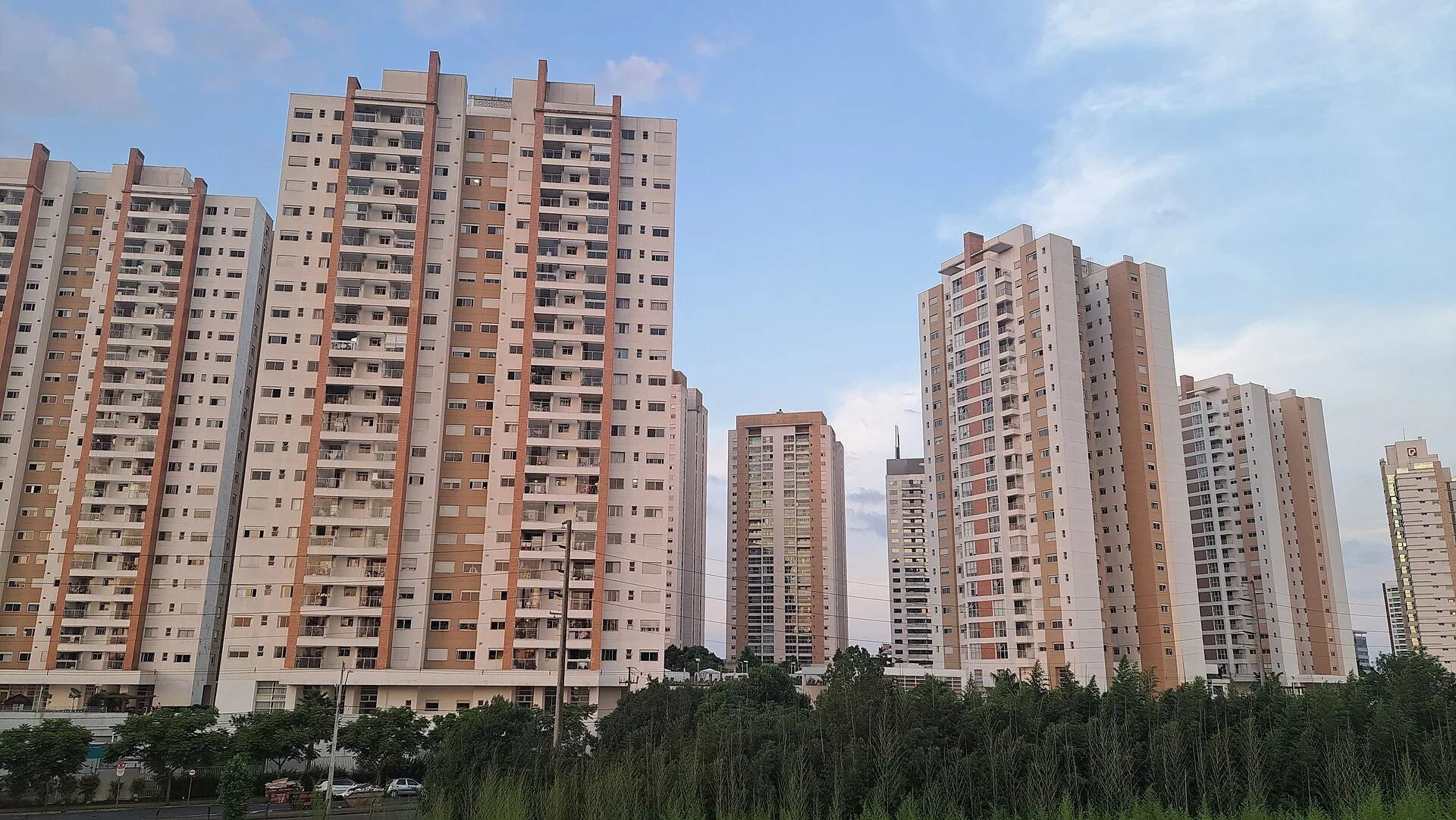
MRV Incorporação, the Brazilian homebuilding arm that makes up most of the business, raised net revenue 28.7% from a year earlier to R$3.4 billion (about US$609 million). That is 24% more than in the second quarter, the company said.
Gross margin, the share of revenue left after building costs, reached 32.1%, the highest in seven years. It rose 1.4 percentage points from a year earlier and 0.9 points from the second quarter.
Net sales were R$3.0 billion (about US$538 million) in the quarter and R$11.0 billion (about US$1.97 billion) over the last 12 months. The company sold about 11,000 homes while launching about 9,300, which shrinks its stock of unsold units.
Cash Returns After a Strike Scare
The group generated adjusted cash of R$427 million (about US$77 million) in the quarter, against R$70 million (about US$12.5 million) in the second quarter. A year earlier it burned R$23.4 million (about US$4.2 million), and the nine-month total now stands at R$894.3 million (about US$160 million).
The main driver was asset sales by Resia and Luggo, which total R$2.2 billion (about US$394 million) this year. The company expects them to cut net debt by R$1.6 billion (about US$287 million).
In July, Resia sold two projects, Ten Oaks and Rayzor Ranch, for US$139 million, cutting net debt by US$87 million. Luggo sold three finished rental buildings with 437 units for R$166 million (about US$30 million), which brought in R$144 million (about US$26 million) in cash.
A strike by staff of Caixa Econômica Federal, the state-owned bank that lends under the housing programme, disrupted mortgage transfers in September. The company said sales were not hurt, although the delays held back cash.
A Bet on the State Housing Programme
Chief financial officer Ricardo Paixão said almost all of the company’s launches now come from Minha Casa Minha Vida, the federal programme that subsidises homes for lower-income families. Buyers pay 4.5% to 7% a year, a rate tied to the FGTS, the workers’ severance fund.
Paixão said that makes demand less sensitive to the central bank’s benchmark rate, called Selic. The rate committee, Copom, interrupted its cutting cycle at its 4 November 2026 meeting, which held Selic at 13.75%.
What It Means for You
If you hold Brazilian stocks through a US fund, the quarter shows that a large, recently troubled homebuilder can post higher profit and cash flow while rates stay high. Its American arm, Resia, which builds and rents apartments in the United States, is selling assets rather than starting new projects.
The business now leans on government-backed lending rather than on market mortgage rates, which narrows the risks from Selic moves. It also depends on the state bank Caixa working smoothly, as the September strike showed.
What Is Not Known
Published figures for consolidated net profit differ by definition, from R$152.7 million attributable to shareholders to about R$171 million for the whole group. We therefore lead with the adjusted figures that the company highlights.
It is not yet clear how fast Resia can sell its remaining US assets, or how much of the R$1.6 billion in debt savings will arrive in the next quarters. The company has not said when it expects Caixa’s delayed transfers to be fully released.
What Prediction Markets Say
Polymarket, a crypto-based prediction market, gave a 90.5% chance on 12 November 2026 (3:46 a.m. ET) that Brazil’s central bank makes no change to its rate in December, with US$71,011 traded across the whole event. The same market priced a 25-basis-point cut (a quarter of a percentage point) at 6.2%.
Why we show this: prediction markets turn real-money bets into a live probability that moves within minutes of the news, which is why investors, campaigns and newsrooms in the United States now follow them closely. We show them next to polls and official results, never instead of them.
More: Brazil news in English, every day from The Rio Times. See also our report on rival homebuilder Direcional’s quarter and on Brazil’s interest-rate pause.
Frequently Asked Questions
How Much Did MRV Earn in the Third Quarter of 2026?
The group reported adjusted net profit of R$201.6 million (about US$36 million), and its Brazilian arm earned a record R$315 million (about US$56 million). The company published the results on Wednesday 11 November 2026.
Why Did MRV’s Cash Flow Improve?
Asset sales by its US arm Resia and its rental arm Luggo drove adjusted cash generation of R$427 million (about US$77 million). A year earlier the group burned cash.
What Is Minha Casa Minha Vida?
It is Brazil’s federal housing programme, which subsidises homes for lower-income families. Buyers pay interest of 4.5% to 7% a year, tied to the FGTS severance fund.
What Is MRV’s Gross Margin Now?
The Brazilian homebuilding arm reached 32.1%, its highest level in seven years. That was 1.4 percentage points above the third quarter of 2025.
Sources: MRV&Co investor relations, third-quarter 2026 results and operating preview, 11 November and 9 October 2026; Banco Central do Brasil, Selic and Copom decisions, November 2026; Polymarket, Brazil central bank December decision market, 12 November 2026; RT market data, USD/BRL market rate, 12 November 2026.
This article was produced by The Rio Times’ automated AI newsroom. Editorial responsibility: Matthias Camenzind, Publisher and Editor-in-Chief. The Rio Times also runs Ask Rio Times, which answers from 100,000+ of our own articles, the daily Latin America Power Map, and prediction-market odds on elections and markets.. How we use AI · Report an error
Brazil runoff, Sunday, October 25: Brazil runoff date. Latest: Brazil runoff polls, Flávio 51%, Lula 49%.