
BRAZIL · ELECTIONS · ANALYSIS
Key Facts
- The country Brazil, Latin America’s largest country, elects its president in a runoff on Sunday 25 October between President Lula and Senator Flávio Bolsonaro.
- What happened Prosecutors, a court, Meta’s Oversight Board and UN experts all pressed Meta within days over accounts that back Lula.
- The accusation Meta election restrictions are alleged: Lula’s campaign says Meta cut the reach of its posts and accounts on Instagram, Facebook and WhatsApp.
- Meta’s answer On the Meta election restrictions claims, Meta blames technical incidents, says its systems do not rank content by political ideology, and says it takes no side.
- The scale Federal prosecutors count more than 1,000 cases of disproportionate moderation in September and October.
- Power Index Brazil ranks 1st of 14 in The Rio Times Latin America Power Index, with 75.0 points (October 2026 edition).
- Prediction markets Polymarket gives Flávio Bolsonaro a 78.8% chance of winning the 25 October runoff and Lula 21.5% (22 October, 2:17 a.m. ET). Polymarket puts Flávio Bolsonaro’s chance of winning at 77% and Kalshi at 76% (Lula: 23% and 24%), as of 23 October, 3:20 am ET; prices are bets, not polls.
Runoff · Sunday, 25 October
Brazil Runoff 2026: Lula vs Flávio
Date, polls, debates, odds and how the runoff works, updated every day.
Read our Brazil election 2026 runoff guide →
Brazil election 2026 · Brazil election polls · Who will win: Brazil election odds · Brazil runoff date and results start · Brazil election results · Brazil election poll data (CSV) · All election stories
Meta election restrictions have become a prosecutors’ lawsuit, an electoral court case and a United Nations (UN) matter within days. The dispute lands in the final week of the Brazil election 2026 race, with the Brazil runoff date set for Sunday 25 October.
The latest Brazil election polls show a tight race between President Luiz Inácio Lula da Silva and Senator Flávio Bolsonaro. The Brazil election odds favour Flávio, and this explainer sets out what Meta is accused of and how institutions responded.
The Meta Election Restrictions Dispute in Brief
Lula’s re-election coalition says Meta cut the reach of its posts and those of its supporters during the runoff campaign. Meta, the US owner of Instagram, Facebook and WhatsApp, says technical incidents caused the problems and denies favouring any candidate.
Federal prosecutors say the restrictions hit student groups, independent media and social movements, most of them critical of Flávio’s campaign, Brasil de Fato reported. Our companion news report, Brazil’s data agency gives Meta five days, covers the latest steps.
What Meta Is Accused Of
Lula’s coalition filed a complaint with the electoral court on Saturday 10 October, Viva reported. It alleges that Meta reduced the reach of Lula’s posts and left a network of fake accounts running.
The campaign told the court that Meta’s artificial intelligence (AI) image tool refused to draw Lula but accepted Flávio, Folha de Pernambuco reported. The judge saw a preliminary failure in the tool but no sign that it was deliberate.
A Federal University of Paraná study examined eight incidents on digital platforms during the election, Tribuna Online reported. In six it found harmful effects on Lula’s campaign or on content critical of Flávio, though its authors say the data cannot prove deliberate interference.
What Meta Says in Its Defence
Meta admitted that technical incidents hurt its ability to boost Lula-related content, but called the problem purely technical, Brasil de Fato reported. It said it does not take sides in any election and that its systems do not rank content by political ideology.
On Monday 19 October, Meta told the electoral court that content on both candidacies is treated equally, Agência Brasil reported. It said staff review automatic restrictions on campaign advertising accounts within two hours, and it says its Meta election restrictions never target one side.
Meta also said it temporarily stopped recommending candidates and generating their images with its AI tool, Folha de Pernambuco reported. Our report Meta tells the court it complied covers that filing.
How Federal Prosecutors Responded
The Federal Public Ministry (MPF), Brazil’s federal prosecution service, opened a procedure on 14 October into moderation by Meta and by X, O Povo reported. Four rights groups, Artigo 19, Conectas, Sleeping Giants Brasil and CTRL+Z, had sent more than 1,000 reports of blocks and suspensions.
Meta replied that a deliberately chosen sample does not reflect the scope of its moderation work, O Povo reported. On Wednesday 21 October the MPF sued Meta with an urgent request, as in Brazil prosecutors sue Meta.
The MPF asks for the restoration of affected accounts, a ban on algorithm-only blocking, and human review of appeals, Brasil de Fato reported. It also wants a fine of R$500,000 (about US$99,500) per account for each day Meta does not comply.
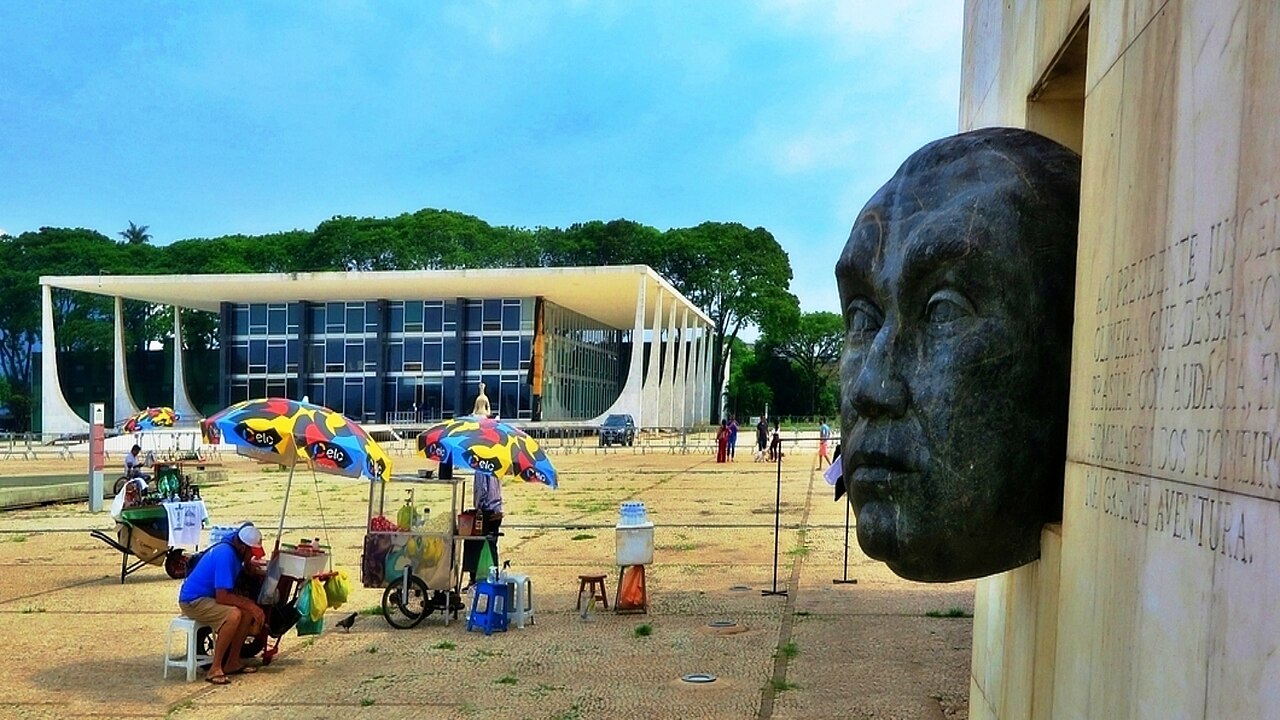
How the Electoral Court Responded
The Superior Electoral Court (TSE), the body that runs and judges Brazil’s elections, ordered Meta on Thursday 15 October to treat both candidates equally. Minister Marco Aurélio Bellizze set a fine of R$500,000 (about US$99,500) a day for any cut to either candidate’s reach, Folha de Pernambuco reported.
On Monday 19 October the court gave Meta 24 hours to prove compliance or face R$1 million (about US$199,000) a day, Agência Brasil reported. Bellizze has said equal treatment means equal rules and criteria, not equal results.
Brazil’s data protection authority gave Meta five business days to explain blocks, removals and reach limits, Tribuna Online reported. Related steps include a newspaper’s request to stop Meta deleting its posts and the judge’s request for election prosecutors’ views.
What the Oversight Board and UN Experts Said
The Oversight Board, an independent panel that reviews Meta’s moderation decisions, said on Tuesday 20 October that Meta shows recurring enforcement failures around elections. Its co-chairs wrote that fraud rules applied to Lula’s advertising accounts should have gone to expert reviewers, the Board’s statement says.
The Board added that Meta still lacks public metrics on its election protections, a gap that bears on the Meta election restrictions question. Our report Oversight Board flags two election errors has more.
On Wednesday 21 October, independent UN human rights experts asked Meta to assess whether its systems disproportionately restricted one side, Brasil de Fato reported. The statement names no candidate, and the experts do not speak for the UN itself, as in UN experts question Meta.
What It Means for US Readers
Meta is listed on the Nasdaq, so Meta election restrictions rulings in Latin America’s largest country matter to investors who follow platform regulation. Any ruling would apply in Brazil, and its effect on Meta’s business is not known.
For Americans, the case echoes the home debate over how social networks rank and limit political posts. It also shows that a US company can face daily fines in a foreign election.
What Prediction Markets Say
On Polymarket, an online prediction market, bettors give Flávio Bolsonaro 78.8% to win on 25 October and Lula 21.5% (22 October, 2:17 a.m. ET). The “Brazil Presidential Election” market has drawn about US$191.3 million in total bets.
These are bets, not polls, and they can move fast on court news. The Meta election restrictions dispute is one of several stories traders are watching before Sunday.
Prediction markets · who wins the runoff
Implied chance of winning Brazil’s presidency on 25 October, from traders’ prices.
Polymarket
Flávio Bolsonaro 77.1% · Lula 22.5% (US$192 million traded)
Kalshi (regulated in the US by the CFTC)
Flávio Bolsonaro 76% · Lula 24%
As of 23 October, 3:20 am ET (08:20 Lisbon), updated every 20 minutes. Prices are bets, not polls, and can move fast.
Why we show this: prediction markets turn real-money bets into a live probability that moves within minutes of the news, which is why investors, campaigns and newsrooms in the United States now follow them closely. We show them next to polls and official results, never instead of them.
What Is Not Known
No court has yet ruled on the prosecutors’ lawsuit, and it is not known when a judge will decide the urgent request. Nor is it known whether the electoral court will find Meta in breach of its equal-treatment order.
No finding says the restrictions were deliberate, and Meta says they were technical. The number of accounts restored so far has not been published.
More: Brazil news in English, every day from The Rio Times.
Frequently Asked Questions
What are the Meta election restrictions in Brazil?
Lula’s campaign and Brazilian prosecutors say Meta’s automated systems cut the reach of, or suspended, accounts that back Lula. Meta says technical incidents caused the problems and that it takes no side.
What have Brazilian prosecutors done?
The Federal Public Ministry opened a procedure on 14 October and sued Meta on 21 October with an urgent request. It asks for restored accounts, human review of appeals and a daily fine per account.
What has the electoral court ordered?
Minister Marco Aurélio Bellizze ordered Meta on 15 October to treat both runoff candidates equally, with a fine of R$500,000 (about US$99,500) a day. On 19 October he gave Meta 24 hours to prove compliance and raised the possible fine to R$1 million (about US$199,000).
What did the Oversight Board and UN experts say?
The Oversight Board said on 20 October that Meta shows recurring enforcement failures, including against Lula’s advertising accounts. UN experts asked Meta on 21 October to assess whether its systems restricted one side.
Has anyone proved Meta acted deliberately?
No finding says so, and the Meta election restrictions case is still open. The electoral judge saw no sign that the AI image failure was deliberate, and a university study says its data cannot prove deliberate interference.
When does Brazil vote in the runoff?
Brazil votes on Sunday 25 October 2026. The runoff is between President Lula and Senator Flávio Bolsonaro.
Sources: Brasil de Fato (federal prosecutors’ lawsuit), 21 October 2026; Brasil de Fato (UN experts), 21 October 2026; Poder360, 21 October 2026; Tribuna Online, 21 October 2026; Oversight Board, 20 October 2026; Agência Brasil (Oversight Board), 20 October 2026; Agência Brasil (Meta filing), 20 October 2026; Folha de Pernambuco, 15 October 2026; O Povo, 15 October 2026; Viva, 14 October 2026.
Editorial responsibility: Matthias Camenzind, Editor-in-Chief · Editorial standards · Report an error