Lithium in Latin America 2026: Inside the Lithium Triangle

LATIN AMERICA · LITHIUM
Key Facts
- —The basics Chile, Argentina and Bolivia hold about 43% of the world’s measured and indicated lithium resources, but only Chile and Argentina mine at scale, with about 27% of world output in 2025.
- —Why it matters Lithium is the core metal of batteries for electric cars and grid storage, and the three countries follow three models: state partnership, tax incentives and state control.
- —The numbers Australia mined about 92,000 tonnes of lithium in 2025, China 62,000, Chile 56,000 and Argentina 23,000; spot carbonate for Asia stood at US$16,850 a tonne on 30 September 2026.
- —Who is who SQM and state copper firm Codelco share Chile’s biggest Atacama operation, beside Albemarle; Rio Tinto, Ganfeng, POSCO and Lithium Argentina lead in Argentina; state firm YLB holds Bolivia’s Uyuni flat.
- —What to watch Chilean President José Antonio Kast holds talks with Bolivian President Rodrigo Paz in Bolivia on 16 and 17 October, while Bolivia’s 2024 Russian and Chinese lithium contracts still await ratification.
- —Prediction markets Polymarket gives a 2.5% chance that Javier Milei leaves Argentina’s presidency before 2027, and Kalshi prices his winning the 2027 election at 56% (16 October, 3:58 a.m. ET).
- —Power Index Chile ranks 3rd of 14 in The Rio Times Latin America Power Index, with 63.6 points (October 2026 edition).
- —Power Index Argentina ranks 4th of 14 in The Rio Times Latin America Power Index, with 61.2 points (October 2026 edition).
- —Power Index Bolivia ranks 12th of 14 in The Rio Times Latin America Power Index, with 28.4 points (October 2026 edition).
- —What it means for you US investors can buy SQM, Albemarle, Sigma Lithium and Lithium Argentina in New York, and Chile and Argentina supplied 97% of US lithium imports in 2021 to 2024.
The lithium triangle holds more lithium than any other region. This guide explains who owns it, mines it, buys it and sets the rules.
The lithium triangle of Chile, Argentina and Bolivia holds about 43% of known lithium resources, the US Geological Survey reported in 2026. Yet only Chile and Argentina mine at scale, and together they produced about 27% of world output in 2025.
In 2026 Chile shares its best brine with the state, Argentina courts foreign capital, and Bolivia keeps state control. Daily coverage of all three sits in the Lithium in Latin America dossier.
Who Holds the Lithium
Resources are what geologists think lies underground, while reserves are the part that can be mined profitably today. The USGS, the US government’s geoscience agency, counts about 150 million tonnes of measured and indicated resources worldwide.
Argentina leads with 28 million tonnes, Bolivia has 23 million and Chile 13 million, or about 43% together. Chile has the largest reserves at 9.2 million tonnes, while the USGS lists none for Bolivia.
World mine output, excluding the United States, rose 31% to about 290,000 tonnes of lithium content in 2025. Australia mined about 92,000 tonnes, China 62,000, Chile 56,000, Zimbabwe 28,000 and Argentina 23,000.
Chile’s share has slipped to about 19%, and China overtook it in 2025, as a report on Chile’s falling share shows. Ore type explains much of the gap between rivals.
Chile and Argentina evaporate brine, a salty underground water, in sun-baked ponds, while Australia, Brazil and Zimbabwe dig hard rock. Mexico’s clays are a third type, and Zimbabwe’s ore export ban features in the Africa minerals race guide.
Chile: The State Takes a Seat
Chilean law has treated lithium as a strategic mineral since 1979, so it cannot be claimed through ordinary concessions. Corfo, the state development agency, owns the key Atacama properties and leases them to producers.
In April 2023 former president Gabriel Boric launched a national lithium strategy giving the state control of key salt flats. Its centrepiece paired SQM, a private Chilean chemicals group, with Codelco, the state copper miner explained in a guide.
The deal closed on Saturday, 27 December 2025, creating Nova Andino Litio, in which Codelco holds one share more than 50%. SQM runs it until 2030, Codelco takes control from 2031, and Corfo’s leases run to 2060.
Chile’s Supreme Court rejected a final appeal by Tianqi, SQM’s Chinese shareholder, in a ruling notified on Monday, 26 January 2026. SQM then reported record lithium sales of 84,100 tonnes of carbonate equivalent in the April to June quarter, 75,800 from Chile.
Its Atacama rebuild is called Salar Futuro, as the report on the SQM investment plan details. Rio Tinto’s deals with Codelco for Maricunga and with state miner ENAMI should close in late 2026 or early 2027.
In 2017 SQM paid more than US$30 million to settle US charges over improper payments to Chilean politicians. Its latest annual report discloses a newer subpoena from the US Securities and Exchange Commission, which SQM calls a non-public fact-finding inquiry.
José Antonio Kast, a conservative, became president on Wednesday, 11 March 2026, and inherited this framework. A guide to Chile’s lithium in 2026 covers his government’s early signals.
Argentina: Provinces, RIGI and Foreign Money
Argentina’s provinces own their minerals, so Salta, Catamarca and Jujuy grant permits and collect royalties, as the natural resources guide explains. The federal lever is the RIGI, an incentive regime created by law in 2024 under President Javier Milei, a libertarian.
It offers mining projects above US$200 million 30 years of tax, customs and currency stability. Output rose from 13,800 tonnes in 2024 to about 23,000 in 2025, led by the foreign players below.
Rio Tinto, the Anglo-Australian miner, bought Arcadium Lithium in March 2025 and runs Fénix, Sal de Vida and 66.5% of Olaroz. Its Rincón expansion in Salta is approved for 60,000 tonnes a year, with first output in 2028, as the Rincón report details.
Ganfeng, a Chinese producer, partners Lithium Argentina at Cauchari-Olaroz in Jujuy, which expects 35,000 to 40,000 tonnes in 2026. In August the partners agreed to fold three Salta projects into PPG, a venture 67% owned by Ganfeng.
PPG targets 150,000 tonnes a year, as the report on Ganfeng’s Salta venture explains. POSCO, the South Korean steel group, plans about 48,000 tonnes a year at Sal de Oro on the Salar del Hombre Muerto.
IDB Invest, the Inter-American Development Bank’s private arm, agreed to arrange up to US$700 million, the Sal de Oro report shows. Eramet, the French miner, runs the Centenario plant in Salta using direct lithium extraction.

Bolivia: The Biggest Resource, the Smallest Output
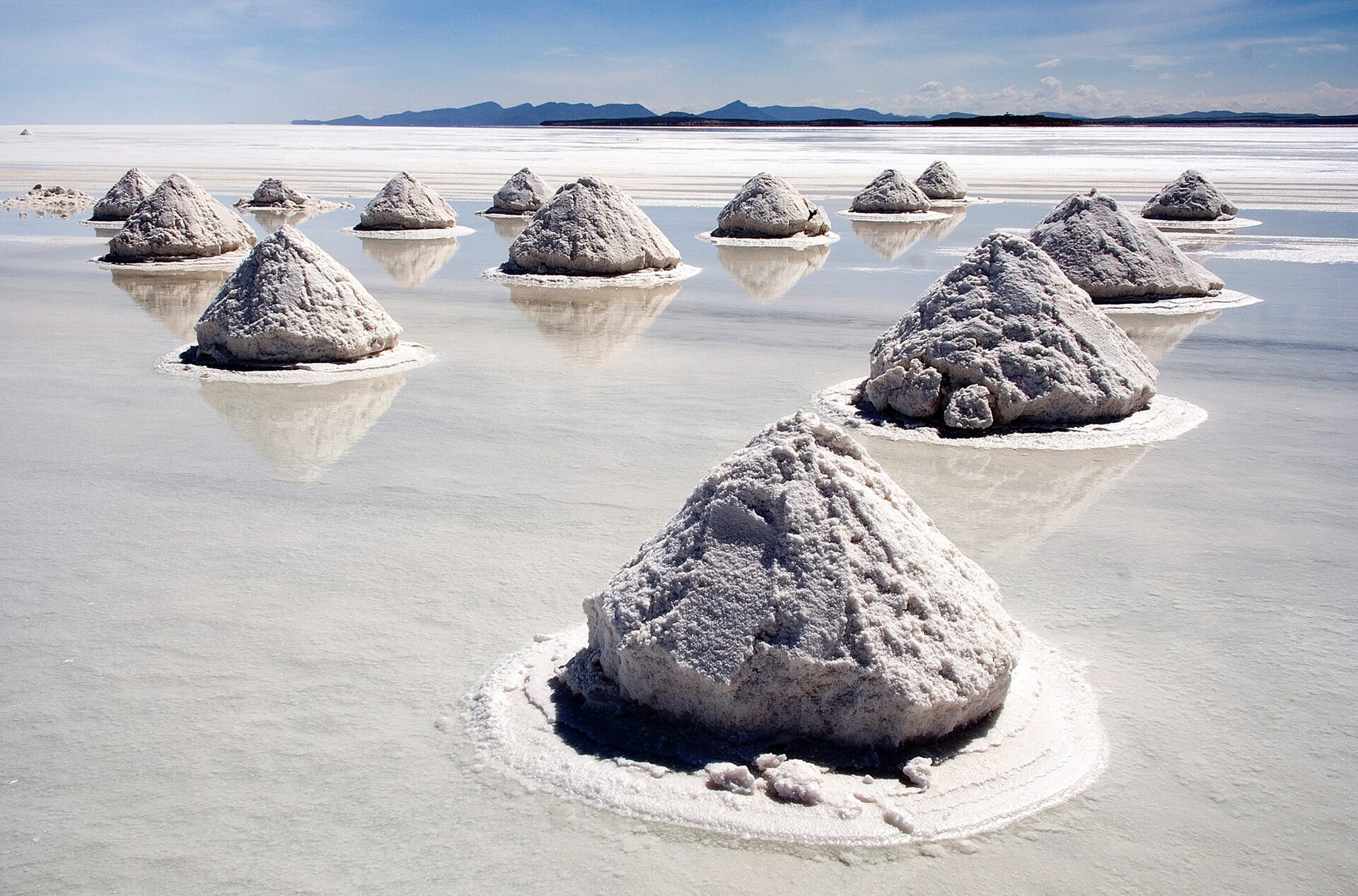
Bolivia’s 23 million tonnes lie mostly under the Salar de Uyuni, the world’s largest salt flat. Its brine holds much magnesium, which makes solar evaporation slow.
State company Yacimientos de Litio Bolivianos, or YLB, controls the resource and opened its first industrial carbonate plant in December 2023. Output remains small, as Bolivia’s lithium explained sets out.
In 2024 former president Luis Arce’s government signed two contracts for direct extraction plants worth over US$2 billion. Russia’s Uranium One, part of state nuclear firm Rosatom, won one; CBC, linked to Chinese battery maker CATL, won the other.
Direct lithium extraction, or DLE, pulls lithium from brine with filters instead of ponds, but it is unproven at scale on Uyuni. Both contracts need approval from the Plurinational Legislative Assembly, Bolivia’s Congress.
A Potosí court froze their handling on 27 May 2025 and lifted that order on 5 June. Rodrigo Paz of the centre-right Christian Democratic Party took office in November 2025.
In February 2026 YLB said no new industrialisation contract had been signed under Paz. It had only a negotiation agreement with EAU Lithium, an Australian firm.
Chilean President José Antonio Kast holds talks with Paz in Bolivia on 16 and 17 October. The visit’s 11-point agenda centres on development and border integration, Bolivia’s Correo del Sur reported.
Brazil, Peru and Mexico: The Newcomers
Brazil mined about 12,000 tonnes in 2025, mainly in Minas Gerais, home of Sigma Lithium’s Grota do Cirilo mine. The guide to Brazil’s natural resources sets lithium in context.
In September 2026 a federal judge suspended Sigma’s licences in a lawsuit by Quilombola communities, descendants of escaped enslaved Africans. Sigma halted output on 30 September, as the court report explains.
A federal appeals court then upheld its licences, and Sigma said on 6 October that operations had resumed. A separate expansion licence stays suspended, Minas Gerais outlets Diário do Comércio and O Fator reported.
Peru’s best-known project is Falchani in Puno, held by Macusani Yellowcake, a unit of Canada’s American Lithium. It remains at the study and permitting stage, as the Falchani report shows.
Mexico nationalised lithium in 2022 and created LitioMX, a state agency with sole mining rights. Its 2026 to 2030 programme appeared in the official gazette on 24 July, as the LitioMX report details.
Ganfeng took Mexico to ICSID, the World Bank’s arbitration centre, in May 2024 after nine Sonora clay concessions were cancelled. Neither Peru nor Mexico yet produces lithium, as the Peru and Mexico resource guides note.
The Companies
Ten companies and state bodies decide most of the region’s supply. Stakes and tickers come from the latest filings as of October 2026.
China, the United States, the EU and the Gulf
China is the main buyer of the region’s carbonate and the main refiner. It produced about 70% of the world’s lithium chemicals in 2024, the International Energy Agency (IEA) estimated.
Chinese money also sits inside the triangle through Tianqi, Ganfeng and the CATL-linked Bolivian bid. The United States, for its part, took 54% of its lithium imports from Chile and 43% from Argentina in 2021 to 2024.
In February 2026 Washington and Buenos Aires signed a trade and investment agreement covering critical minerals and faster RIGI approvals. Chile has had a free trade agreement with the United States since 2004.
A report on Chile–US copper and lithium links covers those ties, and a separate guide maps Chile’s other investors. The EU’s Critical Raw Materials Act aims to keep any single outside country below 65% of each strategic material.
India’s state-backed KABIL signed a deal in January 2024 for five lithium brine blocks in Catamarca. Saudi Arabia’s Manara Minerals bought 10% of Vale Base Metals for US$2.5 billion, but that Vale unit mines copper and nickel.
Prices and Outlook
The USGS puts the average US price for battery-grade carbonate at US$63,700 a tonne in 2022, falling to US$9,000 in 2025. Prices then recovered sharply in 2026.
Cochilco, Chile’s state copper and mining commission, said spot carbonate for Asia peaked at US$22,250 a tonne on 13 May. By 19 August it was US$19,525, still 106% above the 2025 average.
Rio Tinto’s 14 October filing put the Fastmarkets spot index at US$16,850 a tonne on 30 September, down 17% in the quarter. SQM’s Chilean sales in the second quarter imply about US$21,800 a tonne, based on its reported revenue and volumes.
The IEA’s Global Critical Minerals Outlook 2026 still sees a lithium supply shortfall through 2035, though less severe than before. It also found that lithium companies cut investment by around 40% in 2025.
Cochilco has raised its surplus forecasts for 2027 and 2028 as Australian mines restart and Zimbabwe resumes exports. Consensus Economics, a forecast survey firm, expects a 2027 average of US$21,363 a tonne.
Grid batteries now drive demand growth, and Rio Tinto said storage shipments rose 94% in the first eight months of 2026. The IEA’s Global EV Outlook 2026 counts more than 20 million electric cars sold in 2025.
Lithium iron phosphate cells avoid nickel and cobalt but still need lithium. Sodium-ion cells need none, which makes them the main substitution risk.
Policy Fights
Every country argues over who captures lithium income and who controls water. Argentina leaves royalties to provinces, Chile collects through Corfo lease payments and taxes, and Bolivia reserves the metal to the state.
In the Atacama, Indigenous Atacameño communities live beside the brine ponds. In January 2024 Atacameño dissidents blocked roads to SQM’s Atacama site for four days to protest the Codelco deal, SQM discloses.
In March 2024 Catamarca’s top court ordered a cumulative impact study of lithium mining on the Los Patos river. It barred new permits there until the study is finished, though existing operations such as Fénix kept producing.
In Brazil and Bolivia, Quilombola and Indigenous plaintiffs have used prior-consultation rights to challenge projects in court. Zimbabwe bans raw ore exports, while the triangle countries push local processing through contracts instead.
Political stability shapes all of these fights. The Rio Times Latin America Power Index scores each country’s state capacity and alignment on the Latin America Power Map.
What the Markets Say
Polymarket, a prediction market, has no lithium market, so political-risk bets serve as context only. On 16 October at 3:58 a.m. ET, it gave Milei a 2.5% chance of leaving office before 2027.
That market had drawn about US$167,000 in bets, while a Bolivian contract on Paz was too thin to use. Kalshi, an exchange regulated by the US Commodity Futures Trading Commission, priced Milei winning Argentina’s 2027 election at 56%, down from 59%.
Why we show this: prediction markets turn real-money bets into a live probability that moves within minutes of the news, which is why investors, campaigns and newsrooms in the United States now follow them closely. We show them next to polls and official results, never instead of them.
What It Means for US Readers
US investors can buy SQM, Albemarle and Lithium Argentina on the New York Stock Exchange and Sigma Lithium on Nasdaq. The Global X Lithium & Battery Tech ETF, ticker LIT, holds miners and battery makers rather than the metal.
SQM holders should watch the SEC inquiry, while Albemarle runs the only US commercial brine operation, in Nevada. Washington ended the federal tax credit for new electric vehicles acquired after 30 September 2025.
Lithium carbonate carries a 3.7% normal US tariff before any added duties, the USGS notes. The Argentina agreement could open financing from EXIM and the DFC, the US government’s export bank and development lender.
This guide anchors the Lithium in Latin America dossier, one of the Rio Times dossiers. Companion pillars cover copper in Latin America, Africa’s critical minerals and who backs whom in Africa.
What Is Not Known
It is not confirmed whether Ganfeng and Lithium Argentina closed the PPG venture by the end of September, as planned. Whether Bolivia’s Assembly will ratify, renegotiate or reject the 2024 contracts is also unknown.
No official October price reading was available for this guide, so the latest filed index figure dates from 30 September. How fast sodium-ion batteries take market share is uncertain.
The SEC inquiry into SQM has no public conclusion, and Rio Tinto’s Chilean deals still need approvals. The status of Catamarca’s 2024 permit freeze and of the US–Argentina agreement’s entry into force is unclear.
Frequently Asked Questions
Which country has the most lithium?
Argentina has the largest measured and indicated resources at 28 million tonnes, ahead of Bolivia’s 23 million, the USGS reported in 2026. Chile has the largest reserves, the part mineable today, at 9.2 million tonnes.
What is the lithium triangle?
It is the high Andean area where Chile, Argentina and Bolivia meet, rich in lithium brine under salt flats. The three hold about 43% of world resources, but only Chile and Argentina mine at scale.
Who owns Chile’s lithium?
The Chilean state owns the deposits, and Corfo leases Atacama properties to SQM’s venture and to Albemarle. Since December 2025 Codelco has held a majority in Nova Andino Litio, which operates there until 2060.
Why does Bolivia produce so little lithium?
Uyuni’s brine is rich in magnesium, which slows evaporation, and the state firm YLB has struggled to scale up. Its 2024 contracts with Russian and Chinese partners have not been ratified and have faced legal challenges.
Sources: USGS, Mineral Commodity Summaries 2026: Lithium; IEA, Global Critical Minerals Outlook 2026; IEA, Global EV Outlook 2026; IEA, Global Critical Minerals Outlook 2025; Cochilco, lithium price report, August 2026; SQM, Form 20-F for 2025; SQM, second-quarter 2026 results; SQM, completion of Codelco merger; Codelco, NovaAndino Litio; SEC, SQM FCPA settlement, 2017; Rio Tinto, second-quarter 2026 operations review; Rio Tinto, third-quarter 2026 operations review; Albemarle, Form 10-K for 2025; Lithium Argentina, second-quarter 2026 results; Lithium Argentina and Ganfeng, PPG joint venture; Lithium Argentina, material change report, September 2026; Sigma Lithium, 1 October 2026; Sigma Lithium, 6 October 2026; IDB Invest, POSCO Argentina financing; Ganfeng Lithium, Mexico arbitration announcement; IEA policy database, RIGI; IRS, clean vehicle credit; EU Critical Raw Materials Act; KABIL; Vale, Manara Minerals completion; Correo del Sur, Kast visit; Emol, Chile–Bolivia foreign ministers; Correo del Sur, YLB contracts; eju.tv, YLB and EAU Lithium; Los Tiempos, Kast inauguration; Swissinfo/EFE, Colcha K ruling; Diário do Comércio, Sigma ruling; O Fator, TRF-6 Sigma ruling; Minería y Energía, Catamarca ruling; iProfesional, Catamarca ruling; Reporte Minero, Eramet Centenario; Garrigues, LitioMX programme in the official gazette; Baker McKenzie, US–Argentina agreement; Beccar Varela, US–Argentina agreement terms; Polymarket and Kalshi public market data, read 15 October 2026; exchange rates from open.er-api.com (all accessed 15 October 2026).
In depth
Editorial responsibility: Matthias Camenzind, Editor-in-Chief · Editorial standards · Report an error
Expat Guide to Chile
What The Rio Times publishes for foreigners who live in or move to Chile.
Start here
- Santiago Rent for Foreigners in 2026, US$422 to US$886
- Best Places to Live in Chile for Expats 2026
- Chile’s Rent Unit Rose 0.6% Before Inflation Data
- How to Get Residency in Chile in 2026: Permits, Fees and the Kast-Era Rules
City guides
Coming up in Chile
- What to Do in Valparaíso in October 2026 16 Oct
- BTS Santiago Shows on 16 and 17 October, From US$107 17 Oct
- Aitana in Santiago, Chile: Cuarto Azul World Tour at Movistar Arena on October 19, 2026 19 Oct
- Los Fabulosos Cadillacs Play Santiago on 29 October 29 Oct
Understand Chile
Lithium in Latin America
- Bolivia’s Lithium Explained for 2026
- Chile Lithium 2026: Deals, Policy Shift and Race to Stay No. 2
- Argentina Natural Resources Explained 2026
- What Is Codelco? Chile’s State Copper Giant, Its Debt and the El Teniente Crisis