Argentina Lithium: China’s Ganfeng Locks In a Three-Project Salta Megadevelopment
ARGENTINA · ENERGY & MINING
Key Facts
- —What happened China’s Ganfeng signed definitive deals to fold three Salta lithium projects into one joint venture.
- —How big The platform targets 150,000 tonnes a year of lithium carbonate equivalent across three phases.
- —The money Ganfeng also invests US$180 million in partner Lithium Argentina through a convertible note.
- —The catch The target is an ambition, not a build date; the venture still needs incentive approval and financing.
- —Who owns what Ganfeng takes 67 percent and operates the venture; Lithium Argentina keeps 33 percent.
- —What comes next Closing is expected in September 2026, with an incentive-regime decision due by year-end.
China’s largest lithium producer has locked in control of a three-project megadevelopment in Argentina’s Salta province, pairing it with a US$180 million lifeline to its Swiss-Canadian partner.
What Ganfeng and Lithium Argentina signed
Ganfeng Lithium and Lithium Argentina signed definitive agreements this week. The deal creates a joint venture, known as PPG, over three neighbouring projects in Salta province.
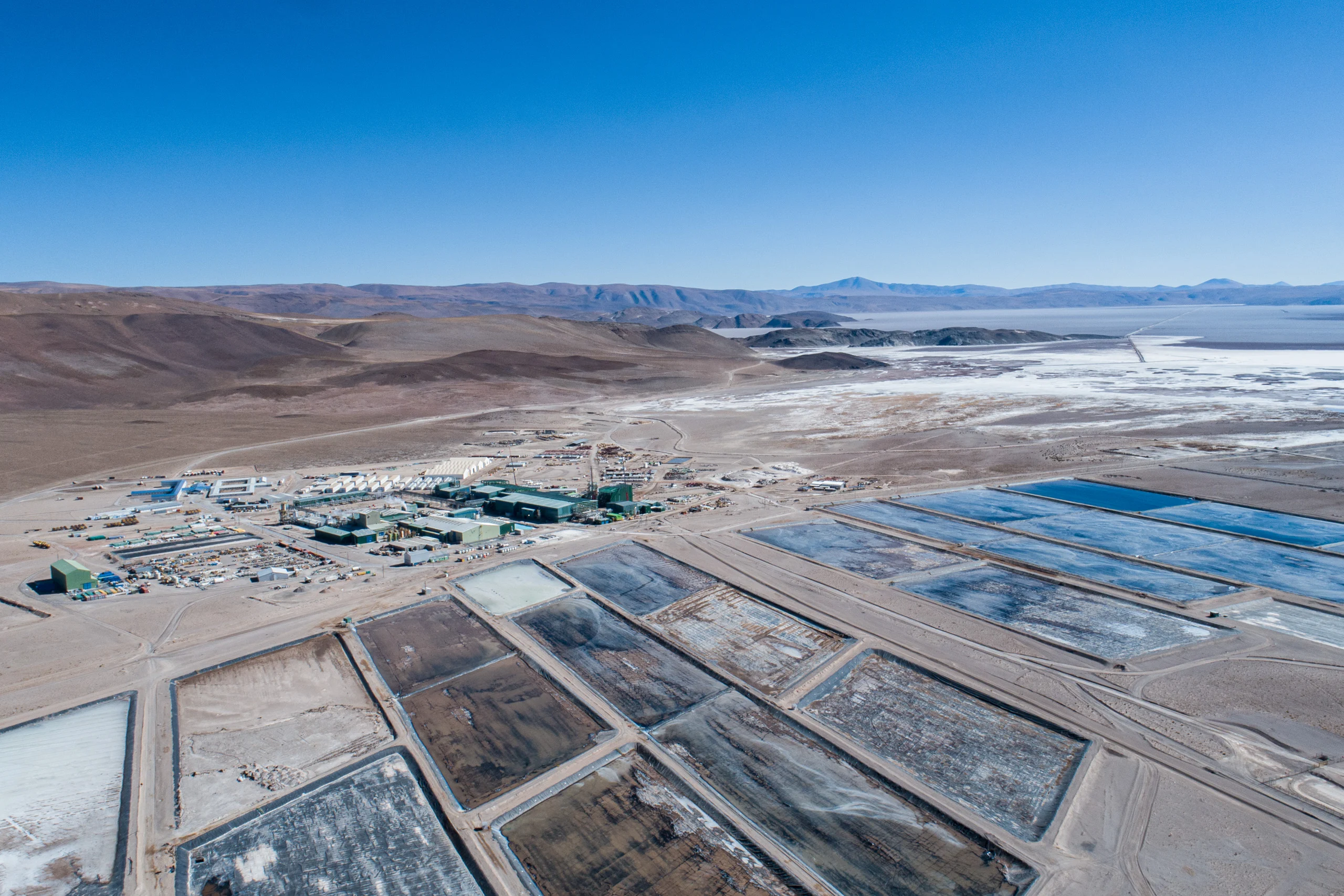
The three assets are Pozuelos-Pastos Grandes, Pastos Grandes and Sal de la Puna. Together they form one continuous brine basin on the Puna high plateau.
Ganfeng will hold 67 percent of the venture and act as operator. Lithium Argentina keeps 33 percent, and key decisions on budgets and financing need both companies’ approval.
The projects will sit under Millennial Lithium B.V., a Netherlands holding company. That entity will indirectly own the Argentine companies holding the three projects.
Closing is expected in September 2026. Approvals from the Toronto and New York stock exchanges are among the remaining conditions.
Lithium Argentina, though headquartered in Switzerland, is essentially a pure Argentina lithium play. Its only producing asset is the Jujuy brine operation.
The US$180 million lifeline
The second transaction is financial. Ganfeng agreed to invest US$180 million in Lithium Argentina through a six-year unsecured convertible note.
The note carries a 4 percent annual coupon. It converts into common shares at US$12.50 each, a premium of about 96 percent to the stock’s recent average price.
Lithium Argentina plans to use the money to repay US$259 million of convertible debt due in January 2027. It will also terminate an existing US$130 million debt facility at closing.
Ganfeng already owns about 9.6 percent of Lithium Argentina’s shares. Full conversion would lift that to roughly 16.1 percent on a fully diluted basis.
The partner ended June with US$100 million in cash. It has also received US$27 million in third-quarter distributions from the producing Cauchari-Olaroz mine.
What the PPG platform aims to build
The target is 150,000 tonnes a year of lithium carbonate equivalent, built in three phases of 50,000 tonnes. At that scale, PPG would rank among the largest lithium operations anywhere.
The partners have already spent heavily. Combined historical investment in the assets stands at about US$1.8 billion, covering acquisitions and development work.
The processing plan mixes direct lithium extraction with conventional solar evaporation. Ganfeng bought the anchor asset, Pozuelos-Pastos Grandes, for roughly US$960 million in 2022.
One milestone now matters above all. The venture applied to Argentina’s Large Investment Incentive Regime, known as RIGI, in the first quarter of 2026.
The companies expect a decision by the end of this year. RIGI status would lock in tax, customs and foreign-exchange terms for the life of the build.
A feasibility study underpins the RIGI filing. Its results will shape the final engineering and processing choices.
Offtake rights will follow the ownership split. Each partner markets its proportional slice of production.
A partnership built at Cauchari-Olaroz
This is not a new relationship. The two companies already run Cauchari-Olaroz in Jujuy province, Argentina’s largest lithium brine operation.
Ganfeng owns 46.7 percent of that mine, Lithium Argentina 44.8 percent. The Jujuy provincial mining company, JEMSE, holds the remaining 8.5 percent.
Cauchari-Olaroz produced about 34,100 tonnes in 2025, near its nominal capacity. Its Stage 2 expansion, approved under RIGI in May 2026, would lift capacity to about 85,000 tonnes a year.
Ganfeng’s chief executive, Wang Xiaoshen, framed the ambition in combined terms. He spoke of reaching more than 200,000 tonnes a year across the two ventures.
That mine’s success underpins the wider Argentina lithium expansion. It proved that large-scale brine production works in the country.
Why it matters for Argentina
Argentina lithium output reached 116,000 tonnes of carbonate equivalent in 2025. That was 56 percent growth in a single year, and the pipeline behind it is the deepest in South America.
The deal also shows where the capital comes from. Ganfeng is China’s biggest lithium producer and the third largest in the world.
Chinese firms now anchor much of the Argentina lithium map. Zijin Mining runs Tres Quebradas in Catamarca, and Ganfeng alone operates Mariana in Salta alongside its two partnerships.
For the government of Javier Milei the calculus is simpler. Argentina lithium exports are among the few sources of fresh foreign investment and hard currency the economy can count.
Critics counter that the model exports raw carbonate and imports value. China still dominates global refining and battery production.
Provinces compete fiercely for Argentina lithium projects. Salta’s governor has courted Ganfeng’s investment for years.
For foreign investors the Argentina lithium story now runs through RIGI. The regime promises decades of stable rules for projects above US$200 million.
What to watch from here
The first date is the September closing. Both the joint venture and the convertible note are expected to complete within weeks.
The second is the RIGI decision, expected by the end of 2026. A rejection would force the partners to reprice the entire development plan.
The third is project financing. The partners are pursuing debt funding and may admit a minority strategic investor.
Watch the lithium price as well. Argentina lithium economics work at current levels, but a deep price fall has killed phases before.
Communities near the salt flats will also want their say. Water use is the sensitive issue across the Puna.
Frequently Asked Questions
What did Ganfeng agree in Argentina?
Ganfeng signed definitive agreements to combine three Salta projects into the PPG joint venture, which it will control at 67 percent. It also agreed a US$180 million convertible-note investment in Lithium Argentina.
How much lithium could the PPG project produce?
The partners target 150,000 tonnes a year of lithium carbonate equivalent in three phases. That would rank among the largest lithium operations in the world.
When does the Ganfeng and Lithium Argentina deal close?
Both transactions are expected to close in September 2026, subject to approvals. The venture’s application to Argentina’s RIGI incentive regime is expected to be decided by the end of 2026.
Sources
Panorama Minero (27 August 2026); Lithium Argentina and Ganfeng Lithium definitive-agreement announcements (August 2026); BNamericas (13 August 2025); EconoJournal (14 August 2025); El Tribuno de Salta (July 2026); Argentina National Mining Secretariat statistics via Litio en Sudamérica (2026).
This article was produced by The Rio Times’ automated newsroom system. How we use AI · Report an error · Editorial responsibility: Matthias Camenzind, Editor-in-Chief