
KENYA · ECONOMY
Updated 1 time · Latest: 14 November 2026
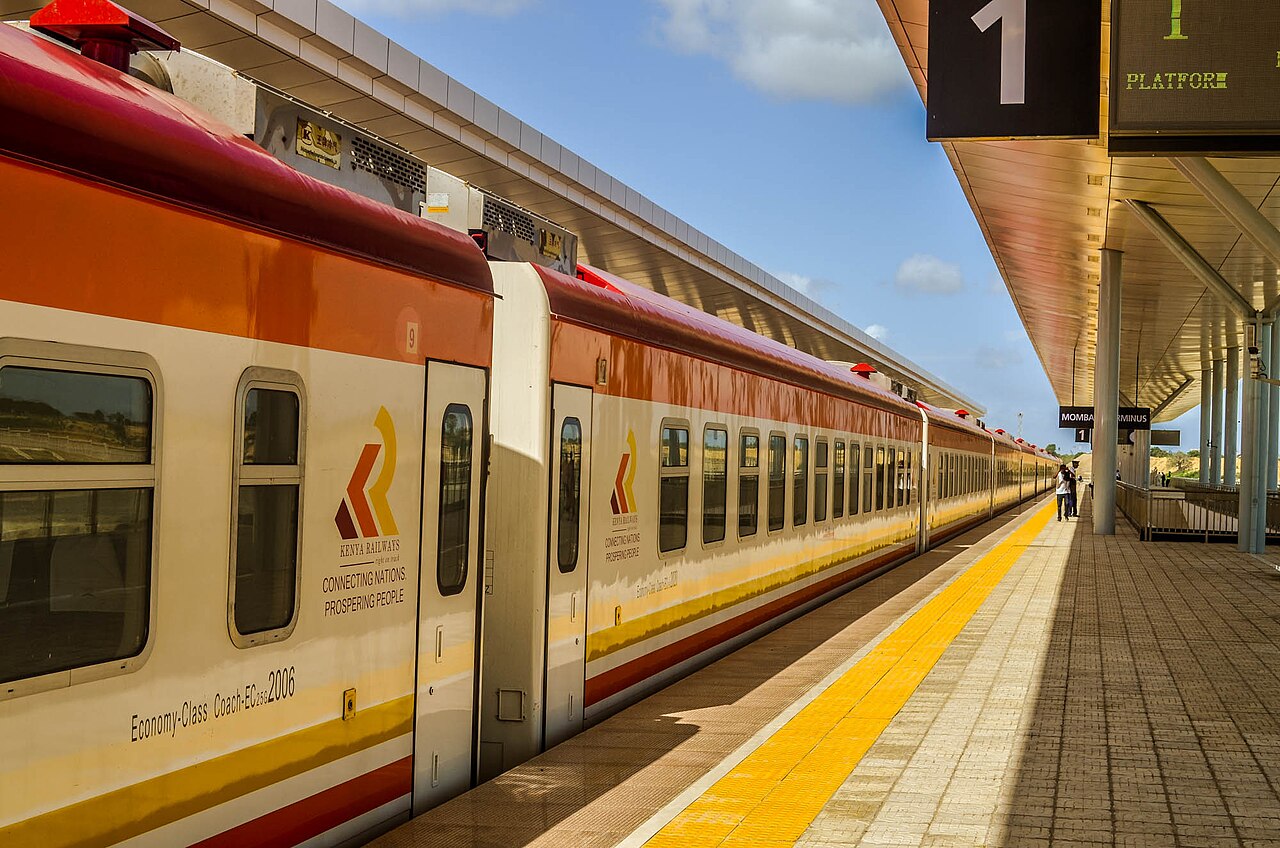
The World Bank, the global development lender, says Kenya could have saved up to US$900 million (about 117 billion Kenyan shillings) on its Mombasa-Nairobi Standard Gauge Railway, known as the SGR, by matching Tanzania’s cost per kilometre. The finding is in the Bank’s Kenya Economic Update, its regular report on the economy, released on Wednesday 4 November 2026.
A separate corruption-risk assessment by Transparency International Kenya, an anti-corruption group, published on 22 June 2026, rates the same railway the riskiest of three Kenyan projects it examined, using the Infrastructure Corruption Risk Assessment Tool (ICRAT). For US readers the findings bear on Kenya’s public debt, which the Bank put at 72.3% of gross domestic product (GDP) in August 2026.
Key Facts
- The railway The World Bank, the global development lender, says Kenya could have saved up to US$900 million on the SGR.
- The comparison Kenya’s diesel railway cost US$7.6 million per kilometre; Tanzania’s electric Dar es Salaam-Dodoma line, US$5.7 million.
- The cause The Bank estimates at least 30% of that gap is tied to governance problems.
- The debt Public debt was 72.3% of GDP in August 2026; interest takes about one-third of revenue.
- Not known Whether Kenya’s government will respond or reopen any contract.
Two independent reviews, one from a lender and one from an anti-corruption group, question what Kenya got for its railway. Both point to weaknesses in how the project was run.
What the World Bank Found
The Bank compared the cost per kilometre of three railway lines: Kenya’s diesel-powered Mombasa-Nairobi railway, Tanzania’s electric Dar es Salaam-Dodoma line and the electric Djibouti-Addis Ababa line linking Djibouti and Ethiopia. Kenya’s line cost US$7.6 million per kilometre, against US$5.7 million for Tanzania and US$5.3 million for Djibouti-Addis Ababa.
At Tanzania’s cost per kilometre, the Bank estimates Kenya could have saved up to US$900 million in initial construction costs. It estimates that at least 30% of that gap is linked to governance problems rather than terrain or technical differences.
Why the Bank Points to Governance
The Bank points to weaknesses in procurement and land acquisition as drivers of the higher cost. It also notes that Kenya’s line is the only one of the three that is not electrified.
The US$900 million is a comparison with other lines, not a court finding of fraud. The Bank itself frames it as what Kenya could have saved at Tanzania’s cost per kilometre.
In Plain English
SGR: the Standard Gauge Railway, a railway line that runs from Mombasa port to Nairobi.
Kenya Economic Update: the World Bank’s regular report on Kenya’s economy; the 34th edition came out on 4 November 2026.
Transparency International Kenya: the Kenyan branch of an anti-corruption group; it scored projects on a scale from 1 (low corruption risk) to 5 (high).
The Fiscal Picture Behind the Railway
The World Bank said on 4 November that Kenya’s deficit last fiscal year was 6.8% of GDP, against a target of 4.7%. It put public debt at 72.3% of GDP in August 2026 and said interest payments absorb about one-third of government revenue.
The Bank estimates that corruption and collusion account for up to 2 percentage points of GDP in annual fiscal deficits. “Better governance is an economic imperative,” said Qimiao Fan, the Bank’s Division Director for Kenya, Rwanda, Somalia and Uganda.
A Second Warning From Transparency International Kenya
Transparency International Kenya, the Kenyan branch of an anti-corruption group, published its assessment on 22 June 2026. It scored the SGR 4.49 out of 5, the highest risk of the three projects, against 3.56 for the affordable housing project in Vihiga and 3.24 for the civil servants’ housing scheme in Kiambu.
For the railway, the group cited opaque financing and procurement, weak oversight and too little public participation. “Without urgent reforms, we risk losing billions of public resources, while failing to deliver meaningful benefits to citizens,” said Sheila Masinde, its executive director.
The Cargo Link
The railway starts at Mombasa, Kenya’s main port. The World Bank’s Container Port Performance Index, compiled with the data firm S&P Global Market Intelligence to measure how quickly ships are turned around in port, ranked Mombasa 375th of 403 ports for 2024.
What It Means for You
If you hold Kenyan government bonds through emerging-market funds, the Bank’s figures show a debt ratio of 72.3% of GDP and interest taking a third of revenue. The railway comparison is one part of that picture.
Travellers need not change plans, because the reports concern construction costs and governance, not train service. Our guide to the Nairobi to Mombasa train explains how US visitors book seats.
Our report on Kenya’s debt to the World Bank shows how much the country owes the lender. Our report on the Bank’s call for Kenya to retire costly debt covers the repayment side.
What Is Not Known
It is not known whether Kenya’s National Treasury, the finance ministry, will respond or reopen any contract. The split of the gap between terrain, land and contracting costs is also not known.
What to Watch Next
A response from the National Treasury, the finance ministry, would be the next signal. The November report is the 34th edition of the Bank’s Kenya Economic Update.
More: Kenya news in English, every day from The Rio Times.
Frequently Asked Questions
How Much Did Kenya Overpay for the SGR?
The World Bank, the global development lender, says Kenya could have saved up to US$900 million, about 117 billion shillings, by matching Tanzania’s cost per kilometre. It estimates that at least 30% of that gap comes from governance problems.
How Risky Is the SGR on Corruption?
Transparency International Kenya scored it 4.49 out of 5 in June 2026, the highest of three projects it assessed. The scale runs from 1 (low risk) to 5 (high risk).
How High Is Kenya’s Public Debt?
The World Bank put it at 72.3% of GDP in August 2026. Interest payments take about one-third of government revenue.
Why Does This Matter to US Investors?
Funds that hold Kenyan government bonds are exposed to the debt ratio and interest burden the Bank describes. The railway finding is one part of that picture.
Sources: World Bank, Kenya Economic Update press release, 4 November 2026; Transparency International Kenya, Corruption Risk Assessment of Infrastructure Projects in Kenya, 22 June 2026; World Bank and S&P Global Market Intelligence, Container Port Performance Index 2020-2024.
This article was produced by The Rio Times’ automated AI newsroom. Editorial responsibility: Matthias Camenzind, Publisher and Editor-in-Chief. The Rio Times also runs Ask Rio Times, which answers from 100,000+ of our own articles, the daily Latin America Power Map, and prediction-market odds on elections and markets.. How we use AI · Report an error
Part of our ongoing coverage
Africa: The New Scramble — the great-power contest over the continent.
LatAm Markets: Live Signals → — real-time movers, turnover leaders and FX across Latin America.