
KENYA · CULTURE
Key Facts
- —The country About 47.6 million people (2019 census); eight UNESCO World Heritage sites.
- —Who Ngũgĩ wa Thiong’o, Wangari Maathai, Lupita Nyong’o, Eliud Kipchoge, Faith Kipyegon.
- —What happened Kenya’s 10 October holiday became Mazingira Day, an environment day, in 2024.
- —Dates Holidays 10 and 20 October; Kenya co-hosts AFCON from 19 June 2027.
- —For US visitors Level 2 State Department advisory as of July 2026; eTA required.
A Nobel laureate, an Oscar winner, Olympic champions and painted minibuses: the people and places that define Kenya abroad.
Kenya culture reaches far beyond the safari image, from a Nobel Peace Prize laureate to an Oscar winner and Olympic champions. This guide names the musicians, writers, film-makers, artists, athletes, media houses and festivals that matter as of October 2026.
For a US reader, the links are closer than they look. Several of these figures built their careers in American universities, museums and film studios.
How Kenya Culture Is Built: Languages, Peoples and Heritage
Kenya counted 47,564,296 people in its 2019 census, according to the Kenya National Bureau of Statistics (KNBS), the official statistics office. That is roughly the population of Spain.
No single group defines the national culture. Dozens of communities, from the Kikuyu and Luo to the Maasai and coastal Swahili, keep distinct languages and rites.
Most urban Kenyans move between Kiswahili, English and a home language. In Nairobi, young people add Sheng, a fast-changing street slang that mixes Kiswahili and English.
UNESCO, the UN cultural agency, lists eight World Heritage sites in Kenya as of October 2026, five of them cultural. Gedi, a historic coastal town and archaeological site, was the latest addition in 2024.
The other four are Lamu Old Town (2001), the Mijikenda Kaya Forests (2008), Fort Jesus in Mombasa (2011) and Thimlich Ohinga (2018). The three natural sites include Mount Kenya and the Lake Turkana National Parks.
UNESCO’s intangible heritage register adds four Kenyan traditions in need of urgent safeguarding. They include the Isukuti dance of western Kenya and three Maasai rites of passage for young men.
Culture also sits on the calendar. Kenya’s Public Holidays Act, last amended 26 April 2024, sets Mazingira Day on 10 October and Mashujaa (Heroes’) Day on 20 October.
The 10 October date was gazetted as Utamaduni (Culture) Day in 2020, the Nation newspaper reports. The 2024 amendment renamed it Mazingira, the Kiswahili word for environment.
In 2026, Mazingira Day falls on Saturday 10 October and Mashujaa Day on Tuesday 20 October. Jamhuri Day, which marks independence in 1963, follows on 12 December.

Music From Benga to Gengetone
Kenyan popular music grew out of the guitar. Benga, a fast, guitar-led dance music rooted in Luo communities around Lake Victoria, became a defining sound after independence.
On the coast, taarab, a sung poetry tradition with Arab and Indian influences, still accompanies weddings in Mombasa and Lamu. Upcountry, church choirs and gospel singers fill radio playlists.
Modern Afro-pop is carried by names such as Sauti Sol, a four-man Nairobi band, and its singer Bien, who also records solo. Their harmony-led songs mix Kiswahili, English and Sheng.
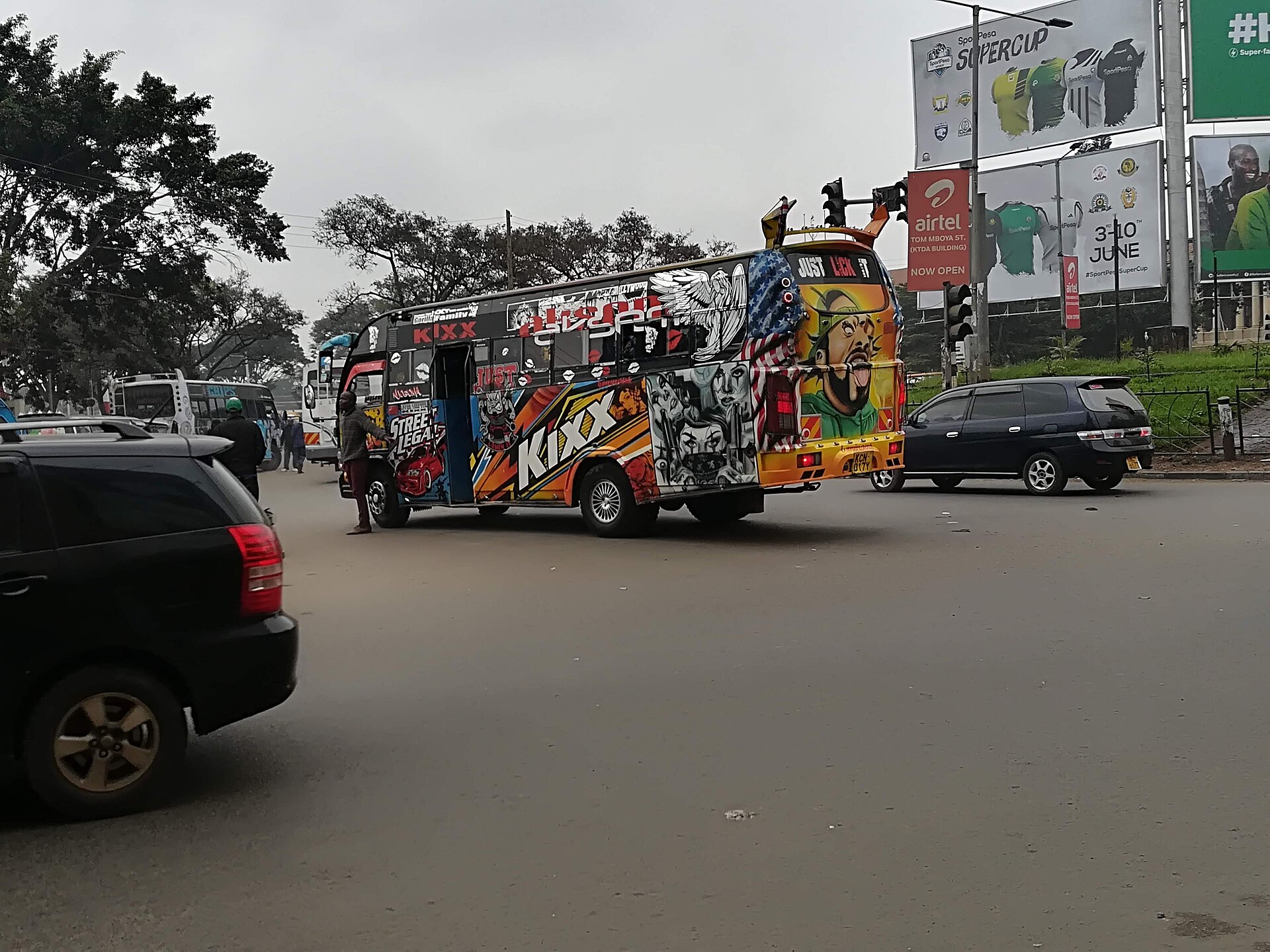
In the late 2010s, gengetone, a rowdy rap style sung in Sheng, spread through Nairobi’s matatus, the privately run minibuses. Its loose, chant-like hooks were built for matatu sound systems and dance floors.
The capital’s hip-hop scene also trades on nostalgia, with reunions such as the Camp Mulla Funky Town night in Nairobi. Live music clusters in Nairobi venues, coastal resorts and year-end festivals.
Writers Who Shaped How Africa Is Read
Ngũgĩ wa Thiong’o is the central name in Kenyan letters. His novels include Weep Not, Child, Petals of Blood, Devil on the Cross and Wizard of the Crow.
He was Distinguished Professor of English and Comparative Literature at the University of California, Irvine, which he joined in 2002. UC Irvine announced his death, aged 87, on 29 May 2025.
Ngũgĩ became known for arguing that African writers should use African languages, and he wrote fiction in Gikuyu. That debate still shapes Kenyan publishing, schools and literary festivals.
Wangari Maathai, the environmentalist and memoirist, won the 2004 Nobel Peace Prize, the first African woman to receive it. The Nobel committee cited her contribution to sustainable development, democracy and peace.
Maathai was born in Nyeri in 1940 and died in Nairobi in 2011, according to the Nobel Foundation. The tree planting promoted on Mazingira Day echoes her legacy.
A younger generation includes the late essayist Binyavanga Wainaina and the novelist Yvonne Adhiambo Owuor. Their satire and lyrical prose pushed back against outsiders’ clichés about Africa.
Film, Television and the Fight Over Rafiki
The Kenyan actor Lupita Nyong’o won the Academy Award for Best Supporting Actress for 12 Years a Slave. The award came at the 86th Academy Awards in 2014.
At home, the director Wanuri Kahiu made Rafiki, a love story between two young women in Nairobi. The Cannes Film Festival selected it for its Un Certain Regard section in 2018.
The Kenya Film Classification Board, the state film regulator, banned it for promoting lesbianism, the Nation newspaper reported. High Court judge Wilfrida Okwany lifted the ban for seven days in September 2018.
The short window let adults see the film and kept its Oscar hopes alive. The case still frames a split between a conservative regulator and a younger, more liberal creative class.
Television drama, stand-up comedy and Kiswahili-language soaps dominate local screens. Global streaming platforms now commission Kenyan series, giving Nairobi actors audiences far beyond East Africa.
Visual Artists and the Street as Gallery
Wangechi Mutu, born in Nairobi in 1972, was the first artist chosen for the Metropolitan Museum of Art’s facade commission. The Met says her works were the first art ever shown in the facade’s niches.
Her four bronze figures, The NewOnes, will free Us, filled the Fifth Avenue niches from 9 September 2019 to 8 June 2020. The commission put contemporary African sculpture on the front of a major American museum.
Much of Nairobi’s public art is on the move. Matatu crews commission airbrushed murals of musicians, footballers and film heroes, turning rush-hour traffic into an open-air gallery.
Galleries and artist collectives in the capital show contemporary painting, sculpture and photography. The Nairobi National Museum, run by the state National Museums of Kenya, holds the national collections.
Sport Icons and the Running Heartland
Distance running is where Kenya’s name travels furthest abroad. Eliud Kipchoge is a two-time Olympic champion, according to World Athletics, the sport’s governing body.
Kipchoge’s marathon personal best of 2:01:09 dates from 25 September 2022. He also lists a world title and silver medals at both the Olympics and the World Championships.
Faith Kipyegon won her third straight Olympic 1500m title in Paris on Saturday 10 August 2024, in an Olympic record of 3:51.29. World Athletics called her the first woman to win three Olympic golds in a single track discipline.
Many champions train in the Rift Valley highlands, around towns such as Iten. Schools there, such as St Patrick’s High School, have turned running into a career path.
Football is the mass spectator sport. Kenya will co-host the Africa Cup of Nations (AFCON), the continental championship, with Tanzania and Uganda.
The Confederation of African Football (CAF) says it runs from 19 June to 17 July 2027, both Saturdays. At home, the annual Nairobi Marathon turns the capital’s Southern Bypass into a racecourse.

Media Houses, Comedy and Festivals
Kenya’s cultural conversation runs through a few large media houses. Nation Media Group publishes the Daily Nation and the Kiswahili daily Taifa Leo; Royal Media Services owns Citizen TV.
The Standard Group and the state-owned Kenya Broadcasting Corporation complete the main players. Their comedy shows, talk shows and radio call-ins shape slang, music tastes and political satire.
Online creators now compete with them for attention. Many young Kenyans first hear new songs and jokes on short-video apps rather than on broadcast radio.
On the coast, the Lamu Cultural Festival brings ngoma drumming and dancing to the island’s seafront. Around New Year, the Beneath the Baobabs festival in Kilifi mixes music and art.
National holidays add their own rituals. Mashujaa Day on 20 October brings official ceremonies honouring the heroes of the independence struggle.
What It Means for US Readers
Many of these figures are already part of American cultural life. Ngũgĩ taught in California for over two decades, Mutu’s sculptures stood on Fifth Avenue, and Nyong’o works in Hollywood.
Travellers should check the rules first. Kenya requires visitors to apply online for an Electronic Travel Authorisation (eTA) before departure.
The US State Department rates Kenya Level 2, “exercise increased caution”, in an advisory issued on 28 July 2026. It lists Lamu County, home to Lamu Old Town, as Level 4, “do not travel”.
The same advisory also lists Nairobi’s Eastleigh and Kibera neighbourhoods as Level 4. Coastal festivals and Nairobi nightlife therefore need planning, local advice and registered transport.
Football fans eyeing AFCON 2027 should watch for ticket and venue details from the three hosts. For the wider picture, see the guides to who holds power in Kenya, who runs Kenya’s economy and Kenya’s geopolitics.
More coverage is collected on the Kenya page of The Rio Times.
What Is Not Known
Population figures here come from the 2019 census. Newer official counts by community or language were not confirmed for this guide.
Official dates for the 2026 Lamu Cultural Festival and other year-end festivals were not confirmed. AFCON 2027 venues and ticket prices in Kenya were also not confirmed as of October 2026.
No official body publishes music sales or streaming rankings for Kenyan artists, so no ranking is given. The current legal status of Rafiki in Kenya after the 2018 window was not confirmed.
Frequently Asked Questions
What is Kenya culture known for?
Kenya is known for distance runners, coastal Swahili heritage, Maasai traditions and writers such as Ngũgĩ wa Thiong’o. Its modern scene adds Afro-pop, Sheng street rap and painted matatu minibuses.
What languages do people speak in Kenya?
Most Kenyans use Kiswahili and English alongside a home language. In Nairobi, young people also speak Sheng, a street slang mixing Kiswahili and English.
Who was Ngũgĩ wa Thiong’o?
He was a leading Kenyan novelist and a Distinguished Professor at the University of California, Irvine. UC Irvine announced his death, aged 87, on 29 May 2025.
Is Mazingira Day a public holiday in Kenya?
Yes. Under the Public Holidays Act, 10 October is Mazingira Day, an environment holiday, and in 2026 it falls on a Saturday.
Is it safe to visit Kenya’s cultural sites?
The US State Department rates Kenya Level 2, “exercise increased caution”, as of July 2026. It advises against all travel to Lamu County and to Nairobi’s Eastleigh and Kibera neighbourhoods.
When does Kenya host the Africa Cup of Nations?
Kenya co-hosts AFCON 2027 with Tanzania and Uganda. CAF says it runs from 19 June to 17 July 2027.
Sources: Kenya National Bureau of Statistics, 2019 census; UNESCO World Heritage Centre, Kenya; UNESCO Intangible Cultural Heritage, Kenya; Kenya Law, Public Holidays Act; Nobel Prize, Wangari Maathai; UC Irvine, Office of the Chancellor; Academy of Motion Picture Arts and Sciences; Festival de Cannes, Rafiki; The Metropolitan Museum of Art; World Athletics, Eliud Kipchoge; World Athletics, Paris 2024 women’s 1500m; CAF, AFCON Pamoja 2027 dates; US State Department, Kenya advisory; Kenya eTA portal; Nation, Rafiki ruling; Nation, 10 October holidays (all accessed 9 October 2026).
This article was produced by The Rio Times’ automated newsroom system. How we use AI · Report an error · Editorial responsibility: Matthias Camenzind, Editor-in-Chief
Part of our ongoing coverage
Africa: The New Scramble — the great-power contest over the continent.