Japan’s Inflation Surge Signals End of Deflation Era, Raises Stakes for Policy and Currency
Japan’s Ministry of Internal Affairs reported that consumer prices excluding fresh food rose 3.2% in March 2025 compared to the previous year. This marks the third straight year that core inflation has stayed above the Bank of Japan’s 2% target.
The headline inflation rate for March stood at 3.6%, slightly down from February’s 3.7%. These figures reflect a dramatic change for an economy that spent decades battling near-zero inflation.
Rice prices soared 92.1% year-on-year, the sharpest rise since records began in 1971. Poor harvests, record tourist demand, and government stockpile releases contributed to this spike.
Other food items also saw significant increases, with cabbage up 111.6%. Prices for household goods, clothing, healthcare, and transport also rose, while energy prices eased slightly due to subsidies.
The Ministry noted that food prices overall rose 7.4% in March, with non-fresh food up 6.2%. Lodging costs climbed 6.6%. This inflation surge follows more than 25 years of price stagnation and even deflation in Japan.
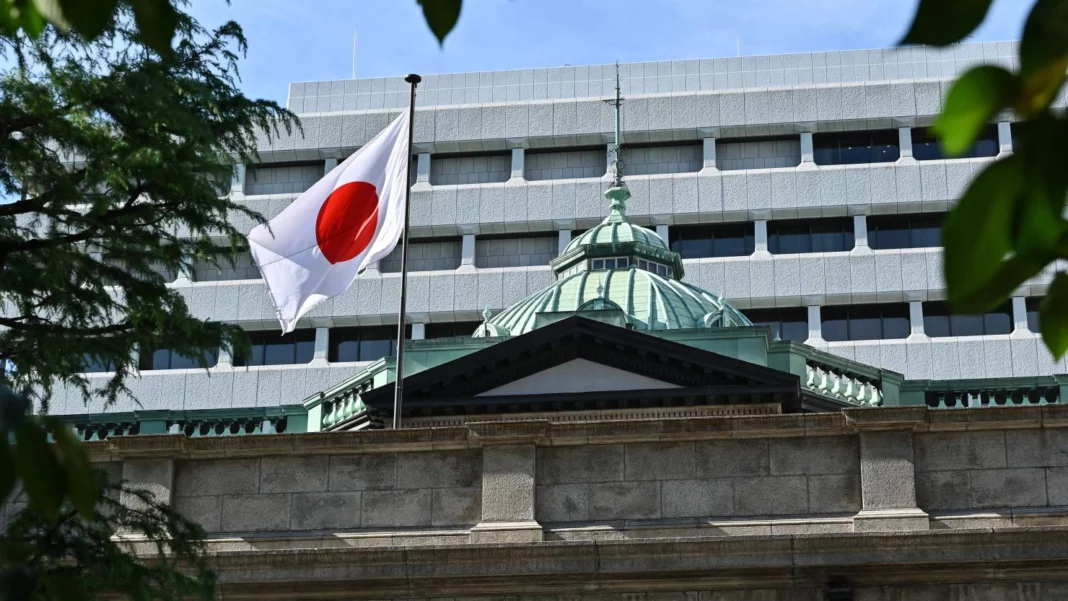
For much of the 1990s and 2000s, businesses and consumers operated under the assumption that prices would not rise. This mindset shaped investment, wage negotiations, and consumer spending.
The current environment, where companies pass higher costs onto consumers and wages are rising, marks a clear break from the past. The Bank of Japan responded to persistent inflation by raising its policy rate to 0.5% in January 2025, the highest in 17 years.
The central bank now faces a delicate balancing act. On one hand, rising prices and wages support further tightening. On the other, new U.S. tariffs on Japanese exports threaten to slow growth.
The BOJ has paused rate hikes for now, citing trade uncertainty and the need to assess the impact on Japan’s export-driven economy. Analysts expect the BOJ to proceed cautiously.
Some project only one additional rate hike before March 2027, with the next move likely in January 2026. The central bank’s ability to raise rates further depends on wage growth and the evolving trade landscape.
A Shift in Japan’s Economic Landscape
The Japanese government and business leaders have expressed concern that U.S. tariffs on autos, steel, and aluminum could suppress GDP growth and dampen wage gains.
The inflation story has also affected the yen. Historically, Japan’s low inflation and low rates made the yen a safe-haven currency, attractive during global uncertainty. Now, as rates rise and inflation persists, the yen’s role may shift.
The currency has shown volatility, partly due to interest rate differentials and changes in global capital flows. The BOJ has signaled it may tolerate some yen weakness if it helps anchor inflation expectations.
For Japanese households, higher prices have forced changes in spending and saving behavior. Consumers now see price increases as normal, prompting a shift from cash savings to investments in stocks and funds.
Businesses, meanwhile, have grown more willing to raise prices and wages, breaking with decades of restraint. Japan’s inflation surge signals a historic turning point.
The country is moving away from the deflationary mindset that defined its economy for a generation. The outcome will shape not only Japan’s monetary policy and currency status, but also its role in global trade and finance.
The story behind the numbers is one of structural change, uncertainty, and a cautious search for a new economic balance. All figures and claims in this article are based strictly on official data and verified sources.
This article was produced by The Rio Times’ automated newsroom system. How we use AI · Report an error · Editorial responsibility: Matthias Camenzind, Editor-in-Chief