INDONESIA · ANALYSIS
Key Facts
- —What is happening Haze from forest and peatland fires in Sumatra and Kalimantan has returned, and Indonesian police have named nine companies and 223 individuals as suspects in fire cases (as of 13 October 2026).
- —Why it matters Smoke crosses borders into Singapore and Malaysia, hits health and puts pressure on palm oil and paper supply chains that reach US shelves.
- —The numbers Minister Dudung said on 19 October that 97 companies were identified in fire cases; police had named 9 companies as formal suspects by 13 October. The Health Ministry counted 283,270 acute respiratory infections in seven provinces, 63,711 of them in children under five.
- —Who is who Dudung Abdurachman, Coordinating Minister for Political and Security Affairs, gave the 97 figure. Senior Commissioner Pipit Subiyanto, who heads a unit in the special-crimes directorate of the national police criminal investigation agency (Bareskrim), gave the suspect counts.
- —What to watch Whether the nine corporate cases reach court, and whether Singapore widens its legal notices beyond the seven Indonesian companies it targeted this month.
- —What it means for you US companies and shoppers who buy packaged food, cosmetics and detergents can be exposed to palm oil from fire-linked land, so supplier traceability matters.
Indonesia’s annual forest fire haze is back. Police say they have identified 97 companies in fire cases, but only nine are formal suspects, and the gap matters for anyone who buys palm oil.
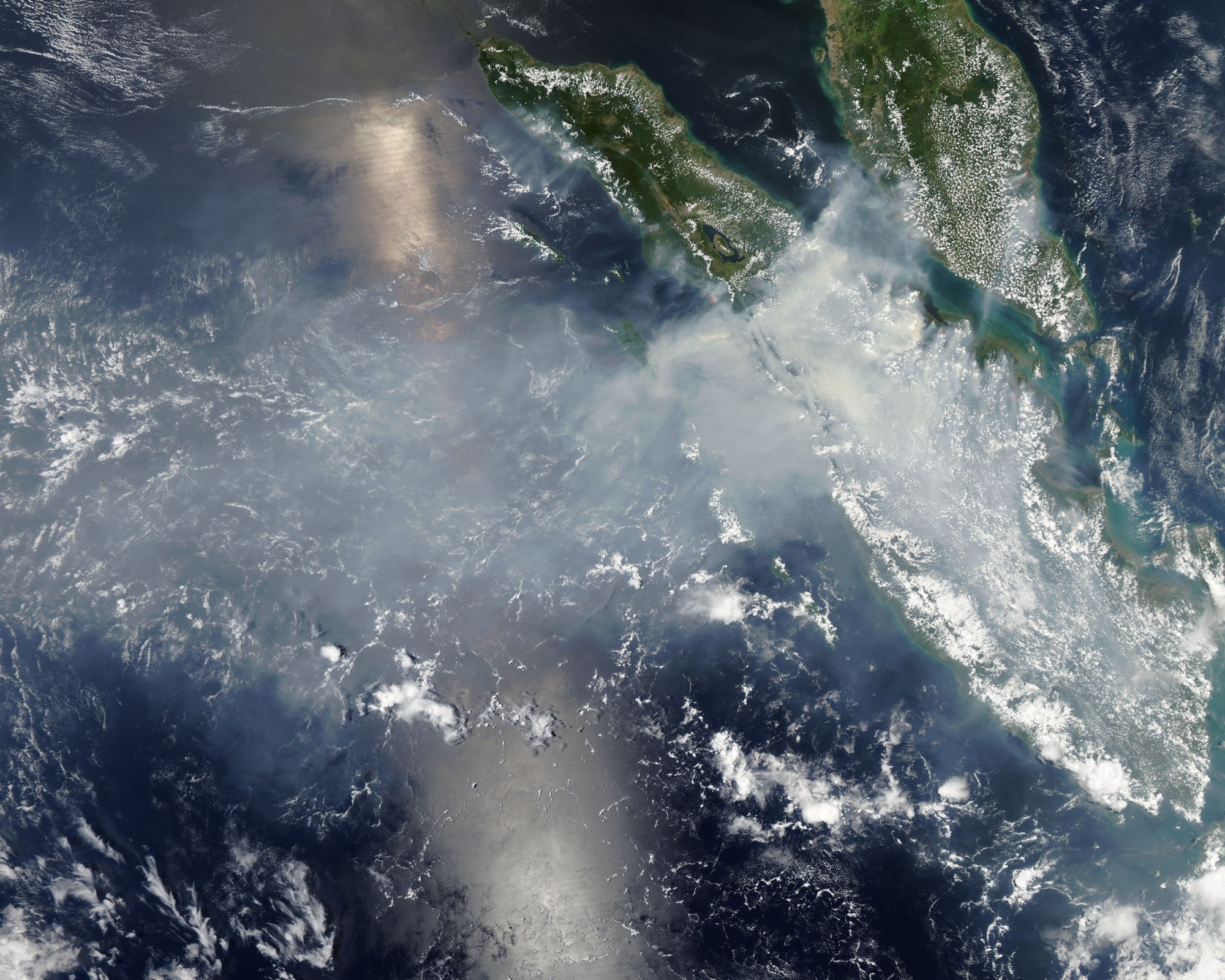
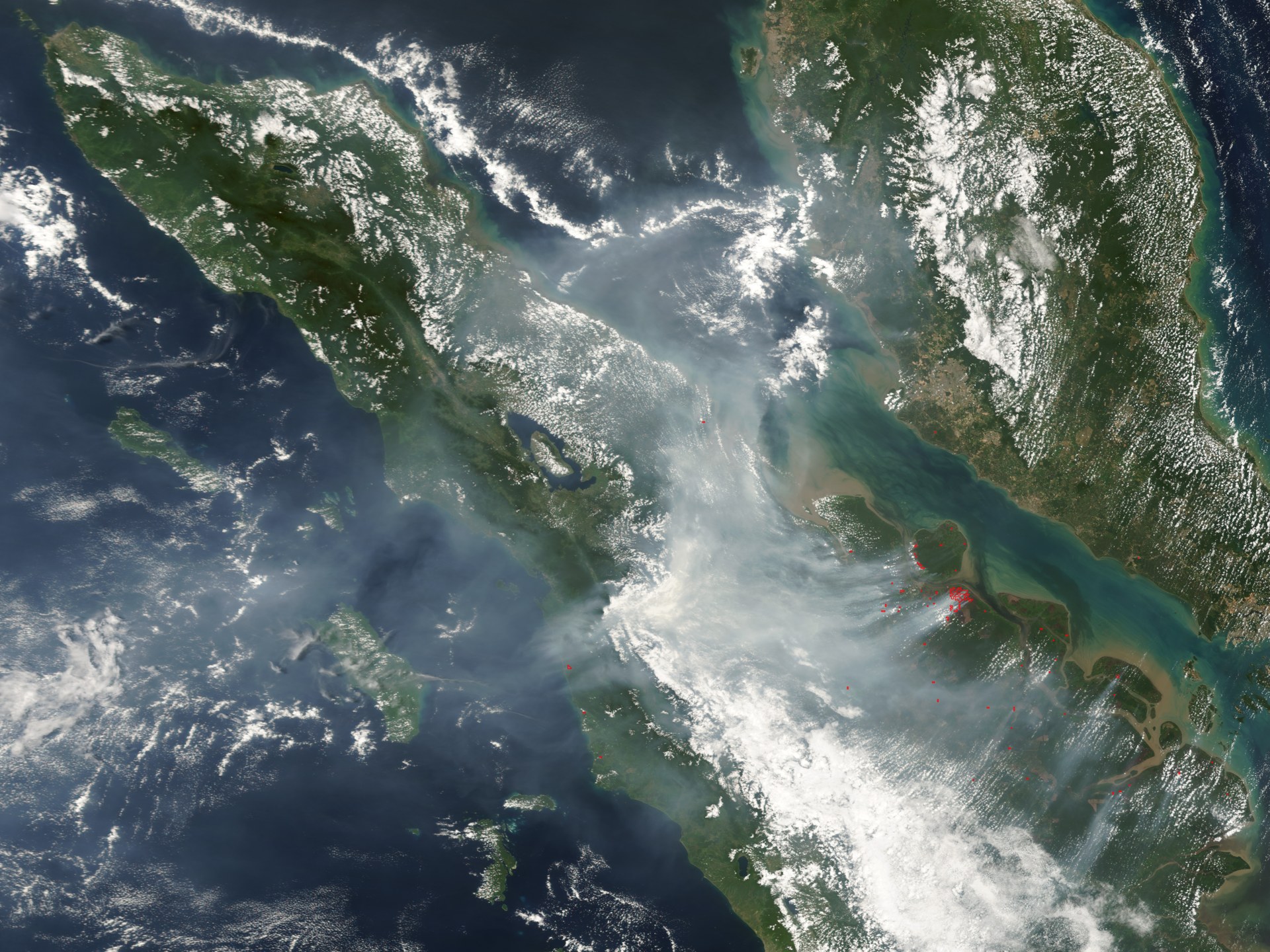
Smoke from burning forest and peatland in Sumatra and Kalimantan is again drifting across Southeast Asia. On 19 October, Coordinating Minister for Political and Security Affairs Dudung Abdurachman said police had identified 97 companies in fire cases across the two islands.
That number is not 97 suspects. As of 13 October, police had named nine companies and 223 individuals as formal suspects, and Dudung described the 97 as companies identified, so we use nine as the count of corporate suspects.
Why the Fires Return Every Dry Season
Burning is the cheapest way to clear land, especially for smallholders and illegal operators far from roads and enforcement. The fires are not one event but a recurring land-use problem.
Peat makes it worse. When forest is cleared and peat is drained for plantations, the soil dries and can smoulder underground for weeks, producing dense smoke that is hard to put out.
Weather decides how bad the haze gets. In dry months with weak winds, smoke stays near towns, and winds can carry it toward Singapore and Malaysia.
The Numbers Behind the 2026 Haze
Police counts come with a time stamp. As of 13 October, Bareskrim reported nine corporate suspects and 223 individual suspects from 273 police reports handled by 12 regional police offices.
Of the nine companies, seven are in West Kalimantan, one in Central Kalimantan and one in South Kalimantan.
The Ministry of Forestry reports a different set of numbers. It has sanctioned 32 companies administratively, with permit suspensions or orders to restore forest, and reports 125 legal subjects in criminal proceedings.
The ministry says its figures and the police figures cover different contexts and cannot simply be equated.
Satellite hotspot counts are not the same as confirmed fires. Detections can include farm burns or repeat sightings of one fire, so we do not use them as proof of scale.
Who Is Being Held Responsible
Administrative and criminal paths should not be confused. A permit suspension reflects a regulatory breach and does not prove that a company lit a fire, and a fire inside a concession does not by itself show that its holder started it.
Police say penalties in forest-fire cases can reach 10 to 12 years in prison, and the government has urged deeper investigations into who is behind the burning. So far the public record shows suspects, not convictions.
The Singapore and Malaysia Dimension
Singapore has used its Transboundary Haze Pollution Act against Indonesian firms. Its National Environment Agency issued preventive measure notices to seven companies: PT Bumi Andalas Permai, PT Bumi Mekar Hijau, PT Paramitra Mulia Langgeng, PT Sumatera Alam Anugerah, PT SBA Wood Industries, PT Hutan Lestari Raya and PT Bangkanesia.
The notices require the companies to put firefighters on land they hold, stop burning and give the agency plans to prevent new fires.
Malaysia is exposed through geography. Haze can close schools, disrupt flights and hurt outdoor work even when the fires are in Indonesia.
How Palm Oil Fits Into the Story
Indonesia is the world’s largest palm oil producer. Palm oil is not the same as illegal burning, and many producers run fire-prevention systems, but the link is economic: clearing land by fire is cheap, and plantations raise land values.
Supply chains mix fruit from large estates, smallholders and traders, which makes it hard to trace a batch back to one plot. Pulpwood and timber concessions also carry fire risk.
What This Means for US Companies and Consumers
Palm oil and its derivatives appear in packaged food, cosmetics, detergents and industrial chemicals. A US brand does not have to import palm oil directly to be exposed.
The exposure comes in three forms. Supply can be disrupted when fires and smoke hit plantations, mills and ports, brands can face scrutiny over suppliers linked to burning, and buyers may be asked for plot-level traceability by customers and regulators.
European Union deforestation rules are not US law, but suppliers serving European buyers may apply the same traceability demands to all customers. Certification helps, but it does not remove the need to know where a supplier’s fruit comes from.
Health and Economic Costs
Smoke from peat and vegetation fires carries fine particles called PM2.5, which reach deep into the lungs. Short-term exposure is linked to breathing problems and asthma flare-ups.
The Ministry of Health counted 283,270 acute respiratory infection cases across seven provinces as of 13 October 2026, including 63,711 in children under five. South Kalimantan and South Sumatra reported the highest counts.
Costs also include lost workdays, school closures, cancelled flights and lower tourism. We found no authoritative 2026 estimate of the total economic loss, so we do not give one.
What It Means for You
If you buy packaged food, cosmetics or detergents, your products may contain palm oil from Indonesia. The haze is a supply-chain and disclosure issue for companies, not only an environmental story.
US investors and executives can ask suppliers whether they trace palm oil to the plantation and mill, and whether their land overlaps peatland or burned areas. For travellers and expatriates in the region, the practical steps are to follow official air-quality readings and limit outdoor exertion on bad days.
What Is Not Known
The cases are investigations, not proof that every named company caused a fire. We do not know how many of the 97 companies will face charges, or whether the nine suspect companies are all among them.
The total economic loss from the 2026 haze has not been estimated by any authority we found. We also have no confirmed link between the named companies and specific shipments of palm oil to the US.
What to Watch
The first test is whether the nine corporate cases reach court and end in convictions. The second is whether Singapore expands its notices or moves to penalties.
Watch also for new health figures from the Ministry of Health and for any change in how US and European buyers ask suppliers about traceability.
Frequently Asked Questions
Why do Indonesia’s forest fires and haze keep returning?
Burning is the cheapest way to clear land, and drained peat can smoulder for weeks. Dry weather and weak enforcement let fires spread across Sumatra and Kalimantan.
Does the number 97 mean 97 companies are suspects?
No. Minister Dudung said on 19 October that 97 companies were identified in fire cases, but as of 13 October police had named only nine companies as formal suspects, alongside 223 individuals.
What is the link between palm oil and the haze?
Land cleared for plantations is often burned because that is cheaper. Supply chains mix fruit from estates and smallholders, which makes it hard to trace.
How does the haze affect Singapore and Malaysia?
Smoke from Sumatra and Kalimantan can drift to both countries and disrupt schools, travel and health. Singapore has issued preventive notices to seven Indonesian companies under its haze law.
What are the health costs of Indonesia’s haze?
The Ministry of Health counted 283,270 acute respiratory infections in seven provinces as of 13 October 2026, including 63,711 children under five.
What should US companies do about palm oil supply-chain risk?
They can ask suppliers for plot-level traceability and check whether concessions overlap with peatland or burned areas. Certification helps but does not remove fire-linked land risk.
Sources: Media Indonesia, Suara.com, Antara, Sketsindonews, RCTI+ (Health Ministry data), Mothership (NEA notices). Retrieved 20 October 2026.
This article was produced by The Rio Times’ automated newsroom system. How we use AI · Report an error · Editorial responsibility: Matthias Camenzind, Editor-in-Chief