J.D. Vance Signals U.S.-India Trade Breakthrough in Jaipur Speech
Vice President J.D. Vance announced that America and India “have officially finalized the terms of reference for the trade negotiation” during his speech at the Ananda Senders India-U.S. Forum in Jaipur on April 22, 2025.
This milestone, revealed on his first visit to India, marks progress toward a trade deal to counter President Trump’s paused 26% tariffs on India. The agreement aims to double bilateral trade to $500 billion by 2030.
Vance, speaking to business leaders and students, emphasized fair trade partnerships. He criticized past U.S. policies for outsourcing jobs, weakening America’s manufacturing base.
He highlighted his Ohio roots, where factory closures devastated towns like Middletown OH, underscoring his push for economic revival. The trade talks, he said, prioritize job creation and robust supply chains.
The speech outlined defense, energy, and technology collaboration. Vance noted that the U.S. conducts more military exercises with India than any nation.
He proposed co-producing munitions like Javelin missiles and selling F-35 jets to strengthen India’s defenses. This aligns with the U.S.-India COMPACT, launched in February 2025, to deepen military ties.
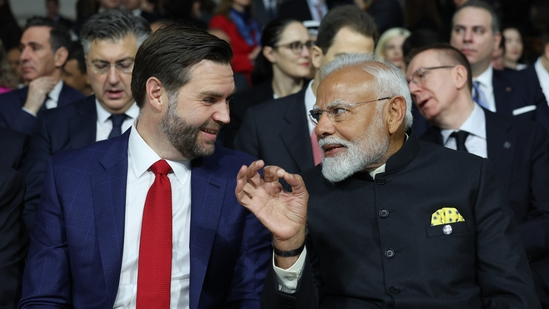
J.D. Vance Signals U.S.-India Trade Breakthrough in Jaipur Speech
Energy cooperation emerged as a priority. Vance promoted American energy exports, like ethanol, to fuel India’s growth.
He urged India to lower non-tariff barriers and leverage U.S. expertise for offshore gas exploration. He linked energy security to India’s AI ambitions, noting U.S. support for India’s nuclear power goals.
Technology partnerships also featured prominently. Vance praised the U.S.-India Trust Initiative, which builds on billions in U.S. investments for data centers and pharmaceuticals.
He highlighted India’s startup ecosystem and America’s AI hardware, urging mutual investment. This collaboration aims to counter global competition in critical technologies.
Vance’s visit, including meetings with Prime Minister Narendra Modi, underscored personal and diplomatic ties.
He shared anecdotes about Modi’s warmth toward his family, noting their dinner at Modi’s residence.
Modi’s high approval ratings, Vance remarked, reflect strong leadership, drawing parallels to Trump’s vision.
The trade agreement’s terms of reference set a roadmap for a final deal. Vance rejected claims of a trade war, framing Trump’s tariffs as a rebalancing effort.
He emphasized mutual respect, dismissing past U.S. condescension toward India. The deal, he argued, benefits workers in both nations.
This breakthrough signals a strategic pivot. Both nations seek economic independence amid global trade tensions. The agreement could stabilize supply chains and counter reliance on adversarial economies.
For businesses, it opens opportunities in defense, energy, and tech markets, promising growth and stability.
Vance’s speech reveals a pragmatic push for partnership. The trade deal, if finalized, could redefine U.S.-India relations, fostering prosperity in a competitive world.
As negotiations advance, the world watches this alliance shape the 21st century’s economic landscape.
This article was produced by The Rio Times’ automated newsroom system. How we use AI · Report an error
Read More from The Rio Times