Neighbor, Not Friend: Mark Carney’s Bold Challenge to Trump’s America
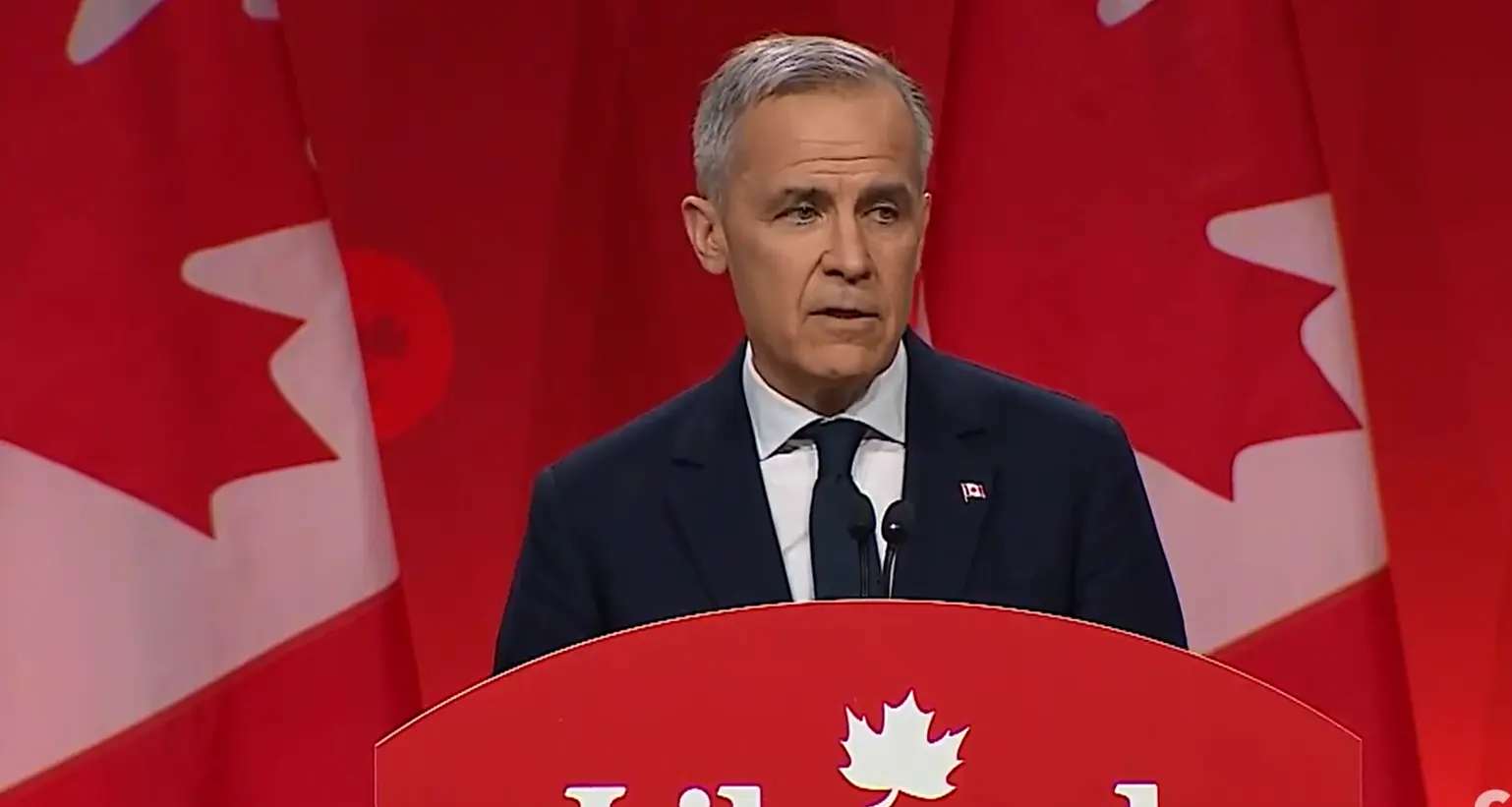
(Analysis) The return of Donald Trump to the White House has catalyzed a fundamental transformation in Canada’s political landscape and national identity. Mark Carney’s meteoric rise to Liberal Party leadership represents more than a mere leadership change—it signals a profound geostrategic realignment with implications extending far beyond North America.
Canada’s relationship with the United States has deteriorated with unprecedented speed. Public sentiment has shifted dramatically, with Canadian favorability toward the US collapsing from 81% to just 39%. One in four Canadians now view the US as an enemy—a seismic shift in national psychology.
This transformation stems from Trump’s aggressive rhetoric about Canada becoming “the 51st state” coupled with punitive economic measures—25% tariffs on most Canadian imports. These actions have shattered decades of goodwill between the nations.
[arve url=”https://www.riotimesonline.com/wp-content/uploads/2025/03/Mark-Carney.mp4″ loop=”true” autoplay=”true” /]
What makes Carney’s emergence especially significant is his strategic pivot from technocratic globalism to economic nationalism. Despite his Goldman Sachs pedigree and central banking background, Carney has adopted forceful rhetoric.
“The Americans want our resources, our water, our land, our country. If they succeeded, they would destroy our way of life.” This language represents a calculated appeal to Canadian sovereignty concerns rather than traditional progressive talking points.
Neighbor, Not Friend: Mark Carney’s Bold Challenge to Trump’s America
Canada faces unprecedented economic vulnerability with approximately 75% of exports directed to the US market. Analysts predict a potential GDP contraction of up to 4% over three years if tariffs persist—constituting a “profound recession.” This existential threat has prompted three interconnected strategic responses.
First, aggressive economic diversification is underway. The CETA agreement with the EU has already increased bilateral trade by 65%, establishing Europe as Canada’s second-largest trading partner. Canada’s Export Diversification Strategy aims to achieve 50% more overseas exports by 2025, leveraging 15 free trade agreements with 49 countries.
Second, Canada is weaponizing its strategic resources. Ontario provides 25% of electricity needs for parts of the US, with Ontario Premier Doug Ford openly threatening supply disruption. Canada possesses all raw materials required for lithium batteries—critical for electric vehicles and renewable energy. Saskatchewan’s oil and potash resources represent potent leverage points in ongoing negotiations.
Third, Canada is developing infrastructure independence. Plans include West-East pipeline development to enable direct oil exports to Europe, expanded LNG export capabilities, and enhanced domestic processing of critical minerals—all designed to reduce reliance on American markets.
The Global Ripple Effect
Carney’s assertive stance may provide a blueprint for other nations confronting Trump’s unpredictable diplomacy. Similar rhetoric is emerging from Germany’s Friedrich Merz who has also declared “we can no longer trust the Americans,” while European Commission President Ursula von der Leyen recently discussed security partnerships with “the UK, Norway or Canada”—conspicuously omitting the United States.
This suggests a potential alignment of Western democracies developing parallel economic and security frameworks independent of American leadership. Canada’s experiment with economic nationalism combined with strategic multilateralism could become a model for countries seeking to balance sovereignty with international cooperation.
The political calculus is changing rapidly. Liberal polling has surged dramatically since Trump’s election, with the Conservatives’ 20-point lead evaporating. Carney’s approach combines experienced technocratic leadership with nationalist rhetoric—a formula that may prove adaptable for centrist leaders worldwide seeking to counter populist movements.
As Carney stated in his victory speech: “We can give ourselves far more than Donald Trump can ever take away.” This represents not just defiance but a fundamental recalibration of Canada’s sense of self—a development with profound implications for global diplomatic
Neighbor, Not Friend: Mark Carney’s Bold Challenge to Trump’s America
Editorial responsibility: Matthias Camenzind, Editor-in-Chief · Editorial standards · Report an error