Nigeria’s Election Body Cites AI Unit
INEC says its AI unit will help it spot and answer fake content before voters go to the polls. The unit was approved in 2025, but much about how it will work is still unpublished.

Politics: Nigeria
Nigeria’s election commission says its Artificial Intelligence (AI) unit, approved in 2025, is working to counter fake video and audio before the 2027 vote, its chairman said on Wednesday 25 November 2026 in Abuja. Nigeria is Africa’s most populous country and its biggest economy, so a credible count matters to US investors, to the diaspora and to anyone tracking election security.
Joash Ojo Amupitan, chairman of the Independent National Electoral Commission (INEC, Nigeria’s election body), spoke through his Chief Press Secretary Adedayo Oketola at the Nigeria Election Risks and Readiness Summit 2026. The Centre for Journalism Innovation and Development, an Abuja media-innovation nonprofit, organised the event.
Key Facts
- Who. INEC, Nigeria’s election body, led by chairman Joash Ojo Amupitan.
- What. An AI division inside INEC’s technology department to detect deepfakes and manipulated content.
- When. Presidential vote Saturday 16 January 2027; governorship vote Saturday 6 February 2027.
- Prediction markets. Polymarket (prediction market), 3 a.m. ET, 26 November: Tinubu 69.0%, Obi 25.5%, Atiku 3.5% to win.
- As of. Thursday 26 November 2026, 08:00 GMT.
INEC says its AI unit will help it spot and answer fake content before voters go to the polls. The unit was approved in 2025, but much about how it will work is still unpublished.
This is the latest INEC statement on the unit, not its first announcement. On 22 May 2025 in Abuja, INEC National Commissioner Sam Olumekun, who chairs its Information and Voter Education Committee, said the commission had approved an Artificial Intelligence Division under its ICT Department, its information and communications technology arm.
On 24 September 2026 in Enugu, at the All Nigeria Editors Conference, Amupitan said INEC has an AI division and an AI roadmap and governance framework. He added that INEC had “commenced deploying intelligent AI tools directly within our results management process”, and that “every automated result check remains strictly subject to human auditing and legal verification”.
On 14 October 2026 in Abuja, at the AI and Democracy Forum 2026, Amupitan said: “No, algorithms will not and must never decide the 2027 vote.” Yiaga Africa, a civic-election group, organised the forum with INEC.
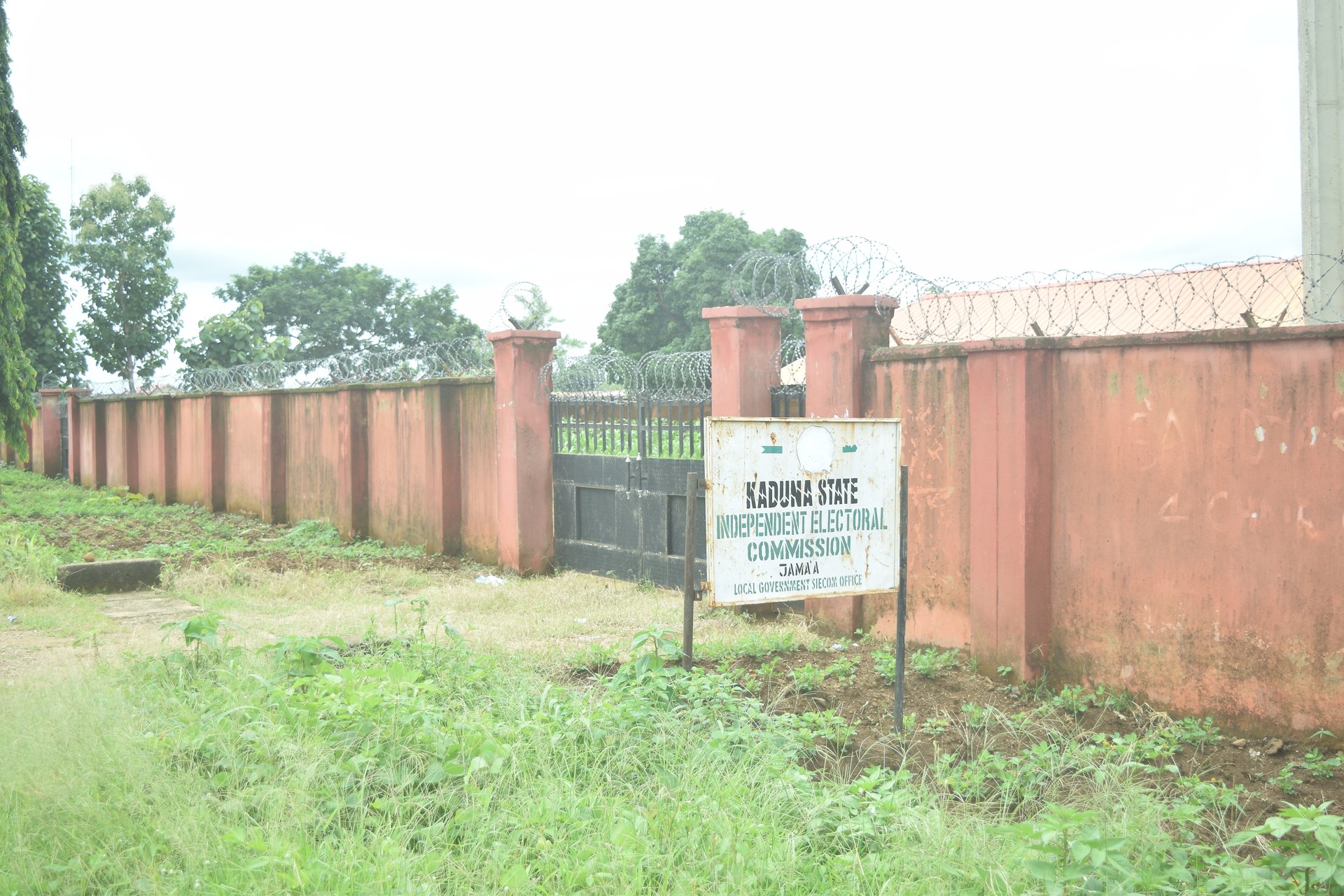
On 25 November, Amupitan said through Oketola that INEC is strengthening its ability to detect and respond to deepfakes (AI-made fake video or audio), synthetic voices and fabricated videos. He warned that such content could undermine public confidence in the electoral process, discourage voter participation and trigger panic or communal violence, particularly through coordinated online campaigns.
He said INEC is working with media organisations, fact-checkers and civil society groups so that accurate information reaches the public quickly. INEC has not published the unit’s budget, head, staff numbers, tools or vendor, nor how a flagged deepfake will be verified and reported.
The same speech covered hardware and people. INEC is procuring about 57,000 new Bimodal Voter Accreditation System (BVAS, the fingerprint-and-face voter scanner) devices and replacing batteries in existing ones, Amupitan said.
He said cutting the load from 1,250 voters per BVAS device to 850 should bring accreditation time down to one to two minutes. INEC also plans to recruit about 1.41 million ad hoc (temporary) staff, about 700,000 for each of the two rounds of voting.
Amupitan said the registration period for those staff has been extended from two weeks to two and a half weeks, and election materials will go into climate-controlled storage. An Election Risk Management tool, used to spot violence-prone areas, is meant to guide security deployment at the 2026 Osun governorship election, he added.
At the summit, Gautier Mignot, the European Union’s ambassador to Nigeria and to ECOWAS (the West African regional bloc), said credible elections need more than voting and results: a fair pre-election environment, access to reliable information and transparent resolution of disputes. He added that Nigeria’s credibility has implications for democratic stability across West Africa.
Trust is the wider test, and Amupitan admitted a “trust deficit” left by the 2023 election at Chatham House, a London policy institute, on 12 November 2026. Cardinal John Onaiyekan, a retired Catholic archbishop, told the Enugu editors’ conference on 24 September 2026 that courts increasingly decide elections, and he called for an independent process to appoint INEC’s leadership.
Our earlier reports cover INEC’s pledge to keep vote data, and the push against AI fakes before the 2027 election. For background on how the system works, see Nigeria Politics Explained.
INEC has scheduled a nationwide mock accreditation and voting exercise for Saturday 28 November 2026, although the opposition African Democratic Congress (ADC) presidential campaign council has asked it to postpone. The presidential and National Assembly elections follow on Saturday 16 January 2027, and the governorship and State House of Assembly (state legislature) elections on Saturday 6 February 2027, with polling from 08:30 to 14:30, according to the INEC election calendar and more in our Nigeria coverage.
What Prediction Markets Say
Polymarket, a real-money prediction market, showed these bets on who wins Nigeria’s presidential election at about 3:00 a.m. ET on 26 November 2026: Bola Tinubu, Nigeria’s president, 69.0%; Peter Obi, a 2023 presidential candidate, 25.5%; Atiku Abubakar, a former vice president whose candidacy a court voided on 5 November, 3.5%. US$164,909 had been traded on the market.
These are bets, not polls, and they say nothing about how well INEC’s AI unit will work.
Why we show this: prediction markets turn real-money bets into a live probability that moves within minutes of the news, which is why investors, campaigns and newsrooms in the United States now follow them closely. We show them next to polls and official results, never instead of them.
Frequently Asked Questions
Is INEC’s AI division new?
No. INEC approved it in 2025 and has described it as established since the autumn; the 25 November statement adds detail on deepfakes.
Will the AI unit decide election results?
INEC’s chairman has said algorithms must never decide the vote. He also said automated result checks remain subject to human auditing and legal verification.
Why do deepfakes matter for voters?
INEC says fake audio and video can erode trust, keep people from voting and spark panic or communal violence.
Sources
INEC election calendar https://inecnigeria.org/elections/calendar ; INEC statements as delivered 22 May 2025, 24 September, 14 October and 25 November 2026 ; Polymarket, 26 November 2026
This article was produced by The Rio Times’ automated AI newsroom. Editorial responsibility: Matthias Camenzind, Publisher and Editor-in-Chief. The Rio Times also runs Ask Rio Times, which answers from 100,000+ of our own articles, the daily Latin America Power Map, and prediction-market odds on elections and markets.. How we use AI · Report an error