Hun Manet’s “Cambodia First” Approach Risks Country’s Diplomatic Isolation
Cambodia has withdrawn from a long-standing economic agreement with Vietnam and Laos, signaling a shift in regional dynamics.
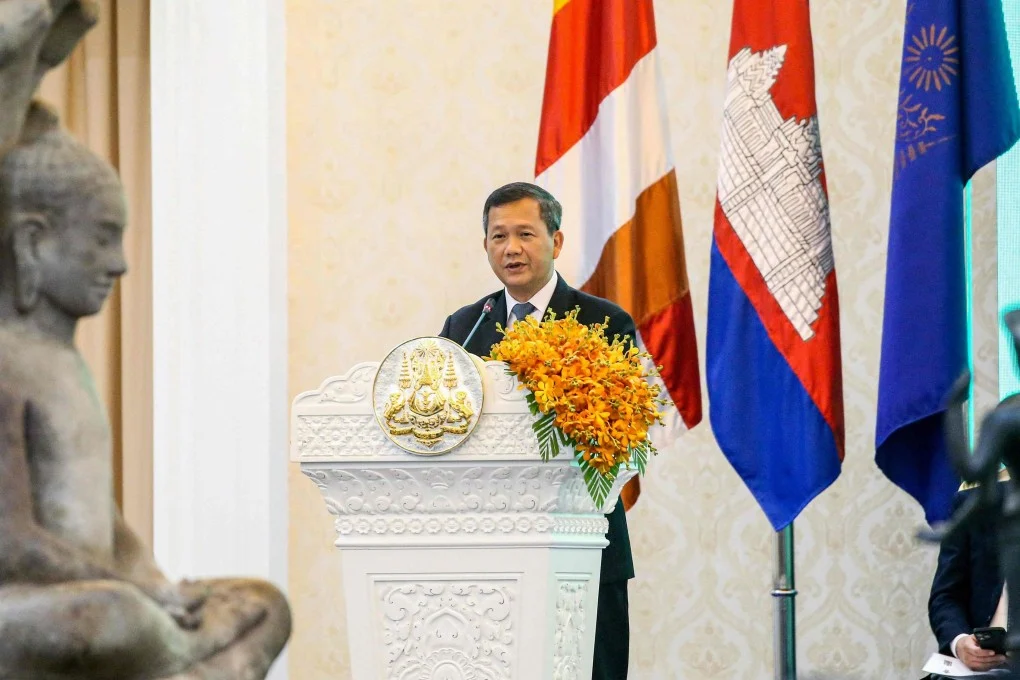
Prime Minister Hun Manet announced the decision on Facebook, citing concerns about territorial sovereignty and political pressure.
The Cambodia-Laos-Vietnam Development Triangle Area (CLV-DTA) agreement, established in 1999, aimed to boost cooperation among border provinces.
Hun Manet accused “extremists” of weaponizing the deal against his administration, prompting the withdrawal to “disarm the opposition.”
The move comes after months of public outcry and protests against the agreement. Critics claimed it led to the loss of Cambodian land and resources to Vietnam.
The government’s response to the opposition has been inconsistent. Initially, authorities cracked down on planned protests, arresting nearly 100 people.
However, the sudden concession to critics suggests a significant change in Cambodia‘s approach to its neighbors. This decision may reflect a broader shift in Cambodia-Vietnam relations.
A Strategic Shift with Regional Implications
The China-backed Funan Techo Canal project has already strained ties between the two countries. Cambodia’s refusal to share information about the canal’s potential impacts on Vietnam’s Mekong Delta region has raised concerns.
Experts warn that Cambodia’s exit from the CLV-DTA could harm its diplomatic standing and regional cooperation efforts.
Huynh Tam Sang, a Vietnamese academic, described the move as “shocking” and potentially damaging to bilateral relations.
The withdrawal might also affect Cambodia’s reputation within ASEAN and among its immediate neighbors. Some analysts view this decision as part of a “Cambodia First” approach that could isolate the country.
Sophal Ear, an associate professor at Arizona State University, compared the withdrawal to Brexit. He suggested it might embolden Cambodia’s opposition to push for further changes.
The CLV-DTA withdrawal highlights Cambodia’s delicate balance between domestic politics and regional relationships. It may reflect historical mistrust between Cambodian and Vietnamese citizens.
The move could also signal Cambodia’s desire for greater autonomy from Vietnam’s influence. Cambodia’s decision might lead to increased collaboration with China in its northeastern provinces.
Beijing has been a consistent economic partner for Cambodia and could support infrastructure development in border regions.
This shift could further complicate regional dynamics and geopolitical tensions. The withdrawal from the CLV-DTA agreement marks a significant moment in Cambodia’s foreign policy.
It demonstrates the government’s responsiveness to domestic pressure and its evolving relationships with neighboring countries.
As Cambodia navigates these changes, the impact on regional cooperation and stability remains to be seen.
This article was produced by The Rio Times’ automated newsroom system. How we use AI · Report an error
Read More from The Rio Times