Guyana Is Swapping a Pontoon for a Bridge and Diesel for Gas, Both by December
GUYANA · INFRASTRUCTURE
Key Facts
- —The bridge Aris Mining has begun building a 109-metre modular steel bridge over the Puruni River at Puruni Landing.
- —What it replaces A pontoon crossing in Region Seven, in a corridor holding almost 500 mining properties and concessions.
- —The power The first turbine of the Wales gas-to-energy plant is meant to deliver 57 megawatts to the grid.
- —The test Public utilities minister Deodat Indar said a first fire test is targeted for 4 December 2026.
- —The catch Both carry December deadlines, and the power plant has no confirmed public cost figure.
- —The full plan The prime minister has said the plant reaches 228 megawatts by early 2027 and 300 by year end.
One replaces a river pontoon serving hundreds of mining and forestry concessions. The other is meant to change what the national grid burns.
Two Guyana infrastructure projects moved this week, and both are aimed at December. One is a river crossing and the other is a power plant.
Aris Mining said it has begun construction of a modular steel bridge over the Puruni River. The span is 109 metres and the site is Puruni Landing.
Separately, the public utilities ministry set out the timetable for the first turbine at the Wales gas-to-energy plant. The target is 57 megawatts into the national grid.
What the Bridge Replaces
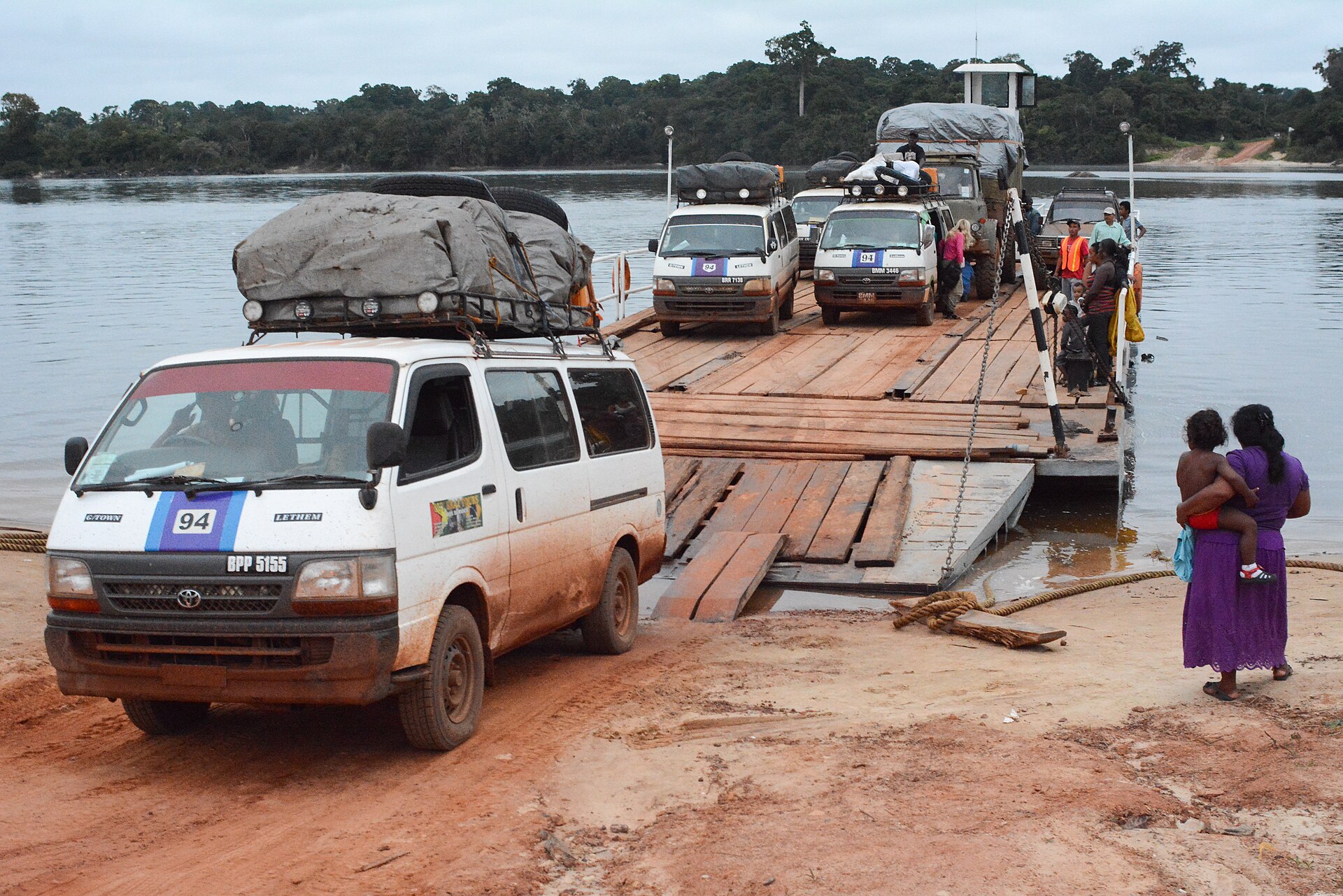
The Puruni crossing sits in Region Seven, Cuyuni-Mazaruni, in the country’s mining interior. Today it is a pontoon.
A pontoon works until the river does not cooperate. It carries limited weight, it stops in bad conditions, and it cannot be scheduled reliably.
Guyana Chronicle reported that the corridor holds almost 500 mining properties and concessions, plus several large forestry concessions. That is the volume that makes a permanent bridge economic.
Aris Mining is building it, coordinating with the ministries of natural resources and public works. Completion is targeted for December 2026.
A government announcement earlier in 2026 referred to a US$6 million bridge over the same river with an eight-month timeline. The Guyana Chronicle reported on Wednesday that the bridge now under way costs more than US$10 million and is privately funded by the Toroparu investor at no cost to the state.
Why a Mining Company Is Building Public Infrastructure
This is not unusual in resource economies and it is not straightforward either. The company gets reliable access to its own operations and the state gets a bridge it did not fund.
The trade-off is control. Infrastructure built by an operator is designed around that operator’s requirements first.
In Guyana the alternative is often no bridge at all. Interior road and river links have historically been the constraint on everything else.
The Power Project Is the Bigger Bet
The Wales plant is the first phase of Guyana’s gas-to-energy programme. The prime minister has said phase one ends at 228 megawatts, with 300 arriving later from the combined-cycle stage.
Public utilities minister Deodat Indar said the immediate goal is to get 57 megawatts from the first turbine into the grid. A first fire test is targeted for 4 December 2026.
Prime minister Mark Phillips has said the project delivers 57 megawatts by the end of 2026. Additional turbines would take it to 228 megawatts by the first quarter of 2027 and 300 by the end of that year.
The contractor Lindsayca has committed to one turbine producing 57 megawatts by the end of 2026. The plant is designed to run on gas brought ashore from offshore production.
What 57 Megawatts Means Here
For a country of Guyana’s size this is not a marginal addition. It is a change in what the grid runs on.
Guyanese generation has depended heavily on imported liquid fuel. A gas plant fed from domestic offshore production removes both the import bill and the exposure to a barrel price.
That matters more this week than most. Brent crude passed US$100 a barrel on Wednesday, and every fuel-importing grid in the region felt it.
The cost figure for the plant has not been independently confirmed in current reporting. Capacity and timelines are documented; the budget is not.
The Deadlines Are the Story
Both projects carry December dates and both are being reported against those dates. That is unusual enough to be worth noting.
Large infrastructure in the region routinely slips. A first fire test with a specific calendar date is a commitment that can be checked.
Guyana has been building on an oil revenue timeline for several years now. The projects are real; the question has consistently been the schedule.
What to Watch
The first marker is 4 December and whether the first fire test happens on it. A test date is the earliest verifiable checkpoint.
The second is the bridge opening. A 109-metre modular span started in September and finished in December would be quick work.
The third is cost disclosure for the power plant, which has no confirmed public figure. That limits any judgement about value.
The fourth is the rest of the turbines. The step from 57 megawatts to 228 is where a demonstration becomes a power system.
More: Caribbean news in English, every day from The Rio Times.
Frequently Asked Questions
What is the Puruni Bridge?
A 109-metre modular steel bridge under construction by Aris Mining over the Puruni River at Puruni Landing in Region Seven, Cuyuni-Mazaruni. It replaces a pontoon crossing and serves access to almost 500 mining and forestry concessions. Completion is targeted for December 2026.
What is the gas-to-energy project?
A power plant at Wales fed by gas from offshore production. The prime minister has said phase one ends at 228 megawatts, with 300 megawatts following from the combined-cycle stage. The first turbine is intended to deliver 57 megawatts, with a first fire test targeted for 4 December 2026.
How much will these cost?
The Guyana Chronicle reported on 9 September that the bridge costs more than US$10 million and is privately funded by the Toroparu investor at no cost to the state, revising an earlier government reference to a US$6 million bridge. No independently reported total for the Wales plant appears in current coverage.
Sources: Guyana Chronicle, iNews Guyana, Kaieteur News, Fueled.gy, La Caribeña News, Aris Mining regulatory filing, Guyana Power and Light Development and Expansion Programme 2026-2030, Rio Times.
This article was produced by The Rio Times’ automated newsroom system. How we use AI · Report an error
Read More from The Rio Times