Guinea-Bissau’s Junta Promises a Free Vote and Seeks a UN Council Seat
Key Facts
- The country. Guinea-Bissau is a West African state of about 2.2 million people between Senegal and Guinea. Its economy, about US$2.5 billion a year, is less than a thousandth of Britain’s and rests on cashews.
- Why it matters. Soldiers seized power on 26 November 2025, a day before election results were due. The country has a long record of coups and attempted coups since independence from Portugal.
- Why now. Leaders are in New York for the UN General Assembly, the yearly meeting of all 193 member states. The junta’s promised elections are only ten weeks away.
- What happened. On Friday 25 September 2026, Prime Minister Ilídio Vieira Té told the Assembly the 6 December elections will be free. He also confirmed a bid to join the UN Security Council for 2028-2029.
- Who is involved. The junta is led by Major-General Horta Inta-a, interim president since 27 November 2025. Té, a former finance minister, was named prime minister a day later.
- What it means for you. Investors and visitors face ten more weeks of military-led rule. An election accepted abroad would ease sanctions risk; a disputed one would prolong the uncertainty.
- Still open. Who may run. The transitional charter bars Inta-a and Té, yet Té has not ruled out a bid. The Security Council vote is due in June 2027.
Ten months after a coup, Guinea-Bissau’s military-backed government asked the world to trust its road back to elected rule. It also asked for a Security Council seat.
Guinea-Bissau, a small cashew-exporting country in West Africa, is run by soldiers who seized power in November 2025. On Friday its prime minister used the UN podium to promise free elections and to seek a Security Council seat.
Ilídio Vieira Té spoke in the general debate of the 81st UN General Assembly in New York on 25 September 2026. He is the civilian head of government appointed by the junta, the military council that took over.
What Té said in New York
Té called the new constitution, approved by referendum on 30 August, “an important milestone”. He linked it to the “disruption of constitutional order” on 26 November 2025, the day of the coup.
“The Government is committed to creating the conditions necessary for the presidential and legislative elections,” he said. He promised that the 6 December vote would be “inclusive, free, transparent and credible”, according to the UN’s summary.
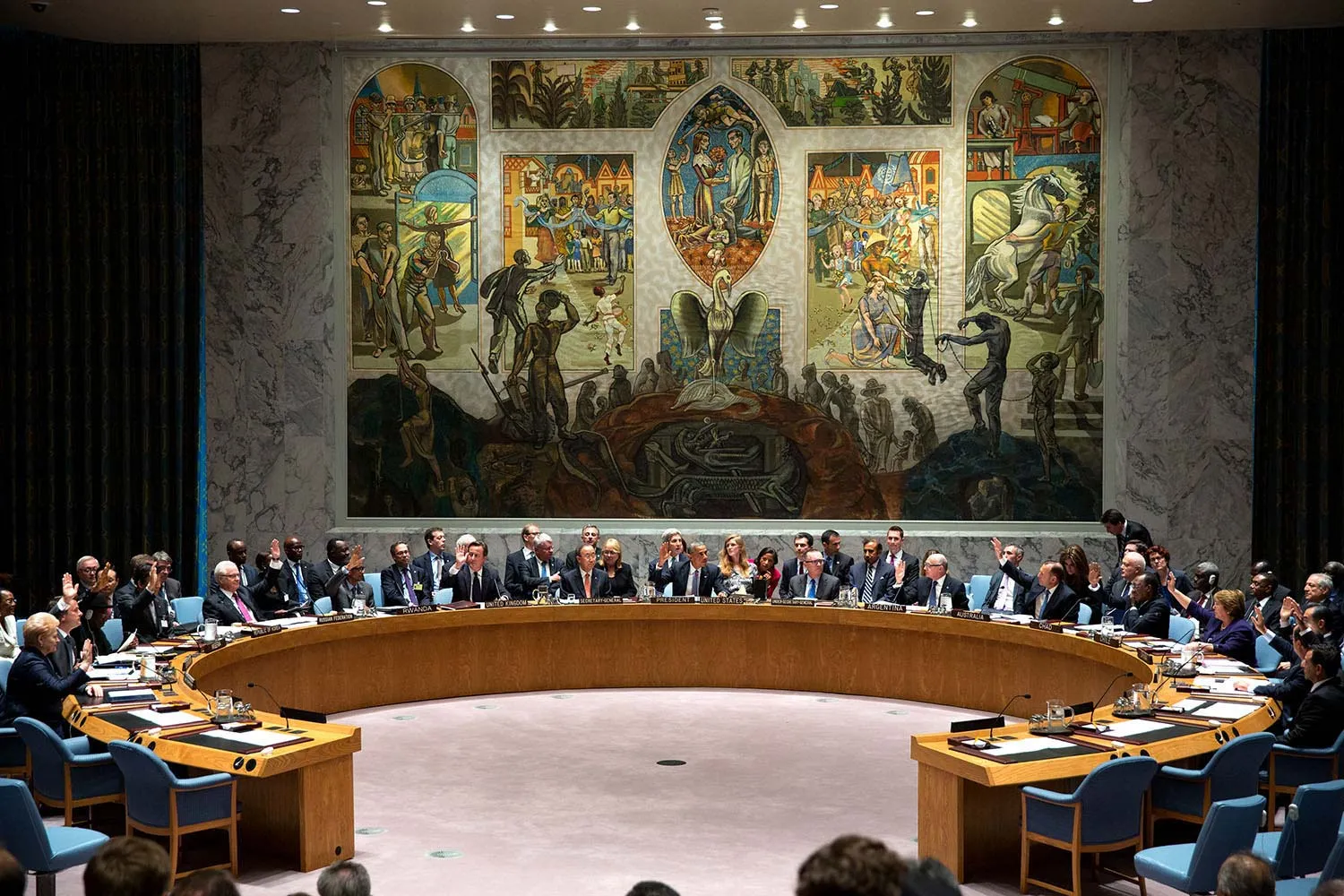
He then stated his country’s candidacy for a non-permanent Security Council seat for 2028-2029. The Security Council is the UN’s 15-member body on war and peace; ten of its seats rotate every two years.
Té also pointed to “enormous gaps” in financing for development and climate action. He said these gaps feed poverty and unsustainable debt across developing countries.
How the country got here
Guinea-Bissau voted for a president and parliament on 23 November 2025. Both President Umaro Sissoco Embaló and his main rival claimed victory before official results came out.
On 26 November officers announced they had taken control and suspended the count. Major-General Horta Inta-a, a close Embaló ally, was sworn in the next day as interim president for one year.
In December the junta published a transitional charter that bars the interim president and prime minister from running. In January it set 6 December 2026 as the date for presidential and legislative elections.
The opposition calls it a staged coup meant to let Embaló return through the new vote, Portuguese news agency Lusa reports. Embaló has spent much of his time in Morocco since the coup.
The December test
The referendum changed the rules of the game. Provisional results gave the new constitution 70% support on a turnout near 60%.
It lets the president appoint and dismiss the prime minister and cabinet, and dissolve parliament in a grave crisis. It also cuts parliament from 102 to 65 seats and electoral districts from 29 to 12.
Presidential candidates must now have lived in the country continuously for five years. The Guardian reported that the rule is widely seen as aimed at politicians based abroad.
Opposition parties urged a boycott of the referendum, saying it would only strengthen the presidency. The junta has since ordered parties to move their offices away from state buildings, as The Rio Times reported.
A Security Council bid from a coup state
The Security Council bid is not new, and it predates the coup. ECOWAS, the 15-nation West African bloc, endorsed Guinea-Bissau’s candidacy for the 2028-2029 term at a summit in Bissau in July 2023.
The African Union’s Executive Council, its body of foreign ministers, listed the candidacy in February and July 2025. Morocco and Libya are also on that list, and were asked to agree on one North African candidate.
The UN General Assembly will elect the members for 2028-2029 in June 2027. A candidate needs two-thirds of the votes cast, so African backing matters but is not enough.
For the junta, the bid is also leverage. A government seeking votes in June 2027 needs a December election that other countries accept.
What this means for expats and investors
Bissau’s foreign community is small: aid workers, cashew traders, diplomats and a few hotel operators. For them, the speech is a public commitment that the government can now be measured against.
The economy grew 5.8% in 2025 on a strong cashew harvest, the World Bank says. But about 22% of bank loans were not being repaid by mid-2025, as The Rio Times reported last week.
A clean vote would ease pressure from ECOWAS and donors. A disputed one would hit a fragile banking system, so candidate registration is the first thing to watch.
What is not known
It is not yet known which parties and candidates will be allowed to stand on 6 December. It is also unclear whether Té, who told Lusa he leads a party, will try to run despite the charter.
No official figure has been given for the money the transition still needs. It is also unclear whether Morocco or Libya will take the second African seat on offer in June 2027.
Frequently Asked Questions
When are Guinea-Bissau’s elections?
Presidential and legislative elections are set for Sunday 6 December 2026. The junta fixed the date in January 2026, about two months after the coup of 26 November 2025.
Who runs Guinea-Bissau right now?
A military-led transition under interim President Major-General Horta Inta-a, sworn in on 27 November 2025. Ilídio Vieira Té, a former finance minister, is prime minister.
Which Security Council seat does Guinea-Bissau want?
A non-permanent seat for 2028-2029. ECOWAS endorsed the bid in 2023, and the African Union lists it among its candidates. The UN General Assembly votes in June 2027.
What did the new constitution change?
Approved on 30 August 2026 with 70% support, it lets the president dismiss the prime minister and dissolve parliament in a crisis. It also cuts parliament from 102 to 65 seats.
Sources
United Nations — Guinea-Bissau, 81st General Debate: statement and summary (25 September 2026) · African Union Executive Council — Decision EX.CL/Dec.1309(XLVI) on candidatures (February 2025) · Forbes África Lusófona — ECOWAS approves Guinea-Bissau’s 2028-2029 Security Council bid (11 July 2023) · Reuters — Junta adopts charter barring leaders from elections (10 December 2025) · Al Jazeera — Guinea-Bissau sets election date (22 January 2026) · Reuters — Guinea-Bissau approves new constitution (1 September 2026) · The Guardian — Voters approve constitution (2 September 2026) · Lusa — Transition PM acknowledges he leads a party (17 September 2026) · World Bank — Guinea-Bissau data · The Rio Times — Guinea-Bissau Grew 5.8% on Cashews. Its Banks Hold 22% Bad Loans
This article was produced by The Rio Times’ automated newsroom system. How we use AI · Report an error
Read More from The Rio Times