
GHANA · GALAMSEY
Key Facts
- —The country Ghana is a West African gold and cocoa exporter fighting small-scale illegal gold mining, known as galamsey.
- —What happened On Thursday 15 October Sir Sam Jonah, a leading Ghanaian businessman, said illegal mining has turned the country’s rivers the colour of chocolate milk.
- —The setting He spoke at the Methodist University Ghana International Conference 2026, held for the university’s 25th anniversary.
- —The data Scientists say about 60% of Ghana’s water bodies are polluted, and cloudiness reached 94,800 NTU on the Ayensu river.
- —Why it matters Dirty river water raises the cost of making drinking water safe, and illegal mining has hit cocoa farmland in three regions.
- —What it means for you Gold and cocoa from Ghana reach American buyers, so damage to rivers and farms is a supply risk.
- —Still open No figure has been given for the full economic cost, and no new government measure followed the speech.
Ghana water pollution from illegal gold mining has turned rivers brown, Sir Sam Jonah, a leading Ghanaian businessman, warned on Thursday 15 October. “Rivers that fed our grandparents now run the colour of chocolate milk,” he told the Methodist University Ghana International Conference.
For US readers, the warning matters because Ghana is one of Africa’s biggest gold producers and a leading cocoa grower. Polluted rivers threaten both industries and the drinking water of millions of people.
What Sir Sam Jonah Told the Conference
Citi Newsroom and MyJoyOnline, two Ghanaian news outlets, reported his remarks on Friday 16 October. The conference marked the 25th anniversary of Methodist University Ghana, which the Methodist Church Ghana founded.
Jonah called illegal mining, known in Ghana as galamsey, a destroyer of “our rivers, our forests and our farmland”. He said it is not only an environmental problem but an economic, a health and, in the end, a moral problem.
Why He Spoke of Wesley and Neighbours
Jonah said galamsey is what happens when people gain all they can and forget Wesley’s condition about not hurting their neighbour. He was referring to John Wesley, the 18th-century preacher who founded Methodism.
He also said stewardship is not only about the land but also about money and talent. MyJoyOnline reported that he called the damage a threat to livelihoods, food production and access to safe drinking water.
The Numbers Behind the Brown Water
The JoyNews Research team published an analysis of Ghana water pollution on Tuesday 13 October that cites the CSIR-Water Research Institute, a state science body. Its scientists said in August that about 60% of Ghana’s water bodies are polluted.
Cloudiness, measured in NTU units, reached 94,800 on the Ayensu, 64,000 on the Birim and up to 32,000 on the Pra. The analysis records drops of 70% to 90% at selected monitoring points, including the Densu at Nsawam, after enforcement operations at some locations.
What Brown Water Does to Drinking Water
Ghana Water Limited, the state water utility, has said very cloudy water can cost it up to 50% of its output during treatment. A normal loss is about 5%.
The reports add that Ghana water pollution could raise the cost of treating water and supplying it to affected communities. The JoyNews Research analysis says dirty raw water pushes up chemical and operating costs for the utility.
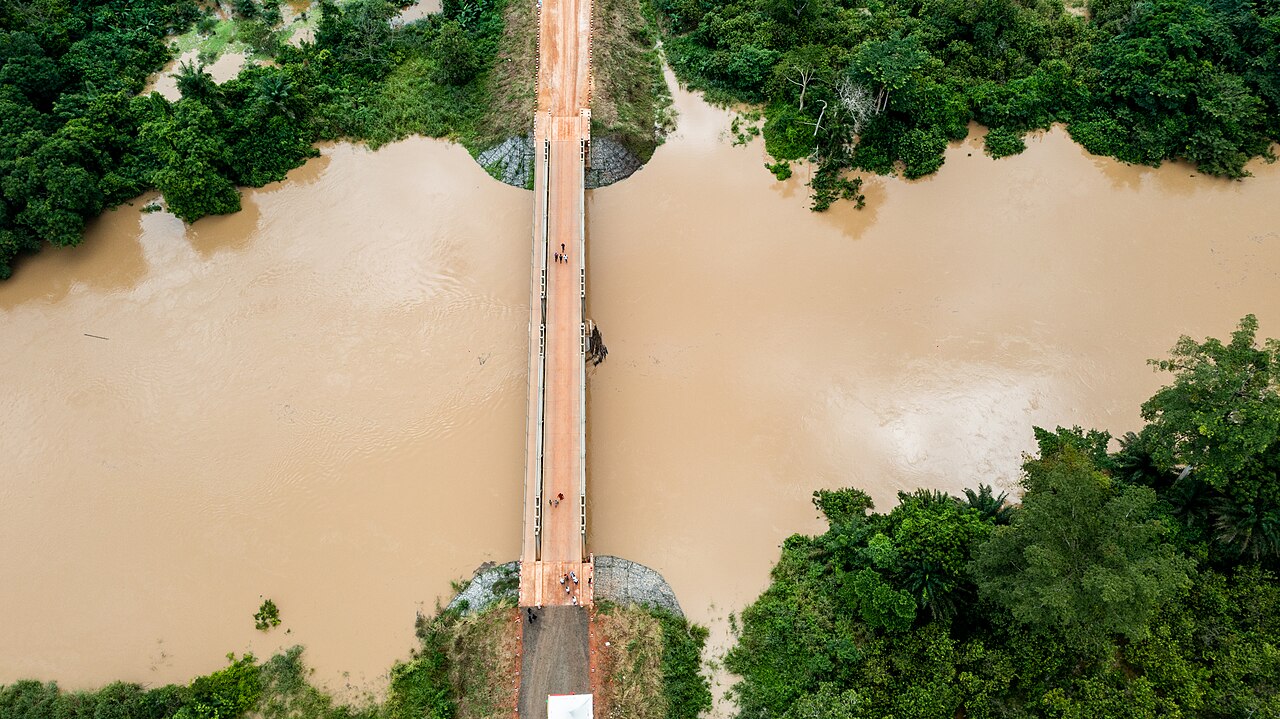
Cocoa Farms Caught in the Damage
Ghana is a leading cocoa grower, and chocolate makers abroad buy its beans. JoyNews Research reports, citing the state cocoa regulator COCOBOD, that illegal mining affected 81% of assessed cocoa farmland in the Eastern Region.
The figures were 74% in the Western Region and 68% in Ashanti. Weather, swollen shoot disease and ageing farms also hurt output, the analysis says.
What Ghana Has Done So Far
The National Anti-Illegal Mining Operations Secretariat, known as NAIMOS, reported by March 2026 that it had seized 94 excavators and destroyed nearly 3,000 illegal sites. It also reported 237 arrests.
In 2024 Ghana imported excavators worth GH¢6.2 billion (about US$531 million), the Lands Minister has said. The government later introduced measures to track the machines and, in 2025, revoked Legislative Instrument 2462, which had allowed some mining in forest reserves.
What It Means for US Readers
Gold and cocoa from Ghana reach American refiners and chocolate makers, so Ghana water pollution and farm damage are a supply risk. Jonah’s warning adds a leading business voice to the debate over galamsey.
Readers can read our report on Ghana losing 8,900 hectares of forest to illegal mining and our guide to Ghana’s natural resources. Both give the wider background to the speech.
What Is Not Known
Jonah named no specific rivers and proposed no new measures in the remarks reported. The cost to the state water utility of treating dirtier river water has not been stated.
CSIR scientists have warned that some polluted water bodies could be difficult to restore even if pollution stopped immediately. It is open whether enforcement can ease Ghana water pollution beyond the sites where cloudiness fell.
More: Ghana news in English, every day from The Rio Times.
Frequently Asked Questions
What did Sir Sam Jonah say about Ghana’s rivers?
He said rivers that fed Ghanaians’ grandparents now run the colour of chocolate milk because of galamsey. He spoke on Thursday 15 October at a Methodist University Ghana conference.
What is galamsey?
Galamsey is the Ghanaian name for illegal small-scale gold mining. It often uses excavators and washes soil in rivers, which turns the water brown.
How bad is Ghana water pollution?
Scientists at the CSIR-Water Research Institute said in August that about 60% of Ghana’s water bodies are polluted, according to JoyNews Research. Illegal mining is a major cause.
How does galamsey affect drinking water?
Very cloudy river water can cost Ghana Water Limited up to 50% of its output during treatment, against about 5% normally, according to JoyNews Research. It also raises chemical and operating costs.
Why does this matter outside Ghana?
Ghana supplies gold and cocoa to world markets. River and farm damage is therefore a supply risk for buyers in the United States and elsewhere.
Sources: Citi Newsroom, Ghana’s rivers now run the colour of chocolate milk, Sam Jonah on galamsey, 16 October 2026; MyJoyOnline, Galamsey: Rivers that fed our grandparents now run the colour of chocolate milk, Sam Jonah, 16 October 2026; MyJoyOnline (JoyNews Research), Wealth Over Water: How Galamsey Is Threatening Ghana’s Water Security, 13 October 2026.
This article was produced by The Rio Times’ automated newsroom system. How we use AI · Report an error · Editorial responsibility: Matthias Camenzind, Editor-in-Chief