Germany 34 Years After Reunification: Facing Challenges but Poised to Lead Europe
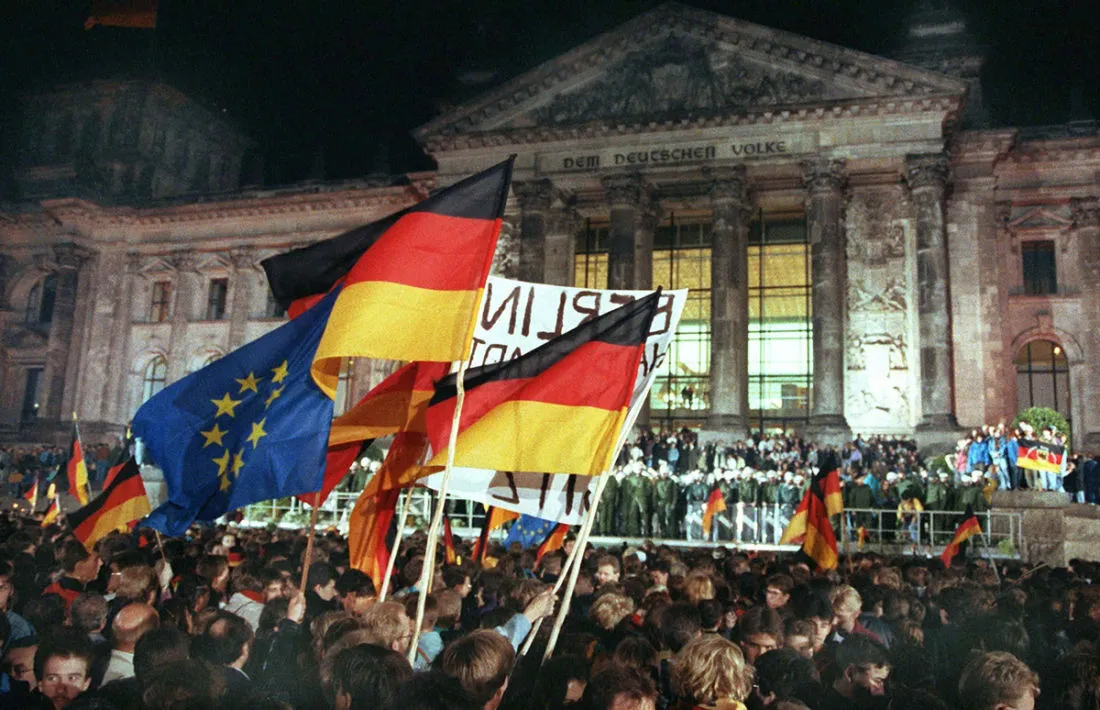
(Analysis) October 3rd marks Germany’s Day of Unity, commemorating the 1990 reunification. This date holds deep significance for Germans, representing the end of decades of division.
The choice of October 3rd wasn’t arbitrary. It avoided the historically loaded November 9th, which carries both positive and negative connotations in German history.
Germany has made remarkable progress since reunification, emerging as Europe’s economic powerhouse. In a recent milestone, Germany overtook Japan as the world’s third-largest economy.
This marks the first time Germany has surpassed Japan economically since World War II. The country’s nominal GDP for 2023 reached approximately €4.12 trillion ($4.4 trillion), a 6.3% increase from the previous year.
This achievement underscores Germany’s economic resilience and growth despite global challenges. The shift reflects both the country’s strength and Japan’s ongoing economic struggles.
Japan’s economy grew to 591.5 trillion yen ($3.93 trillion), a 5.7% increase, but fell short when converted to US dollars. However, Germany now faces a series of challenges that test its resilience.
Economic headwinds have slowed growth, with forecasts for 2024 revised downwards to 0%. This stagnation stems from high energy costs, inflation, and weak exports.
Germany’s heavily export-dependent manufacturers have struggled with high energy prices following Russia’s invasion of Ukraine.
Demographic pressures also loom large on the horizon. An aging population threatens to strain Germany’s robust social welfare systems.
By 2035, the retirement of the “baby boomer” generation will significantly reduce the working-age population. This shift could impact productivity and economic dynamism.
Navigating Challenges and Opportunities
Germany’s industrial landscape is undergoing a profound transformation. Core sectors, particularly automotive, must adapt to decarbonization and digitalization trends.
This structural change creates uncertainty and demands massive investments in new technologies and skills.
Geopolitical tensions have further complicated Germany’s position. Russia’s invasion of Ukraine upended long-standing energy policies and security assumptions.
Meanwhile, managing relations with China presents a delicate balancing act between economic interests and strategic concerns.
Despite these challenges, Germany retains considerable strength. Its GDP reached €4.12 trillion in 2023, cementing its position as the EU‘s largest economy.
German exports remain robust, with over half going to other EU countries. Public support for the European project remains high among Germans.
Germany’s influence in EU institutions, including the European Commission presidency, provides leverage to shape policy. This position allows Germany to play a crucial role in addressing continent-wide challenges.
To overcome its hurdles and lead Europe forward, Germany must take decisive action. Accelerating investments in green technologies and digital infrastructure is crucial.
Reforming education and immigration systems can address looming skills shortages. Strengthening EU integration in defense and energy policy will enhance collective resilience.
Germany’s path forward requires a delicate balance between national interests and European leadership. The country’s history of resilience and reinvention suggests it can adapt to these new challenges.
By embracing change and fostering innovation, Germany can help steer Europe towards a more prosperous and secure future.
As Germany commemorates its unity and celebrates its economic achievements, it stands at a crossroads. The choices made today will shape not only its own future but that of Europe as a whole.
With careful navigation and bold action, Germany can transform these challenges into opportunities for growth and renewal, solidifying its position as a global economic leader.
This article was produced by The Rio Times’ automated newsroom system. How we use AI · Report an error
Read More from The Rio Times