Spain’s Defense Budget: A Modest Player in Europe’s Military Spending Landscape
Spain’s defense budget has reached 15 billion euros for 2024, marking a significant increase from previous years. This figure represents approximately 1.3% of Spain’s GDP, still short of NATO’s 2% target.
The Spanish government aims to reach this goal by 2029, maintaining an “upward investment cycle” in the coming years. When compared to other major European countries, Spain’s defense spending appears relatively modest.
France allocates 59.6 billion euros (2% of GDP), Germany 66.8 billion euros (1.5% of GDP), and the United Kingdom 74.9 billion euros (2.3% of GDP) to their respective defense budgets.
Even Italy, with a comparable economy, outspends Spain at 29.8 billion euros (1.4% of GDP). The contrast becomes even starker when considering Poland’s defense budget, which has surged to 31.6 billion euros.
This represents an impressive 3.8% of its GDP. This significant disparity highlights the diverse approaches to defense spending across Europe, often influenced by geopolitical factors and perceived security threats.
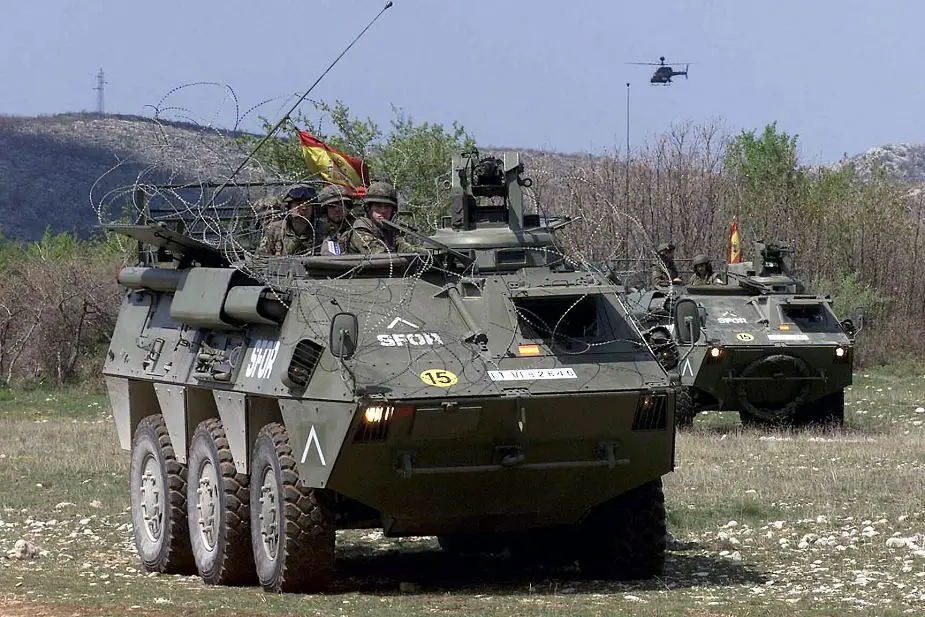
Spain’s Secretary of State for Defense, Amparo Valcarce, outlined several key modernization programs, including the VCR 8×8 armored vehicle and upgrades to the Patriot air defense system.
Spain’s Defense Spending
These initiatives, while important, may progress slower than similar efforts in higher-spending European nations. Looking beyond Europe, Spain’s defense budget also lags behind global powers.
India allocates 83.6 billion euros (2.4% of GDP) to defense, while Brazil spends 22.9 billion euros (1.1% of GDP). Even South Africa, with its smaller economy, dedicates 3.5 billion euros (0.8% of GDP) to military expenditure.
The Spanish Army Chief of Staff, General Amador Enseñat y Berea, emphasized the need to modernize artillery and anti-aircraft capabilities, lessons drawn from recent conflicts.
However, the limited budget may constrain the pace and scope of these upgrades compared to other European militaries.
As geopolitical tensions rise, Spain’s relatively modest defense spending raises questions about its ability to contribute significantly to collective defense efforts and maintain influence within NATO and the EU.
The coming years will be crucial for Spain to balance its NATO commitments, domestic priorities, and the need to keep pace with its European allies in military capabilities.
This article was produced by The Rio Times’ automated newsroom system. How we use AI · Report an error
Read More from The Rio Times