Europe’s Busiest New Rocket Flies From South America. Who Profits?
French Guiana · Economy
Key Facts
—The launch. A heavy Ariane 6 rocket lifted off from French Guiana carrying its biggest load ever.
—The cargo. Thirty-six internet satellites, about twenty-two tonnes, the heaviest payload in Ariane’s history.
—The place. Europe launches its rockets from a corner of South America, not from Europe itself.
—The weight. The spaceport is the engine of the local economy, by some counts about fifteen percent of output.
—The question. Local leaders ask how much of the rising launch pace actually stays in the territory.
—The stake. A world-class industry sits beside one of France’s poorest regions.
The French Guiana spaceport just pulled off the heaviest launch in Ariane’s history, a reminder that one of Europe’s proudest industries runs from South American soil, and that locals are still asking how much of the wealth lands at home.
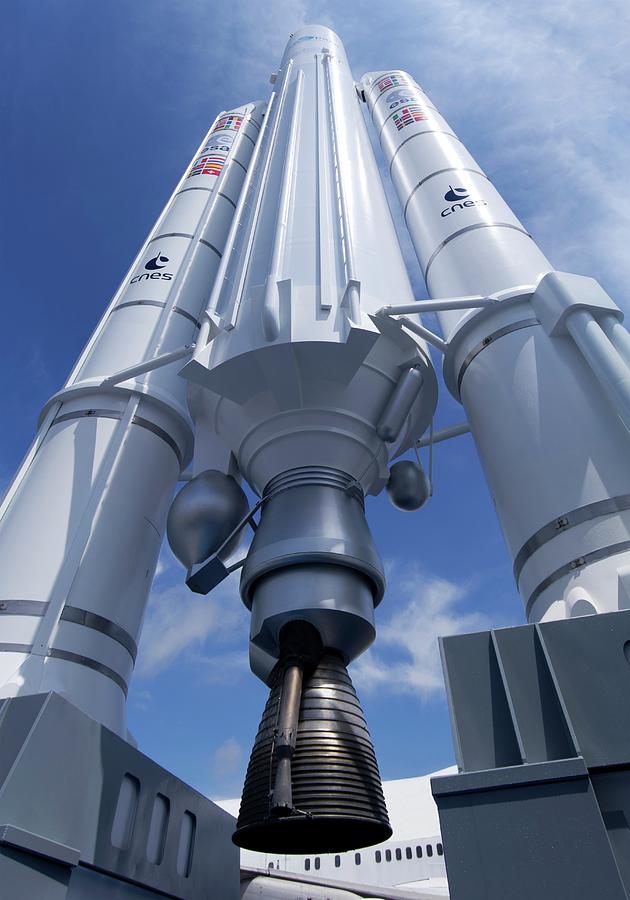
On the morning of June 17 a tall white rocket climbed away from the jungle coast of French Guiana. It was an Ariane 6, Europe’s newest heavy launcher, and it was carrying more than any Ariane before it.
The load was thirty-six satellites for a new internet constellation, weighing about twenty-two tonnes. To lift it, the rocket flew for the first time with four upgraded solid boosters strapped to its sides.
The flight was a technical milestone, but the more interesting story is where it happened. Europe’s flagship rockets do not launch from Europe at all.
Why the French Guiana spaceport exists
French Guiana is a piece of France on the northern shoulder of South America, an overseas region wedged between Suriname and Brazil. That makes it European Union territory sitting just a few degrees north of the equator.
That location is the whole point. Launching near the equator gives rockets a free speed boost from the Earth’s spin, so since the late 1960s Europe has fired its space missions from a base at Kourou rather than from home.
The site is run jointly by the French and European space agencies and the launch company Arianespace. It is widely known, with some pride, as Europe’s Spaceport.
An economy built around a launch pad
For the territory, the base is not just prestige. It is the single biggest pillar of the local economy.
By the reckoning of the spaceport’s own director, the centre accounts for around fifteen percent of French Guiana’s output. It employs many hundreds of people directly and supports thousands more through suppliers and services.
After years of delays with the new Ariane 6, the pace of launches is finally picking up. Each mission for a big satellite customer is, in effect, a commercial window for the region.
The question locals keep asking
Here is the catch, and local leaders are blunt about it. A faster launch schedule looks impressive, but the gain for ordinary people depends on how much of the money actually stays on the ground.
Much of the high-value work, from building the rockets to running the missions, is tied to mainland France and the wider European programme. The worry is that French Guiana hosts the spectacle while the profits fly out with the satellites.
As one local outlet put it, the real success will not be measured by satellites in orbit, but by the share of the activity that remains in the territory. Local taxes tied to economic activity are one channel communities watch closely.
A rich industry, a poor region
The tension is sharp because of where French Guiana sits on the map and on the income scale. Its neighbours Guyana and Suriname are riding a historic offshore oil boom, while this stretch leans almost entirely on space.
Yet despite hosting a world-class industry, French Guiana remains one of France’s poorest regions, with high unemployment and deep social strains. A gleaming launch pad and a struggling local economy coexist within a short drive of each other.
Why outsiders should watch
For an investor or an outside observer, the launch cadence is the number to follow. A busier spaceport means more contracts, more local spending and a stronger case that the region can convert rockets into broad-based growth.
The record flight is genuine good news for Europe’s push to regain independent access to space. Whether it is equally good news for the people who live beneath the launch path is the question French Guiana is still trying to answer.
Connected Coverage
For more on the region’s reach into orbit and its energy fortunes, see our reporting on why Ecuador thinks it can build a spaceport by 2030 and on TotalEnergies’ refusal to drill for French Guiana oil.
More: Latin America news in English, every day from The Rio Times.
Frequently Asked Questions
Why does Europe launch rockets from French Guiana?
French Guiana sits just north of the equator, where the Earth’s spin gives rockets an extra speed boost and saves fuel. It is also French and European Union territory, so Europe has launched from the Kourou base there since the late 1960s.
How important is the spaceport to the local economy?
It is the territory’s biggest economic pillar, estimated by the centre’s director at around fifteen percent of output. It provides many hundreds of direct jobs and supports thousands more through local suppliers and services.
What was special about the June 2026 launch?
An Ariane 6 carried thirty-six internet satellites weighing about twenty-two tonnes, the heaviest payload in the rocket family’s history. It was also the first flight to use four upgraded solid boosters.
This article was produced by The Rio Times’ automated newsroom system. How we use AI · Report an error
Read More from The Rio Times