Why Brazil’s Military Is Closing In on the World’s Top 10
Key Facts
Brazil has Latin America’s strongest armed forces by Global Firepower’s count, and a place in the global top fifteen. Whether that position reflects real fighting power, or the way one index counts, is the argument now running in Brasília.
Global Firepower, a US-based annual defence review, places Brazil 11th of 145 countries in its 2026 ranking. That puts the country ahead of Germany, Israel, Iran and Spain, and just behind Italy in tenth place.
Why This Matters Beyond Brazil
Brazil has not fought a war since 1945 and has no permanent bases abroad. It still appears in the same bracket as states that fight, or prepare to.
That gap between listing and experience is the reason the ranking is worth reading carefully. It is also why the number is being quoted in an election campaign.
Brazilians vote on 4 October, and Lula has made defence spending part of his campaign. President Luiz Inácio Lula da Silva, seeking a fourth term, has promised money for the armed forces.
His opponents question the promise, pointing to years of thin budgets. For investors, the question is narrower and more practical.
Brazil runs the broadest defence industrial base in South America, from aircraft to submarines. What the state buys over the next six years decides whether that base grows or shrinks.
What the Ranking Actually Says
Global Firepower gives each country a PowerIndex score where zero would be perfect. Brazil scores 0.2374, against 0.2463 for Germany and 0.2211 for Italy in tenth.
Israel sits 15th on 0.2707, Iran 16th on 0.3199 and Spain 18th on 0.3247. Rio Times reported the same standing in March, and the margins remain thin.
Brazil is 0.0089 ahead of Germany and 0.0163 behind Italy. Germany is marginally closer to passing Brazil than Brazil is to passing Italy.
The five-year record shows a country holding its place near the threshold. Global Firepower’s own archive puts Brazil 10th in 2022, 12th in 2023 and 2024, and 11th since 2025.
The site warns that its formula changes each year, so scores are not a clean time series. Only the ranks can be compared, and even those move with the method.
What the Index Measures and What It Leaves Out
The formula uses more than sixty factors, and the site names manpower as the most important. Mobilisation is modelled over four years of war, on patterns drawn from the two world wars.
Brazil does very well on that test because of its size. It ranks sixth for available manpower, second for airports and second for usable waterways.
Logistics and geography carry real weight, and Brazil has a continent of both. Several things the formula does not track matter more in a modern fight.
Drones are excluded from the aircraft totals, which the site states plainly. There is no category for combat experience, precision weapons, satellites or command systems.
Readiness is estimated rather than measured, using average American availability rates. A rival measure reverses the picture entirely.
The Global Militarisation Index, run by the German research centre BICC, ranks Brazil 125th of 151. That index weighs military spending against health spending and soldiers against doctors.
The Gaps Inside the Force
Global Firepower counts 495 aircraft in Brazilian service and 376,000 active personnel. It counts zero attack helicopters and zero tankers, though the air force’s KC-390s refuel its Gripens in flight.
The helicopter gap has a date attached to it. The air force retired its twelve Russian-built Mi-35 gunships through 2022, citing a shortage of spare parts.
The retirement was announced in February 2022, weeks before Russia invaded Ukraine, after years of scarce parts. Nothing has replaced them since.
The navy carries a similar weight of age. Revista Sociedade Militar put the average age of the fleet at about 32.6 years in June.
The monitor Parnaíba, launched in 1937, still patrols the Paraguay river. Brazil has one helicopter carrier and six submarines, but no aircraft carrier or destroyers.
Lula’s Money Was Authorised, Not Released
Real figures here use the Central Bank of Brazil PTAX rate of 5.20 reais per US dollar on 25 September 2026. Congress passed Complementary Law 221 in 2025 to exempt strategic weapons projects from Brazil’s fiscal rules.
Lula signed it on 18 November 2025, the Chamber of Deputies reported. It exempts up to R$5 billion (about US$962 million) a year from fiscal rules, R$30 billion (about US$5.8 billion) through 2031.
Senator Randolfe Rodrigues of Lula’s Workers’ Party, its Senate rapporteur, said the aim was to guarantee the money. The bill came from Senator Carlos Portinho of the opposition Liberal Party.
Congress added up to R$2.5 billion (about US$481 million) for 2026, and Lula signed it on 27 August. That sum will be deducted from the 2028 allowance, so it is an advance rather than a rise.
The gap is between authorisation and cash. By late August not one centavo had been released, Revista Sociedade Militar and Valor Econômico reported.
Revista Sociedade Militar also said defence lost a third of its discretionary funds in May. Brasil de Fato put that month’s freeze at R$23.6 billion (about US$4.5 billion) across government.
Defence absorbed R$4.3 billion (about US$827 million) of it, the deepest cut of any ministry. Pensions were left untouched, because the fiscal framework shields mandatory payments.
Where the Budget Goes
The 2026 budget law gives defence about R$142 billion (about US$27.3 billion), close to 1.1% of output. Revista Sociedade Militar, citing Defence Minister José Múcio’s May reply to Congress, put personnel at 78% to 82.6% of spending.
The ministry’s argument is arithmetic rather than denial. Its reply argues that the smaller the defence budget, the larger the share salaries and pensions occupy.
The executed 2025 accounts point the same way from a different angle. Brasil de Fato, using the federal transparency portal, found R$56.09 billion (about US$10.8 billion) went to military retirees and pensions.
That was 42% of the year’s authorised defence budget of R$133.65 billion (about US$25.7 billion). Personnel of all kinds took about 74% of the executed budget.
Discretionary spending in the 2026 law is R$12.7 billion (about US$2.4 billion). It must cover fuel, maintenance and training as well as every new ship, aircraft and vehicle.
The Opposition’s Case
At a frigate christening in Itajaí in July, Lula cited Trump’s remarks on Greenland and the Panama Canal to justify spending. He has made sovereignty a theme of his campaign.
Aldo Rebelo, a former defence minister coordinating Ronaldo Caiado’s campaign for the Social Democratic Party, rejected the pitch. He told Gazeta do Povo the declaration lacked authenticity and served electoral objectives.
Critics quoted by the same paper point to the record rather than the promise. Military investment fell from R$12.3 billion (about US$2.4 billion) to R$7.2 billion (about US$1.4 billion) between 2014 and 2023.
Those figures come from the Defence White Paper and are adjusted for inflation, the paper said. The armed forces argue they need 2% to 2.5% of output, Alcides Vaz of the University of Brasília told the paper.
The race itself is close. The Americas Society/Council of the Americas put Lula and Flávio Bolsonaro of the Liberal Party in a technical tie.
What Is Already Locked In
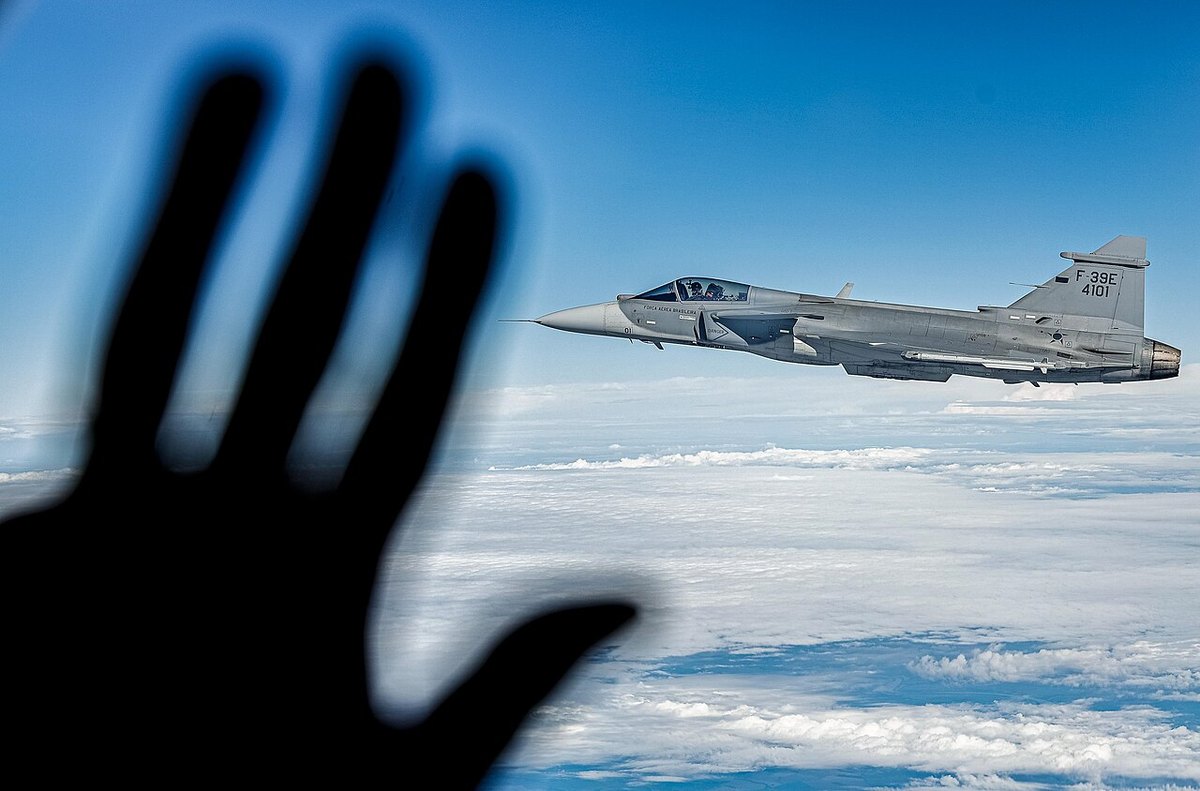
A good deal of the next decade is fixed by contracts already signed. Brazil ordered 36 Gripen fighters from Sweden’s Saab in 2014 and had taken eleven by June 2026.
The first Brazilian-built aircraft was unveiled at Embraer’s Gavião Peixoto plant on 25 March 2026. Full delivery has slipped from 2024 to 2032, and R$800 million (about US$154 million) was frozen in June.
The navy commissioned the first Tamandaré-class frigate on 24 April 2026 and is negotiating four more. The four-ship contract with Germany’s thyssenkrupp Marine Systems, signed in 2020, was worth R$9.1 billion (about US$2 billion at the time).
The nuclear-powered submarine Álvaro Alberto has moved from 2025 to 2034 and now to 2038. Rio Times covered that delay in a separate report on 19 September.
Embraer’s KC-390 order was cut from 28 aircraft to 19, with deliveries running to 2034. The army’s armoured vehicle plan runs to 2040 and has about 820 of roughly 2,100 vehicles contracted.
Can Brazil Reach the Top Ten
The assessment that follows rests on published contracts and forecasts, not on any official Brazilian target. A market study released through GlobeNewswire in January puts the 2025 budget at US$23.5 billion.
It forecasts about 2% annual growth from 2026, reaching US$27.2 billion by 2030. Money at that pace will not move Brazil past Italy on its own.
Italy raised its spending by 20% in real terms in 2025, to US$48.1 billion, SIPRI found. Passing Italy remains possible if the equipment already ordered arrives, since the gap is 0.0163 points.
Thirty-six Gripens and up to eight frigates would register in the formula, though the nuclear boat is not due until 2038. Whether they arrive on time is the open question, and the Gripen and submarine schedules have already slipped by years.
The top five are another matter, with South Korea fifth on 0.1642, about 31% better than Brazil. Reaching that group would need a change of scale that no published Brazilian plan contains.
What It Means for the Region and for Washington
A claim often repeated is that Brazil outspends the rest of South America combined. SIPRI, the Stockholm peace research institute, put regional spending at US$56.3 billion in 2025.
Brazil’s US$23.9 billion was about 43% of that, so the claim overstates the gap. Its spending rose 13% on the year, which SIPRI attributed to naval technology and personnel costs.
Proportionally, Brazil is a modest spender by regional standards. Colombia spent 3.2% of output on defence last year against Brazil’s 1.1%.
The supplier data shows that most of Brazil’s imported equipment is European. France provided 62% of Brazilian arms imports between 2021 and 2025, Sweden 18% and Italy 8.6%.
The United States did not make the top three, despite Brazil holding major non-NATO ally status since 2019. Brazil is also a seller, with export authorisations of US$3.1 billion in January to November 2025, a ministry record.
American troops returned to the Operation Formosa exercise this month after last year’s cancellation, as Rio Times reported. That followed a year of US tariffs on Brazil and US visa sanctions on Brazilian officials.
What It Means If You Live, Work or Invest in Brazil
Suppliers to the armed forces should read the release of funds, not the authorisation of them. Congress creating fiscal space does not oblige the treasury to spend it.
Shareholders in Embraer have the clearest exposure to the trend. Its defence revenue rose 36% in 2025, and the group’s order backlog reached US$31.6 billion.
Anyone tracking industrial policy should watch the defence arm of Nova Indústria Brasil, the government’s industrial strategy. That plan carries R$112.9 billion (about US$21.7 billion) to 2033, including R$31.4 billion (about US$6 billion) through the public investment programme.
Nothing in this changes daily life or security for residents and travellers. The armed forces are not deployed against any neighbour, and Formosa took place on a closed range.
What Is Not Yet Known
The government has not said when, or whether, it will release the exempted weapons money. No official target for defence spending as a share of output has been published.
The price and timetable for four additional Tamandaré frigates have not been announced. It is unclear whether the Gripen order will be extended beyond 36 aircraft.
Brazil has not chosen a replacement for its retired attack helicopters. The tracked vehicle competition, which includes bidders from Turkey and Europe, has no decision date.
How the 4 October result changes the defence budget is the largest unknown. Lula’s campaign has promised more money for defence without publishing a figure.
Frequently Asked Questions
Where does Brazil rank in the 2026 Global Firepower index?
Brazil is 11th of 145 countries with a PowerIndex score of 0.2374. That places it ahead of Germany, Israel, Iran and Spain, and just behind Italy.
Does Brazil have the strongest military in Latin America?
By that index, yes, and by a wide margin over Argentina in second place. Brazil has fewer active soldiers than Colombia or Mexico, but a far larger navy, air force and defence industry.
How much does Brazil spend on defence?
SIPRI recorded US$23.9 billion in 2025, about 1.1% of national output and 21st in the world. Personnel costs take the large majority of the budget.
Who supplies Brazil’s weapons?
France supplied 62% of Brazilian arms imports between 2021 and 2025, followed by Sweden and Italy. The United States was not among the three largest suppliers.
This article was produced by The Rio Times’ automated newsroom system. How we use AI · Report an error
Read More from The Rio Times