
Published Monday, 9 November, 4:30 AM ET (10:30 AM Paris) · Source: French Prime Minister’s Office, Interior Ministry, unions
Key Facts
- What. Prime Minister Sébastien Lecornu hosts unions and employers on pay at Matignon, his Paris office, on Monday, 9 November.
- Why. The talks follow the 5 November strike day, when the Interior Ministry counted 575,000 protesters and the CGT union claimed 1.6 million.
- At stake. The government eyes a net minimum wage of 1,500 euros a month (about US$1,678), up from 1,477.93 euros (about US$1,654).
- Prediction markets. Polymarket priced a 3.5% chance that France declares a state of emergency by 31 December (9 November, 4:23 a.m. ET).
This story is part of our coverage of the why France is in crisis. Dates, times and how to follow it are in our guide.
Pay Conference Opens at Matignon
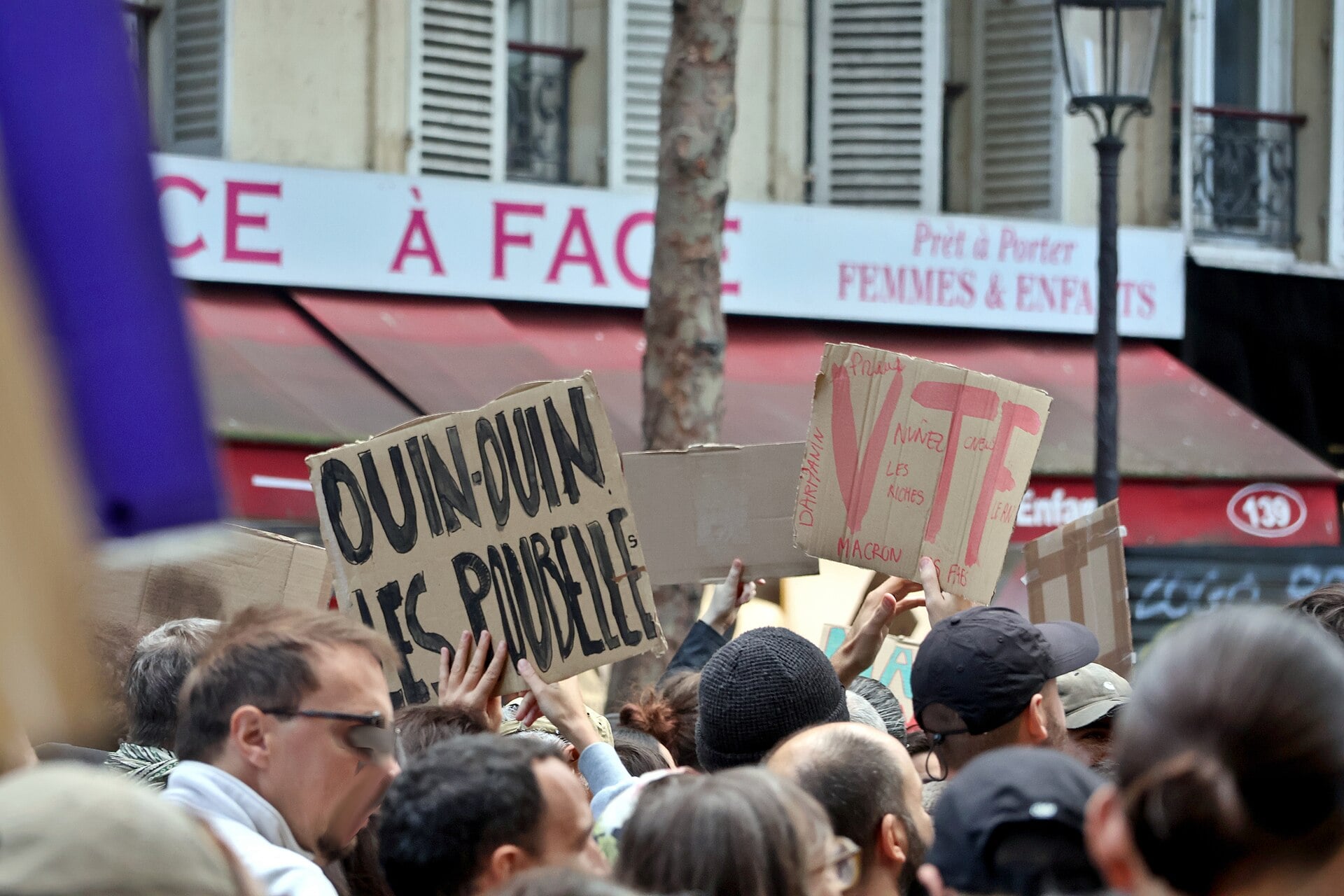
Prime Minister Sébastien Lecornu is hosting a “social conference” with unions and employers on Monday, 9 November, at Matignon, the prime minister’s office in Paris. He called it after the 5 November strike day to give answers on purchasing power and wages, part of the wider France protests story.
The strike movement began in September with high-school students. The eight-union alliance known as the intersyndicale says it will wait for the outcome of the talks before deciding how to continue.
The Minimum Wage at the Centre
The government has signalled a discretionary boost, known as a “coup de pouce,” to the Smic, France’s legal minimum wage. Labour Minister Jean-Pierre Farandou wants the net monthly Smic to pass 1,500 euros (about US$1,678), from 1,477.93 euros (about US$1,654) today, a rise of roughly 22 euros (about US$25) or 1.5%.
Farandou said nothing is settled and that any rise must not hurt jobs. He added that a decree is ready to push employers to lift sector-level minimum pay scales to the Smic level.
By law the Smic also rises on 1 January, and press estimates put that rise at roughly 1.2%. The exact figure depends on inflation data due in the coming days.
Unions Press for More
The CGT, one of France’s two largest unions, wants a 10% rise and the indexation of wages to prices. The CFDT, France’s other large union, wants 100 euros (about US$112) more per month net on the Smic.
Marylise Léon, who leads the CFDT, said the union wants more than a boost, describing the need as an “electroshock” on purchasing power. The government, in the unions’ eyes, must answer on a scale that matches the anger of the past weeks.
Employers and the Budget Backdrop
Michel Picon, president of the U2P, an employers’ group for small businesses, called a Smic rise “a catastrophe” and warned of small-firm closures. He argues for cutting the CSG and CRDS, two social-charge levies on wages, and Farandou said the government is ready to discuss an adjustment to labour costs.
The talks test whether a minority government can calm the unrest without a majority in the National Assembly, which rejected the revenue part of the 2027 budget bill on 4 November by 458 votes to 0. The government’s text now goes to the Senate without the Assembly examining the spending part.
What Prediction Markets Say
Polymarket, a crypto-based prediction market, priced a 3.5% chance that France declares a state of emergency by 31 December, with about US$2.8 million traded (9 November, 4:23 a.m. ET). Prices of this kind are bets, not polls.
Why we show this: prediction markets turn real-money bets into a live probability that moves within minutes of the news, which is why investors, campaigns and newsrooms in the United States now follow them closely. We show them next to polls and official results, never instead of them.
What It Means for US Readers
A pay deal would be the government’s first concrete response to the strike movement. For US investors and travellers, the outcome shapes how long strikes and street protests disrupt France ahead of the 2027 presidential election.
What Is Not Known
It is not known whether the talks will produce a minimum-wage figure above or below 1,500 euros, or whether the measure will come by decree or negotiated deal. It is also not known whether the intersyndicale will call a new nationwide strike date.
The 5 November turnout is disputed: 575,000 according to the Interior Ministry and about 1.6 million according to the CGT. Education strikes have been reported for Tuesday, 10 November, but we found no union notice confirming them.
Frequently Asked Questions
What is happening in France on 9 November?
Prime Minister Sébastien Lecornu is holding a social conference at Matignon with unions and employers on purchasing power and wages. No outcome had been reported when this article was written.
What are unions demanding?
The CGT wants a 10% rise in the minimum wage with wages indexed to prices. The CFDT wants 100 euros (about US$112) more per month net.
What happens next?
The intersyndicale will decide on next steps after the talks. Further announcements are expected from Matignon.
This article was produced by The Rio Times’ automated AI newsroom. Editorial responsibility: Matthias Camenzind, Publisher and Editor-in-Chief. The Rio Times also runs Ask Rio Times, which answers from 100,000+ of our own articles, the daily Latin America Power Map, and prediction-market odds on elections and markets.. How we use AI · Report an error