Published Thursday, 12 November, 2:30 p.m. ET (Friday, 13 November, 8:30 a.m. in Wellington) · Source: New Zealand party leaders, Electoral Commission
New Zealand’s governing coalition has not yet won the election, and it is already arguing over who runs the money. The New Zealand general election of 7 November left National and Labour level, with special votes still to come.
Prime Minister Christopher Luxon, leader of the centre-right National Party, said on Sunday, 8 November that the next finance minister “will be a National Party person, as I’ve said before, that’s not negotiable.” On Monday, 9 November, David Seymour, leader of the free-market ACT Party and a coalition partner, said National keeping the finance post is “no longer tenable”.
Key Facts
- The dispute: Prime Minister Luxon says National keeps the finance post; coalition partner Seymour calls that untenable.
- The count: National, ACT and NZ First hold 67 of 131 seats on the preliminary count.
- The swing vote: Opportunity, a new centrist party with seven seats, is talking to both National and Labour.
- Next: Special votes (about 399,000) are counted by Friday, 27 November.
- Prediction markets: Polymarket puts Luxon at 87% to be the next prime minister (US$353,799 traded; 2:26 p.m. ET, 12 November).
Why the Finance Post Matters
Seymour added “Everything’s negotiable, Christopher”, and floated giving one of the associate finance ministers, himself or Shane Jones of NZ First, a bigger role. NZ First is a populist party in the three-party coalition.
Finance Minister Nicola Willis failed to return to Parliament because she stood on the party list only, and National won no list seats. The finance portfolio therefore needs a new holder whichever side governs.
Where the Count Stands
On the preliminary count, Labour took 29.36% of the party vote and National 29.21%. The Greens won 13.30%, ACT 10.92%, NZ First 9.78% and Opportunity 5.96%.
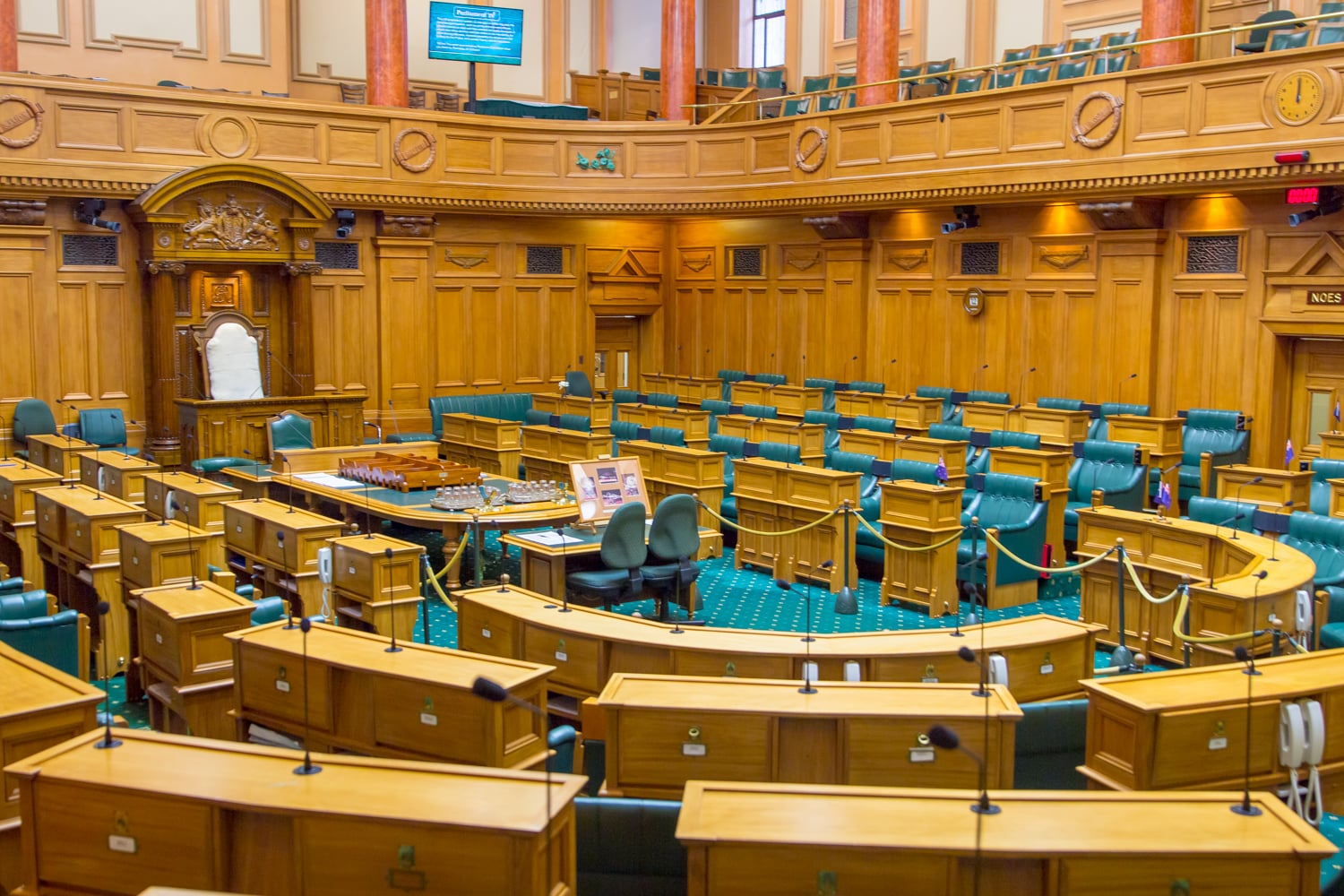
The National, ACT and NZ First coalition holds 67 of 131 seats. Labour, the Greens and Te Pāti Māori, the Māori Party, hold 57, and Opportunity holds seven.
Parliament has 131 seats rather than the usual 120 because of overhang seats. These are extra seats a party wins in local contests beyond what its party vote entitles it to.
Opportunity Holds the Balance
The Opportunity Party was founded in 2016 by the economist Gareth Morgan, and Qiulae Wong now leads it. Wong said it will talk with National first because National won the most seats, and will turn to Labour if talks stall.
She met Luxon for an hour on 9 November and Labour leader Chris Hipkins for an hour on 10 November. Luxon called his meeting with her “very positive”, although he had repeatedly ruled out working with Opportunity during the campaign.
What Prediction Markets Say
On Polymarket, a crypto-based prediction market, traders put Christopher Luxon at 87% to be New Zealand’s next prime minister and Chris Hipkins at 11.5%. About US$353,799 had been traded on that market at 2:26 p.m. ET on 12 November.
These prices are real-money bets, not polls. Why we show this: prediction markets turn real-money bets into a live probability that moves within minutes of the news, which is why investors, campaigns and newsrooms in the United States now follow them closely.
We show them next to polls and official results, never instead of them.
What It Means for You
For readers in the United States, the point is timing: New Zealand’s next economic course will not be clear until after 27 November. Any new finance minister is likely to wait for that result.
The finance row shows how much leverage a small party can hold when the two big parties finish level. A deal on the post could be the first sign of which side Opportunity prefers.
What Is Not Known
We found no new development on the finance dispute dated 11 or 12 November. It is not known whether special votes will cost the coalition its majority.
The Electoral Commission has not published a time of day for the 27 November result. It is also unknown whether the coalition can settle the finance post, or which side Opportunity will back.
Betting prices can move quickly, and they do not decide the result.
Frequently Asked Questions
When will New Zealand’s final election result be known?
Final results including special votes are due on Friday, 27 November 2026. We did not find a time of day.
Does the governing coalition still have a majority?
On the preliminary count it holds 67 of 131 seats. Special votes, which have historically leaned left, could narrow that.
What is the dispute over the finance minister?
Luxon says the next finance minister must be a National MP. ACT’s Seymour says National keeping the post is no longer tenable.
Related: New Zealand’s new party meets both rivals.
This article was produced by The Rio Times’ automated AI newsroom. Editorial responsibility: Matthias Camenzind, Publisher and Editor-in-Chief. The Rio Times also runs Ask Rio Times, which answers from 100,000+ of our own articles, the daily Latin America Power Map, and prediction-market odds on elections and markets.. How we use AI · Report an error
Read More from The Rio Times