Who Decides on Bolsonaro’s Seized Weapons? Police Pass It to Moraes
Brazil · Justice
Key Facts
- —The request On August 11, Brazil’s Federal Police asked Justice Alexandre de Moraes to decide the fate of Bolsonaro’s seized weapons.
- —Why them Police say the seizure came from a court order, not a police investigation, so the choice is not theirs to make.
- —The haul Ten firearms, plus ammunition and accessories, were taken in July after Moraes revoked Bolsonaro’s gun registration.
- —The backdrop Bolsonaro was sentenced on July 18 to 27 years and 3 months in prison for a coup attempt.
- —His status He is under house arrest, with visits and communications tightly restricted.
A dry procedural request, deciding where ten confiscated firearms should go, quietly measures just how far the former president has fallen.
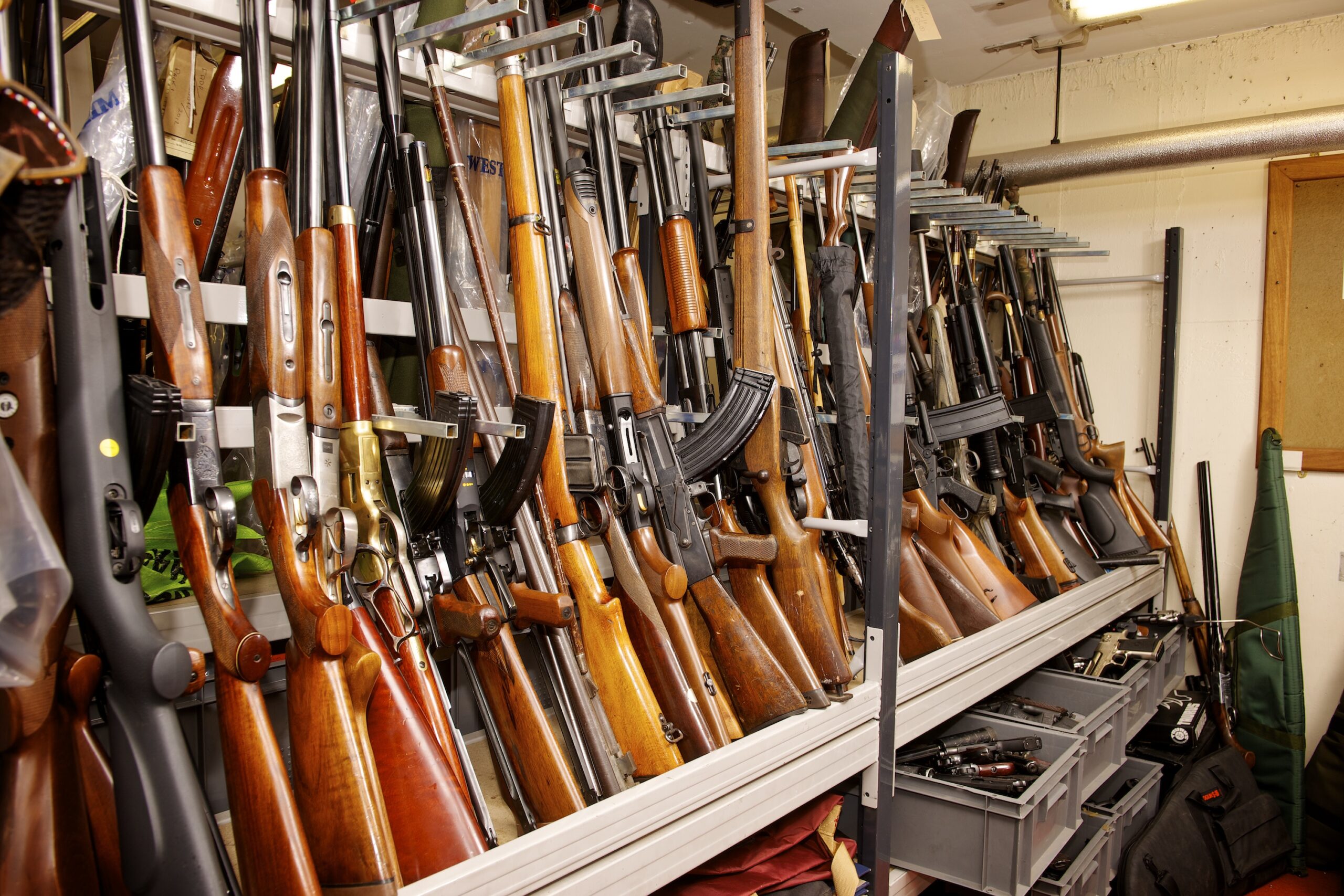
Brazil’s Federal Police have asked the Supreme Court to decide what should happen to Bolsonaro’s seized weapons. On the surface it reads like paperwork.
A set of ten firearms taken from the former president in July. But behind that dry request lies one of the most dramatic falls in modern Brazilian politics.
A question the police say is not theirs to answer
The request landed on August 11. The Federal Police asked Justice Alexandre de Moraes to define where the confiscated arms should ultimately go.
Their reasoning is unusually humble for a police force. They argue the seizure flowed from a court order, not from any police investigation of their own.
Because of that, they say, the decision belongs to the court. The options on the table are familiar ones: hand the weapons to the Army, destroy them, or donate them.
How Bolsonaro’s seized weapons ended up in limbo
The story of the weapons begins in early July. On July 3, Moraes revoked Bolsonaro’s registration as a hunter, sport shooter and collector.
That status, known in Brazil as a CAC licence, is what had allowed him to own firearms legally. Stripped of it, he was ordered to surrender them.
Days later, on July 6, seven weapons were collected in Brasília. They had been kept at an Army police battalion in the capital.
The tenth gun and a shotgun in the south
The count did not stop at seven. By July 8, the tally reached ten firearms tied to the former president.
The last was a shotgun, reportedly a gift. That had been held by a third party in Cachoeirinha, in Rio Grande do Sul.
Alongside the guns came ammunition and accessories. Police searched Bolsonaro’s own home too, and reportedly found no weapons there.
An arsenal, itemised
The inventory reads like a serious collection rather than a keepsake. It spans pistols, carbines and shotguns of various calibres.
Among them are handguns from Taurus, SIG-Sauer and Arex, and rifles chambered for military-style rounds. It is a substantial private armoury.
That detail matters politically. Gun rights were a signature cause of Bolsonaro’s presidency, and loosened firearm rules were among his proudest boasts.
Why this is bigger than ten guns
It would be easy to file this under bureaucracy. That would miss the point entirely.
The same man now waiting to learn where his shotguns go was, until recently, the president of Brazil. The distance travelled is extraordinary.
Each procedural step, however small, is a marker of that descent from the presidential palace to a tightly policed house. For millions of Brazilians on both sides, the image is unforgettable: a former commander-in-chief stripped even of his personal firearms.
A 27-year sentence hangs over it all
The weapons question does not stand alone. It sits inside a far graver case.
On July 18, Moraes sentenced Bolsonaro to 27 years and 3 months in prison for an attempted coup. It was a landmark ruling in Brazilian history.
The conviction reframed everything around him, including the once-routine matter of his gun licence.
Life under house arrest
For now, Bolsonaro is not in a cell but at home, under domiciliary arrest. The confinement, though, is strict.
In late July, Moraes suspended general visits for 30 days, allowing only medical staff, physiotherapists and lawyers. He also faces bans on social media and on political or electoral contact.
The isolation is nearly as striking as the sentence.
The role of Alexandre de Moraes
One name runs through every chapter of this saga: Alexandre de Moraes. He revoked the licence, ordered the seizure and imposed the sentence.
To Bolsonaro’s supporters, that concentration of power is proof of persecution. To his critics, it is the rule of law finally catching up.
Either way, it is Moraes who will now decide the fate of the guns, closing a loop he himself opened.
What his defence says
Bolsonaro’s lawyers have contested the broader case at every turn, framing the prosecution as politically driven. On the specific weapons.
They had earlier told the court that some had already been handed to police and others held by the Army. The former president has consistently denied wrongdoing, insisting he never plotted to seize or keep power by force.
What happens to the weapons now
The practical outcome is likely to be quiet. Courts in such cases usually send seized arms to the Army or order their destruction.
A donation to a security force is also possible. What is almost certain is that Bolsonaro will not get them back.
For a leader who built a movement partly on the right to bear arms, that is a pointed, if understated, ending.
Why it resonates beyond Brazil
Foreign investors and observers watch these steps for a simple reason. They show whether Brazil’s institutions hold firm under pressure.
A former president convicted, disarmed and confined, all through the courts, is a real-time stress test of the country’s democracy. So far, the machinery is grinding forward, one procedural request at a time.
What to watch next
The immediate signal is small: Moraes’s ruling on where the ten firearms go. It will likely come without drama.
The larger story is the appeals still ahead in the coup case, and how Bolsonaro’s movement responds to his silence. In Brazil right now, even a question about storage lockers is really a question about power.
Investors, meanwhile, mostly want calm. A predictable, rules-based process, however charged, is easier to price than chaos.
More: Brazil news, every day from The Rio Times.
Frequently Asked Questions
What did the Federal Police actually ask for?
They asked Justice Moraes to decide the final destination of ten firearms seized from Bolsonaro. Saying that choice is the court’s to make, not theirs.
Why were the weapons seized?
In July, Moraes revoked Bolsonaro’s firearms licence and ordered his guns surrendered. Ten were collected, along with ammunition and accessories.
What is Bolsonaro’s legal situation now?
He was sentenced on July 18 to 27 years and 3 months for an attempted coup. He is now under house arrest with tight restrictions.
Will he get the guns back?
Almost certainly not. Courts typically send such weapons to the Army or order them destroyed or donated.
Why does a weapons request matter so much?
Because it marks how far a former president has fallen. And it tests whether Brazil’s institutions can enforce the law against a powerful figure.
Sources: Federal Police; Supremo Tribunal Federal; G1; Reuters.
This article was produced by The Rio Times’ automated newsroom system. How we use AI · Report an error
Read More from The Rio Times