West African Bloc ECOWAS Targets 2027 ECO Currency Launch

Africa · Western
Key Facts
—2027 Launch Confirmed. ECOWAS heads of state reiterated at their July 2026 summit in Sierra Leone that the ECO will launch in 2027.
—Multi-Speed Rollout. Only member states that meet economic convergence criteria and are deemed “ready” will adopt the currency in the first phase.
—Ghana in Core Group. Ghana is explicitly cited alongside Nigeria, Sierra Leone, Liberia, Guinea, and The Gambia as a potential first-wave adopter, pending compliance.
—Convergence Gaps Remain. As of 2024, only Cape Verde and Benin met all four primary convergence criteria, raising questions about the 2027 timeline’s realism.
—Two-Track Currency Reality. The ECO project remains split between a flexible-rate ECOWAS-wide currency and a euro-pegged CFA franc successor for the UEMOA bloc.
The ECOWAS ECO launch is now officially set for 2027 with a pragmatic “coalition of the willing” approach that names Ghana among the first-wave adopters, marking a decisive shift away from the bloc’s long-standing insistence on simultaneous universal entry.
A Flexible Roadmap Replaces Universal Ambition
At the 69th Ordinary Session of ECOWAS heads of state and government in Lungi, Sierra Leone, on 19 July 2026, leaders formally reiterated that the long-awaited ECO currency will enter circulation in 2027. Crucially, they abandoned the requirement that all fifteen member states must simultaneously meet the convergence criteria before the launch could proceed.
Instead, the bloc adopted a gradual, multi-speed rollout under which only countries that satisfy the economic benchmarks and are deemed “ready” will adopt the ECO in the first phase. ECOWAS Commission President Omar Alieu Touray confirmed the doctrine publicly from Banjul, stating that the bloc will “launch the currency with those who are ready” while offering technical and financial support to lagging members.
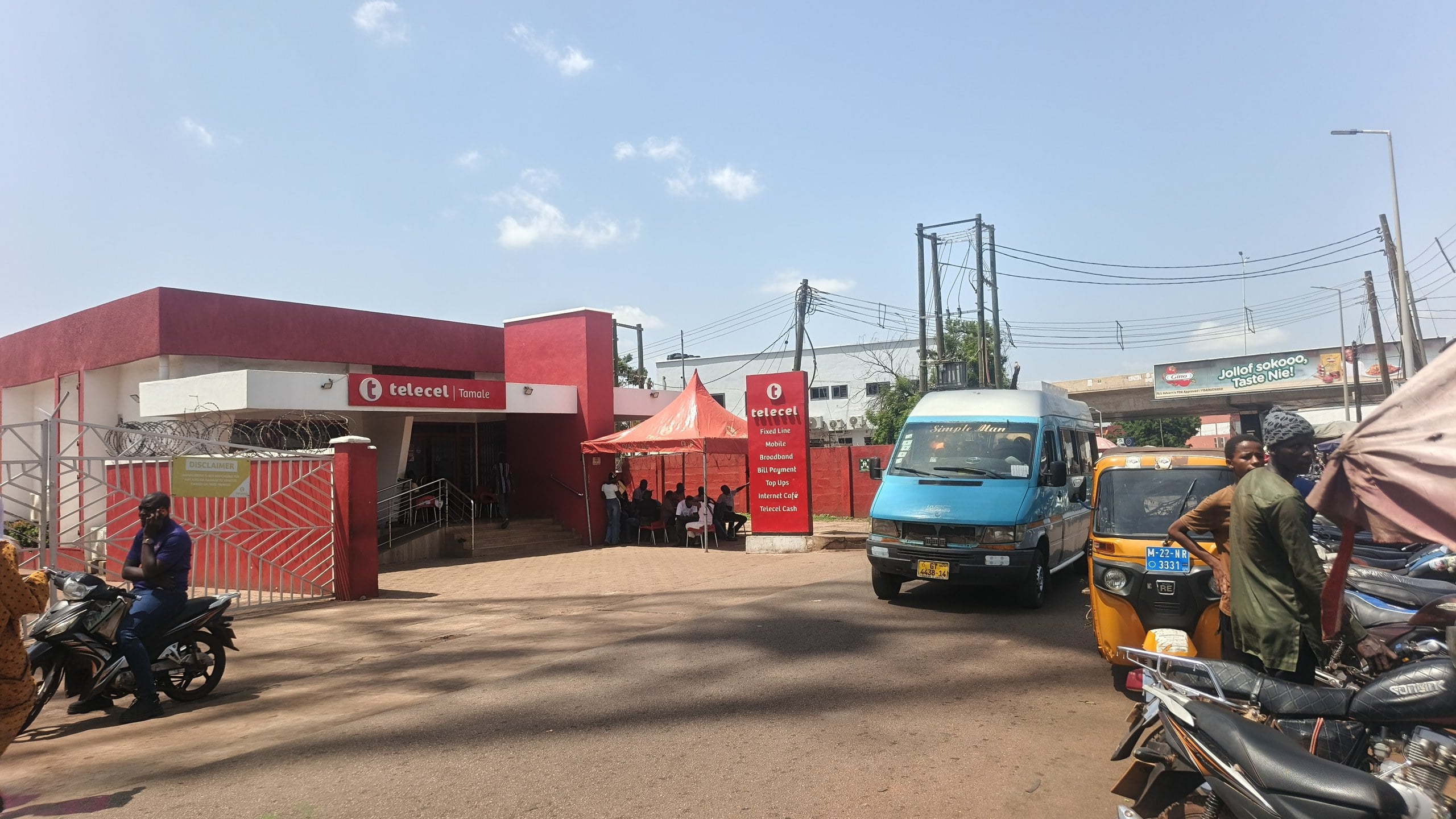
Ghana’s Place in the First-Wave Calculus
Coverage of the July 2026 summit identifies a core group of six potential first adopters: Nigeria, Ghana, Sierra Leone, Liberia, Guinea, and The Gambia. These are predominantly non-UEMOA states whose currencies are currently national—the naira, cedi, leone, and others—rather than part of the existing CFA franc architecture.
Ghana has long signalled political enthusiasm for joining a regional ECO arrangement. After the 2019 Abidjan announcement that the West African CFA franc would be renamed ECO, Accra declared its determination to “join UEMOA members rapidly in using the ECO,” stressing support for a flexible exchange rate and a federal central bank model.
Yet political will and economic readiness are different things. Ghana has struggled with elevated inflation and fiscal deficits in recent years, and as of 2023 no ECOWAS state fully met all mandatory convergence criteria.
Whether Accra actually qualifies for the 2027 first wave will depend on economic stabilisation between now and the launch window, making the Bank of Ghana’s policy trajectory a critical variable for investors to watch.
The Convergence Hurdles: Who Is Truly Ready?
The ECO’s entry conditions are modelled on Maastricht-type rules and are monitored by the West African Monetary Institute. The primary criteria require a fiscal deficit no higher than 3% of GDP, single-digit inflation with an operational target of 5% or below, gross foreign-exchange reserves covering at least three months of imports, and central bank financing of the deficit capped at 10% of the previous year’s tax revenue.
Secondary benchmarks include a public debt-to-GDP ratio of 70% or less and nominal exchange-rate variation limited to plus or minus 10%. The reality on the ground is sobering: independent analyses show systematic non-compliance across the region, with only Cape Verde and Benin meeting all four primary indicators in 2024.
This persistent gap explains the strategic pivot to a flexible launch. Rather than waiting indefinitely for all members to converge, ECOWAS will trigger the currency once a sufficient subset meets the thresholds, a decision that acknowledges the political cost of further delay while shifting the burden of proof onto individual states.
The Two-Track ECO and the CFA Franc Question
The ECOWAS ECO launch cannot be understood in isolation from the existing CFA franc architecture. Eight UEMOA members—including Côte d’Ivoire, Senegal, and Benin—currently use the West African CFA franc, which is pegged to the euro and backed by a French guarantee.
In December 2019, Ivorian President Alassane Ouattara and French President Emmanuel Macron announced that the CFA would be renamed ECO, with French representatives leaving the regional central bank’s board and the obligation to deposit reserves at the French Treasury removed, though the fixed euro peg initially remained.
This has created a two-track reality: a “CFA-ECO” still tied to the euro for the UEMOA bloc, and a broader “ECOWAS-ECO” envisioned as a flexible-rate currency for all fifteen states. Analysts describe this ambiguity as a struggle over monetary leadership between UEMOA, backed by France, and non-CFA heavyweights like Nigeria and Ghana, each with divergent visions of what the ECO should be.
For global investors and policymakers tracking the great-power contest in Africa, this monetary negotiation is a microcosm of the wider dynamics covered in our pillar series Africa: The New Scramble. Control over the currency means control over budget constraints, external financing terms, and trade pricing—levers that matter enormously as Chinese, Turkish, and Gulf investment flows deepen across West Africa.
What the ECO Would Change for Business and Trade
For companies operating across West African markets, a functioning ECO would eliminate intra-regional currency risk and lower transaction costs across a bloc of up to fifteen countries. Single pricing, unified payments, and potentially deeper financial markets are the promised dividends, particularly if accompanied by industrial policies that strengthen regional value chains beyond raw-material extraction.
Yet economists caution that ECOWAS does not currently meet the criteria of an optimum currency area. Trade integration remains limited, economic structures are heterogeneous, and labour mobility is constrained.
A common currency without strong fiscal coordination and shock-absorbing mechanisms could intensify crises in weaker members, a risk that the multi-speed launch is partly designed to mitigate.
The exit of Mali, Niger, and Burkina Faso from ECOWAS adds a further complication. These three Sahelian states have formed the Alliance of Sahel States and may pursue their own currency, raising the prospect of two separate monetary zones in a region that was once imagined as a single market.
For corporates with cross-border supply chains, this fragmentation demands scenario planning that treats 2027 as a policy milestone rather than a hard operational deadline.
The Geopolitical Stakes: Sovereignty, France, and the BRICS Thread
The ECO debate is inseparable from post-colonial monetary politics. Critics have long viewed the CFA franc—and by extension a euro-pegged ECO—as a symbol of continued French influence, because of the fixed peg, reserve arrangements, and the historic presence of French officials on the regional central bank’s board.
France’s 2019-2020 reforms removed some of the most visible symbols of that oversight, but the euro peg and French guarantee remain, leading some analysts to describe the changes as cosmetic adjustments that preserve significant use.
For Latin American readers familiar with debates over dollarisation and monetary sovereignty, the parallels are striking. Just as South American nations have wrestled with the trade-offs between exchange-rate stability and policy autonomy, West African states are now navigating a similar terrain, with the added layer of a formal French guarantee that has no direct equivalent in the Western Hemisphere.
The ECO also sits within a broader South-South context that connects to the BRICS agenda. As emerging economies from Brazil to South Africa explore alternatives to dollar dominance for trade settlement, a successful regional currency in West Africa would represent one of the most significant experiments in monetary sovereignty on the continent.
Whether the ECO ultimately strengthens West Africa’s bargaining position with external creditors and trading partners will depend on the credibility of its institutional design and the economic discipline of its first-wave members.
Connected Coverage
More: Ghana news in English, every day from The Rio Times.
The big picture: Nigeria explained — economy, politics, society and daily life in one read.
Frequently Asked Questions
When will the ECO currency officially launch?
ECOWAS has confirmed that the ECO will launch in 2027, following a decision reiterated at the 69th Ordinary Session of heads of state in Sierra Leone in July 2026. The rollout will be gradual, with only member states that meet the economic convergence criteria adopting the currency in the first phase, while others receive support to join later.
Is Ghana guaranteed to adopt the ECO in 2027?
Ghana is named among the six potential first-wave adopters, but its participation is not guaranteed. The country must meet the convergence criteria—including a fiscal deficit below 3% of GDP and single-digit inflation—before it can join.
Ghana has struggled with both metrics in recent years, so its inclusion depends on successful economic stabilisation between now and the launch window.
How does the ECO relate to the existing CFA franc?
The relationship is complex and remains unresolved. Eight UEMOA countries currently use the CFA franc, which is pegged to the euro and backed by France.
In 2019, it was announced that the CFA would be renamed ECO with some reforms to French oversight, but the euro peg remains. This creates a two-track reality: a euro-pegged ECO for the UEMOA bloc and a broader, flexible-rate ECOWAS-wide ECO that Nigeria and Ghana favour.
Sources
This article was produced by The Rio Times’ automated newsroom system. How we use AI · Report an error · Editorial responsibility: Matthias Camenzind, Editor-in-Chief
LatAm Markets: Live Signals → — real-time movers, turnover leaders and FX across Latin America.