Dollar Demand Intensifies: BCRA Intervention Fails to Stabilize Sliding Argentine Peso
The Argentine peso continues its downward trajectory against the US dollar this morning as economic uncertainty persists. As of 7:09 AM GMT on March 19, 2025, the official USD/ARS exchange rate stands at 1068.11 pesos per dollar, showing a slight increase of 0.01% from yesterday’s close.
Current Exchange Rates
The official peso rate has weakened marginally overnight, while the parallel “blue dollar” market shows more significant pressure:
- Official Rate: 1068.11 ARS/USD
- Blue Dollar Rate: 1180-1260 ARS/USD (varying by source)
- Spread: 10.6-18% (widening overnight)
Yesterday’s Market Activity
The peso faced considerable pressure throughout yesterday’s trading session as the official rate reached 1068 ARS/USD, continuing its depreciation trend from Friday’s close of 1063 ARS.
The Argentine Central Bank (BCRA) was forced to accelerate its intervention efforts, selling significant dollar reserves to stabilize the currency.
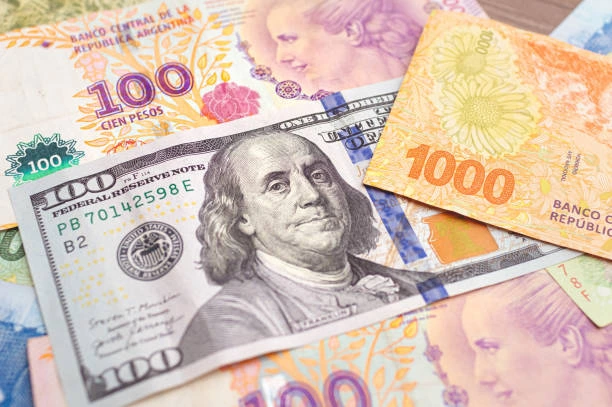
In its most recent intervention rounds, the BCRA liquidated over half a billion dollars, ending a six-week period of net dollar acquisitions. This aggressive intervention highlights growing concerns about currency stability despite the government’s austerity measures.
Overnight Developments
Trading remained volatile overnight as investors processed contradictory signals about Argentina’s economic outlook. The gap between official and parallel rates has widened since yesterday, with some sources reporting the black market rate reaching as high as 1260 pesos per dollar, creating a spread of approximately 18%.
This widening spread reflects renewed market anxiety about Argentina’s economic fundamentals and policy direction, particularly regarding negotiations with the International Monetary Fund.
Market Analysis
“The narrowing spread we saw earlier this year indicated partial success in the government’s currency stabilization efforts, but persistent gaps signal ongoing structural challenges in Argentina’s economy,” noted Diego Martínez of Banco Ciudad in yesterday’s market commentary.
Finance Minister Carlos Rodriguez attempted to reassure markets this morning, stating: “The convergence between official and parallel rates reflects our commitment to market-based exchange mechanisms, though complete normalization remains a medium-term goal”.
Technical Indicators
The USD/ARS pair currently faces strong resistance at the 1070 level, with immediate support around 1060. The 14-day Relative Strength Index (RSI) indicates the peso remains in oversold territory, though less extremely than in previous months.
Chart patterns suggest a consolidation phase may be forming after several months of steady depreciation, with trading volume declining slightly over the past week as the market searches for direction.
Trading Volumes and Flows
The ROFEX futures market recorded moderate trading volumes yesterday, with the March 2025 contract settling near 1080.50 on volume of approximately 416,000 contracts. This relatively calm derivatives market suggests institutional investors have largely priced in current depreciation rates.
Corporate dollar demand remains steady, primarily for import payments, while foreign investors continue to maintain cautious positioning in Argentine assets.
Economic Context
The peso has depreciated approximately 25.36% since March 2024, despite the central bank’s February decision to reduce the crawling peg rate to 1% monthly from the previous 2%. This persistent slide reflects deeper structural issues in Argentina’s economy.
President Milei’s administration continues pursuing a new program with the IMF to strengthen state finances. These finances have been undermined by years of excessive spending and substantial fiscal deficits.
However, crucial aspects of the program remain unclear, and the proposal may encounter resistance in Congress, creating uncertainty that weighs on the currency.
Market Outlook
Traders expect continued pressure on the peso in the near term, with futures markets pricing in further depreciation. The central bank’s declining foreign reserves position limits its intervention capacity, suggesting market forces will largely determine the currency’s path.
The key metric to watch remains the official-to-blue dollar spread, which could widen further if economic conditions deteriorate or policy credibility weakens. Argentina’s ongoing IMF program negotiations add another layer of uncertainty that could impact currency markets in the coming weeks.
Inflation expectations remain elevated, with businesses increasingly adopting dollar-referenced pricing as a hedge against further peso weakness. This dollarization trend continues to spread through the economy despite official efforts to bolster confidence in the national currency.
More: Argentina news in English, every day from The Rio Times.
This article was produced by The Rio Times’ automated newsroom system. How we use AI · Report an error
In depth
Read More from The Rio Times