Divergence and Diplomacy: Lula’s Controversial Take on Venezuelan Elections
(Analysis) Brazil remains officially neutral regarding the recent Venezuelan elections. Yet, President Luiz Inácio Lula da Silva’s comments suggest minimal concern about tensions in Caracas.
His perspective sharply contrasts with that of the Brazilian Ministry of Foreign Affairs, Itamaraty. The latter has withheld its judgment, pending further electoral documentation.
This divergence indicates a significant shift in Brazil’s diplomatic posture, highlighting possible internal disagreements at the highest government levels.
In a televised interview, President Lula dismissed the electoral disputes between Nicolás Maduro and his opposition as typical proceedings.
He did this even though Maduro declared victory before ensuring full transparency and verification of the results.
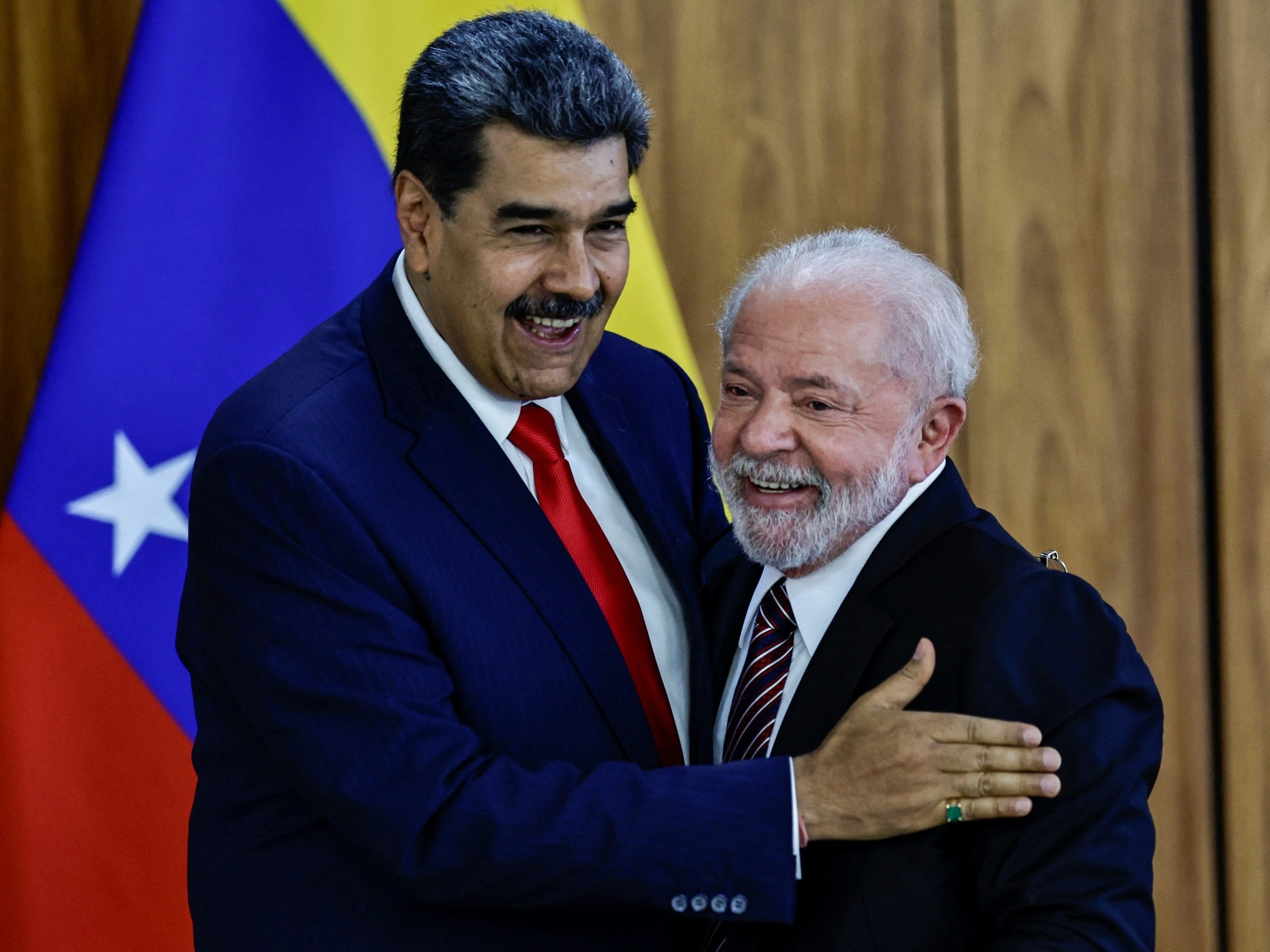
This approach by Lula has sparked criticism not only from opposition parties but also from his allies, such as Senator Randolfe Rodrigues and the Brazilian Socialist Party (PSB).
Their dissatisfaction points to broader discomfort within Brazilian politics concerning Lula’s seemingly dismissive attitude toward what many perceive as a critical test of democracy in the region.
Brazil’s Diplomatic Crossroads
The central issue is the legitimacy of the Venezuelan elections. Despite accusations of irregularities and a lack of comprehensive proof, Maduro’s reported 51% victory has not been internationally recognized.
This is due to concerns over electoral fairness and the government’s control over voting processes. Such circumstances usually call for cautious diplomatic engagement.
Yet, Lula’s comments have preemptively dismissed widespread concerns, placing Brazil at odds with the international community’s cautious stance.
This discrepancy between Lula’s remarks and Itamaraty’s silence carries broader implications for Brazil’s foreign relations.
It raises questions about Brazil’s commitment to democratic values abroad and highlights the challenges of maintaining a coherent diplomatic strategy.
The fallout from Lula’s stance is not merely a domestic issue. It resonates internationally and could influence Brazil’s relations with both allies and adversaries who are closely monitoring the situation.
In essence, this situation underscores a pivotal moment for Brazil’s foreign policy. It reveals tensions between presidential rhetoric and traditional diplomatic caution.
As the international community continues to scrutinize Venezuela’s political integrity, Brazil’s internal discord and its potential impact on global diplomatic alignments come to the forefront.
More: Brazil news in English, every day from The Rio Times.
This article was produced by The Rio Times’ automated newsroom system. How we use AI · Report an error
Read More from The Rio Times