US Democrats Press Rubio on Venezuelan Tycoon’s Role in Oil Deal
Key Facts
This story is part of our coverage of the Venezuela US tensions. Who runs Venezuela, the US sanctions and oil deals, the Maduro case and the odds are in our dossier.
Washington’s new oil partnership in Venezuela runs through a businessman who has been investigated in three countries. Democrats in Congress now want to know how he got there and who helped him.
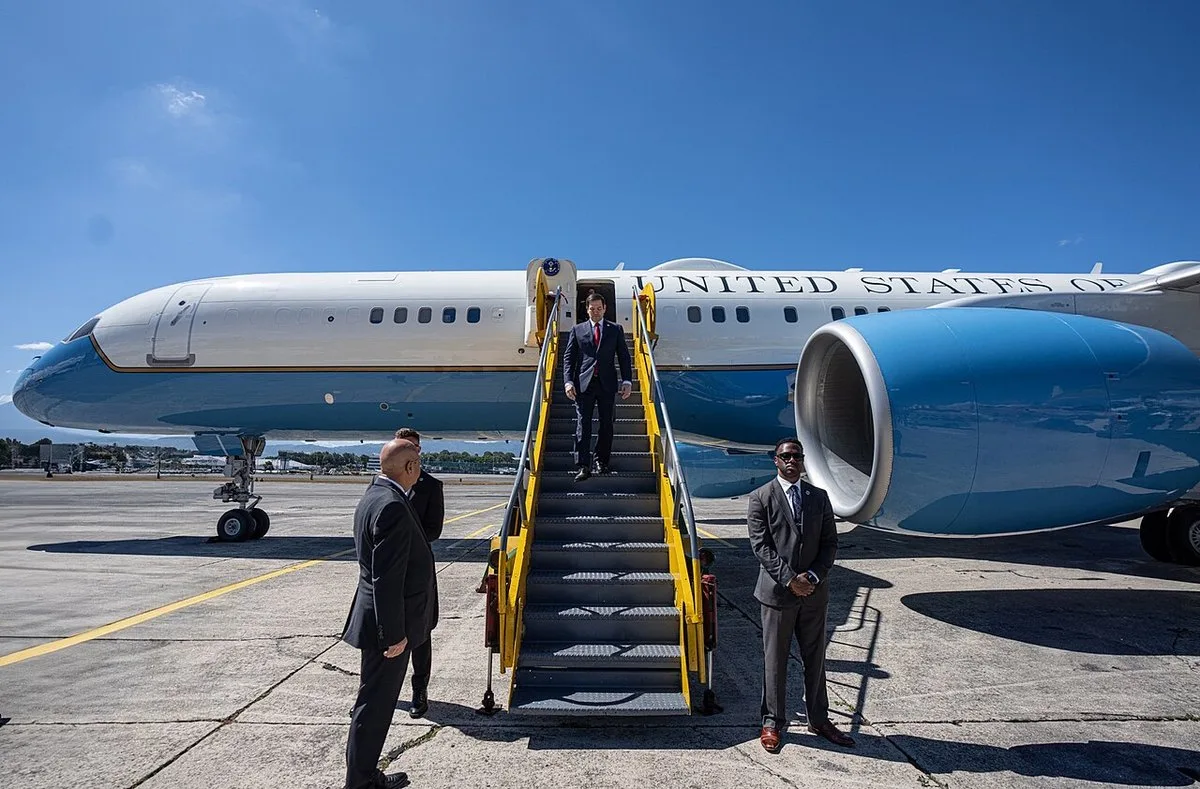
Representatives Robert Garcia, Gregory Meeks and Jared Huffman wrote to Secretary of State Marco Rubio on 17 September 2026. The letter, also sent to Attorney General Todd Blanche, questions the role of Venezuelan businessman Alejandro Betancourt, Efecto Cocuyo reported.
Why This Matters
After Nicolás Maduro’s arrest in January, the Trump administration moved to take a direct role in Venezuelan oil. Venezuela holds about 303 billion barrels of proven crude reserves, the largest of any country, on OPEC figures.
Under a deal announced in late August, the US would take a 35% stake in North American Blue Energy Partners. That company, known as NABEP and led by Betancourt, would give the US preferential rights to buy 20% of production.
The deal covers 17 oil fields with estimated reserves of 65 billion barrels, Efecto Cocuyo reported. Infobae reported that the US stake would be held through the Pentagon and that NABEP is based in Barbados.
Rubio and Pete Hegseth, who heads the Pentagon, signed for the US side, according to the same report. The accounting firm KPMG monitors revenue from Venezuelan oil sales, Infobae added.
What the Democrats Want
The three are the top Democrats on the House oversight, foreign affairs and natural resources committees. Semafor noted that they would likely chair those committees if their party wins the House in November.
Their press release says the administration has shared few details on its handling of at least $13 billion in Venezuelan oil revenue. Efecto Cocuyo, a Venezuelan news site, reported that they asked for a list of everyone involved in the negotiations.
They also want details on the roles of Betancourt and Mauricio Claver-Carone, a former informal US envoy. The letter seeks records of any US interventions with foreign governments over investigations into Betancourt.
It also asks for communications on the deal between the White House, the State Department and the Justice Department. The lawmakers want the personal involvement of Rubio and Blanche documented, their committees said.
Congress “has a right to know who the president has chosen to conduct business with”, the lawmakers wrote. Meeks asked why Betancourt “is being treated as a business partner instead of the subject of a law enforcement investigation”.
Huffman said handing him a stake in another nation’s oil “is exactly how the Trump administration does business”. Garcia called Betancourt “an alleged money launderer who is under active criminal investigation”.
Who Alejandro Betancourt Is
Betancourt, 46, runs Venezuela’s second-largest private oil producer, according to Efecto Cocuyo. He first made his name with Derwick Associates, a firm he co-founded in 2003 with his cousin Pedro Trebbau.
Derwick won 11 power-plant contracts from Venezuelan state companies during the 2009 to 2010 electricity crisis. The Wall Street Journal reported in 2019 that those contracts were worth about $1.8 billion.
Derwick has denied all allegations of corruption, and a lawsuit brought against it by a critic was dismissed. He has faced investigations in the US, Switzerland and Spain over alleged laundering of funds from PDVSA, the state oil company.
Axios reported that he was never charged in a 2019 US inquiry into an alleged $1.2 billion laundering scheme. The US Justice Department had described that case in 2018 as money embezzled from PDVSA through bribery and fraud.
Efecto Cocuyo reported that his cousin and others were charged in Miami, and that Swiss authorities later reopened their case. Swiss investigators searched his castle in Spain, El Alamín, and an office in Madrid, according to the same report.
A Spanish probe led by National Court judge Santiago Pedraz was dismissed in March 2026. Axios also reported that US officials, including then-Attorney General Pam Bondi, asked Switzerland in 2026 to pause its case.
From Opposition Go-Between to US Partner
In 2019, Betancourt acted as an intermediary between opposition leader Juan Guaidó and military figures, Efecto Cocuyo reported. He travelled to Moscow with a letter asking Russia to drop its support for Maduro, and Maduro ordered his arrest.
After Maduro’s capture, he worked with Claver-Carone and played a key role in transition talks, the same report said. Claver-Carone led the Inter-American Development Bank from 2020 until its governors removed him in September 2022.
He was named US special envoy for Latin America in January 2025. Betancourt’s lawyer, Jon Sale, said his client had been investigated over “very old facts” and never charged or convicted.
Where NABEP Fits Among Other Deals
NABEP is not the only vehicle for the return of foreign money to Venezuelan oil. Chevron, which stayed when ExxonMobil and ConocoPhillips left in 2007, announced an expanded position on 3 September.
Its joint ventures plan to invest more than $7 billion over five years, Rigzone reported. US general licences currently name six firms allowed to operate, including BP, Chevron, Eni, Repsol and Shell.
What sets NABEP apart is that the US government itself would hold equity, not just license private companies. That makes the choice of partner a question for Congress, not only for sanctions lawyers.
The Administration’s Case
Rubio defended the deal on 2 September, saying “no investigation existed within our system” into Betancourt. He described Betancourt’s company as the largest private firm in Venezuela “with a record of being able to produce”.
Rubio said the fields had previously been exploited by Chinese and Russian interests, Infobae reported. He said the arrangement would let the company produce more and make payments to the Venezuelan government.
What It Means If You Follow the Deal
For oil investors, the letter adds political risk to a deal whose terms have not been published in full. A Democratic House could summon officials and demand documents after the midterm election on 3 November.
For Venezuelans, the question is who controls revenue from fields that hold about a fifth of the country’s reserves. For Swiss prosecutors, the letter keeps attention on whether Washington tried to shield a suspect in their case.
What Is Not Yet Known
Neither the State Department nor Betancourt had responded to the letter in the reports reviewed. Rubio said on 2 September that no US investigation into Betancourt existed, Infobae reported.
Semafor noted that Democrats could issue subpoenas only if they win control of the House. It is unclear whether the Swiss case against Betancourt remains paused.
The full text of the NABEP agreement has not been made public. It is not known how much Betancourt or other private partners stand to earn from the deal.
Frequently Asked Questions
Why does the Democrats’ letter matter?
It questions why a businessman investigated for money laundering leads the firm behind a US stake in Venezuelan oil. A Democratic House win in November could turn it into subpoenas.
Who is Alejandro Betancourt?
He is a Venezuelan businessman who leads North American Blue Energy Partners. He has been investigated for alleged money laundering but has not been convicted.
What does the US get from the Venezuela oil deal?
A 35% stake in NABEP and preferential rights to buy 20% of its output. The deal covers 17 oil fields.
Does the administration have to answer?
No. Semafor noted that it has no legal duty to reply, though the Democrats asked for documents by 1 October.
Sources: Efecto Cocuyo, Democrats demand answers from Rubio, House Oversight Democrats, press release on the letter, House Foreign Affairs Democrats, the ranking members’ statements, Semafor, Democrats press State and DOJ on the oil deal, Efecto Cocuyo on Axios, Betancourt’s background, Infobae, Rubio defends the NABEP deal, OPEC, Venezuela’s reserves, Wikipedia, Derwick Associates, Wikipedia, Alejandro Betancourt López, US Justice Department, the 2018 PDVSA laundering case, Wikipedia, Mauricio Claver-Carone, Chevron, its expanded position in Venezuela, Rigzone, Chevron’s joint venture investment plan, US Treasury, Venezuela sanctions programme and licences, Wikipedia, 2026 US House elections
This article was produced by The Rio Times’ automated newsroom system. How we use AI · Report an error · Editorial responsibility: Matthias Camenzind, Editor-in-Chief
Venezuela and the United States
- What Is Going On Between Venezuela and the United States?
- What Is Going On Between Venezuela and the United States?
- Venezuela Geopolitics Explained, US Now Runs Its Oil
- Venezuela Politics 2026, Who Holds Power After Maduro