Costa Rica recovers archaeological pieces exported to the U.S. in the 19th century
RIO DE JANEIRO, BRAZIL – Costa Rica recovered 1,305 archaeological ceramic and lithic pieces of great historical value that were exported by railroad entrepreneur Minor Keith between the late 19th and early 20th centuries.
The Costa Rican National Museum finalized the second repatriation – the first was in 2011 with the delivery of 981 pieces – from the Brooklyn Museum in New York, which allows the national collection to be complete.
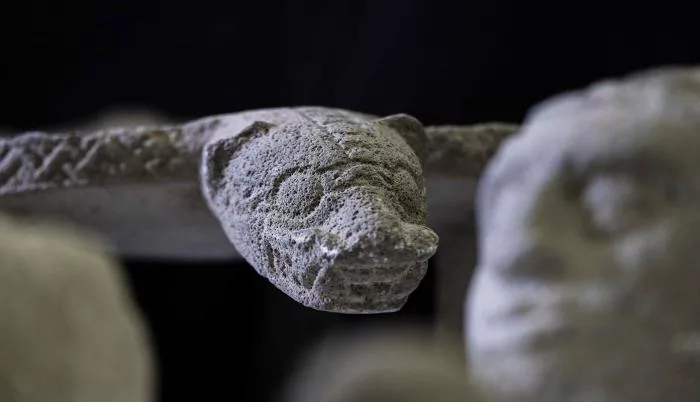
“It is a way to recover part of history (….) The first legislation that protects the archaeological heritage only came in 1938. Then, when Minor Keith took the pieces out between 1870 and 1910 with the construction of the railroad to the Atlantic, he did it in a very natural way by sea because he went with machinery or other things and it was not something they had control over”, explained to Efe the archaeologist of the Heritage Protection department, Daniela Meneses.
The set is made up of ceramic and lithic (stone) pieces from various regions of the country, but mainly from the central zone, among which stand out a slab of approximately 120 kilos, a zoomorphic metate, a prisoner of war, as well as a great variety of vessels, axes, chisels, spears, vases, domestic utensils, among others.
Each of the pieces must be verified, cleaned, and some of them must be restored, as well as valued, revised, and included in a registry for cataloguing. They will then be available to the museum for future exhibitions and displays, as well as for researchers and studies.
HISTORICAL RECOVERY
Authorities estimate that Minor Keith’s collection could amount to 16,000 pre-Columbian pieces. However, there is no inventory, so there could be the possibility that there are other materials such as gold and jade within the series.
A Heritage Protection Department report indicates that the collection was kept together until 1914 when a portion was loaned to the American Museum of Natural History in New York, others were sold or donated to the Museum of the American Indian, Heye Foundation and the Smithsonian Institution’s National Museum of Natural History; after Keith’s death his wife donated objects to the Brooklyn Museum, while others were purchased in 1934.
Among some of the most characteristic works is an unfinished tombstone. On the left side it has a zoomorphic figure and on the right you can see the wear and tear that the piece had to undergo in order to make the details.
It also highlights the figure of a prisoner in stone with his hands tied backwards, but the unusual thing is that the face is half sideways and has an expression of pain something that, for the moment, has not been seen so it is “very interesting and special”, said Meneses.
In the case of ceramics, there is a vessel that is the largest with an anthropomorphic representation on the body. These figures are typical of the period and were possibly used to store water or grain.
“The incoming collection is very diverse both in terms of vessel shapes and regions, there are some from the Central Caribbean but others come from the south and the northwest (north Pacific), which give us valuable scientific aspects at the time of research. There are simple and small vessels that were elaborated approximately between 300 and 500 A.D.,” indicated to Efe the archaeologist Javier Fallas.
This second delivery, which was made with the budget of the National Museum, cost 23 million colones (US$38,000) and counted on the collaboration of the Brooklyn Museum for the packing of the objects. The return was finalized at the end of 2020 after three years of conversations to detail technical aspects.
The repatriation was executed thanks to the good will of the Brooklyn Museum and not by a judicial process, since the objects had left the country when there was no legislation to protect the patrimony.
More: Latin America news in English, every day from The Rio Times.
Editorial responsibility: Matthias Camenzind, Editor-in-Chief · Editorial standards · Report an error