Copel Fight Pulls Brazil’s Paraná Electoral Court Into Governor’s Race
Key Facts
-
—
What happened. Paraná’s electoral court, TRE-PR, ordered candidate Sandro Alex’s campaign to remove a video attacking rival Sergio Moro. -
—
How big. The judge set a fine of R$5,000 (US$970) per day for noncompliance, plus R$5,000 if the video reappears. -
—
Who it affects. Sandro Alex, Governor Ratinho Júnior’s chosen successor, championed Copel’s 2023 privatization as state infrastructure secretary. -
—
What it means. Copel’s privatized power service, including 2025 profit of R$2.6 billion (US$505.1 million), has become the race’s defining issue. -
—
The catch. Moro’s own campaign has also been sanctioned by TRE-PR this month, in a race both sides keep taking to court. -
—
What comes next. Paraná votes for governor on Oct. 4, 2026, with a runoff on Oct. 25 if no one wins a majority.
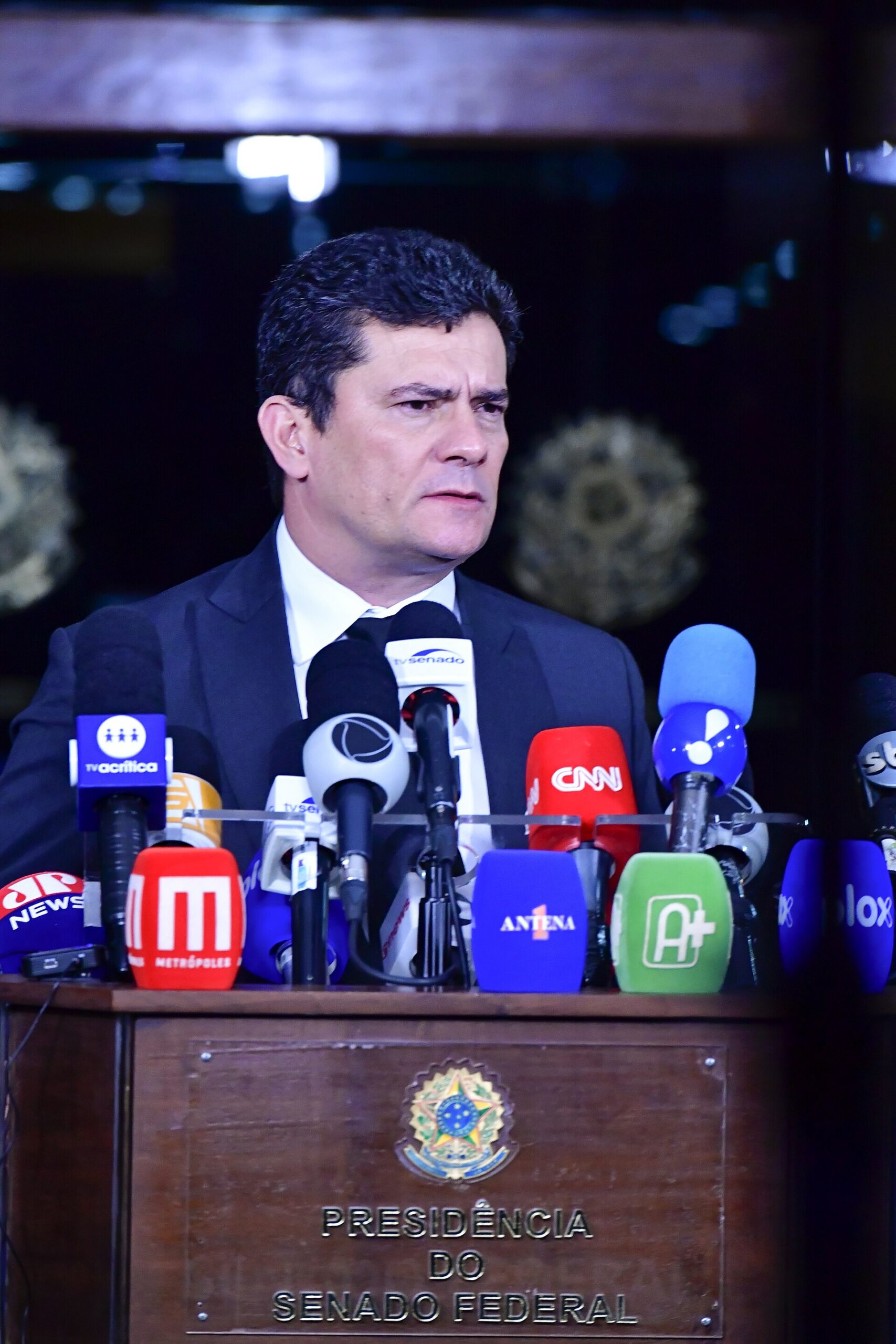
A fight over the privatized state utility Copel has pulled Paraná’s electoral court directly into the race for governor. Judges have now ordered video after video pulled from the internet, most of them aimed at Senator Sergio Moro.
The latest ruling came Sept. 10, 2026, from Desembargadora Sandra Bauermann of the Tribunal Regional Eleitoral do Paraná, known as TRE-PR. She ordered the campaign of rival candidate Sandro Alex to take down a video within 24 hours.
What the Video Showed
The clip paired photographs of Sandro Alex with former president Jair Bolsonaro, taken in earlier years. It overlaid the images with Alex’s 2026 ballot number and current coalition branding.
Bauermann found the editing created a false impression of present-day support from Bolsonaro. She wrote that stamping old photos with new campaign markings “differs from merely using the candidate’s political trajectory.”
The court set fines of R$5,000 (US$970) per day if the campaign missed the deadline. A further R$5,000 penalty applies if the video is reposted anywhere online.
Copel Sits at the Center
Sandro Alex is not a Copel executive today, but his political history is bound tightly to the utility. As Paraná’s secretary of infrastructure and logistics, he helped steer the company’s 2023 sale to private control.
He remains one of privatization‘s most vocal defenders on the campaign trail. He says the model works but acknowledges Paraná’s “generalized complaint” over service quality since the sale.
Moro, too, backs privatization in principle but has turned Copel’s performance into a campaign weapon. He argues the company owes compensation to residents hit by prolonged blackouts.
State records cited in local reporting show more than 38,000 power interruptions in a recent stretch. That marked a 23.6% jump from the year before.
Average repair response time also worsened, rising from 248 to 355 minutes. Rural producers reported steep losses, including tens of thousands of dead fish and poultry after outages.
Despite those complaints, Copel posted a 2025 profit of R$2.6 billion (US$505.1 million). Moro has asked to summon the company’s president, Daniel Pimentel Slaviero, for a legislative hearing on the outages.
Slaviero is the brother of Curitiba’s mayor, Eduardo Pimentel, a fellow member of Sandro Alex’s Social Democratic Party. That family and party overlap has fed opposition arguments that the privatized utility remains politically entangled.
Copel’s defenders counter that private ownership brought new investment and better financial results than the state ever managed. Aneel, Brazil’s federal energy regulator, has also faced pressure from Moro to explain its oversight of the concession.
A Court Kept Busy
The Sept. 10 order was not TRE-PR’s first strike against the Sandro Alex campaign this election cycle. Five days earlier, the same court ordered a 30-second Bolsonaro-narrated ad pulled from free television airtime.
Judges found that ad devoted most of its runtime to personal attacks on Moro rather than policy proposals. Broadcasters were told to strip an equivalent 30 seconds from Sandro Alex’s future allotment as penalty.
Earlier in August, TRE-PR separately ordered removal of an AI-generated video making false claims about Moro. That case involved a different poster, “Política Velho Oeste,” and drew a steeper daily fine of R$5,000 for continued noncompliance.
Moro’s side has not escaped scrutiny either. Electoral judges this month ordered his campaign to stop copying content from Sandro Alex’s social media accounts.
Separately, the court curbed Governor Ratinho Júnior from using a state hospital event to promote his chosen successor. That video, too, came down under a daily fine.
A Race Defined by Litigation
Eight candidates are competing for Paraná’s governorship, but the contest has narrowed into a bitter duel. Moro represents the Liberal Party, while Sandro Alex carries the banner of Ratinho Júnior’s governing coalition.
Requião Filho, a third contender from the Democratic Labor Party, has built his campaign around auditing the Copel sale entirely. He wants contracts from the privatization reviewed for possible irregularities.
Local outlets covering the race describe near-daily filings at the electoral court from one side or the other. Legal analysts say the volume reflects both a close race and the reach of video content in modern Brazilian campaigns.
Short-form video has become the dominant battlefield in Brazilian elections since 2022, replacing longer television spots as the main persuasion tool. That shift has also multiplied the openings for the kind of misleading edits judges keep striking down.
TRE-PR’s rulings so far have hit every major campaign at least once. None of the candidates has emerged from the litigation without a rebuke.
Whichever candidate wins in October will inherit a politically charged relationship with Copel. The utility’s service record, ownership structure and executive ties look likely to remain flashpoints well past election day.
This article was produced by The Rio Times’ automated newsroom system. How we use AI · Report an error
Read More from The Rio Times