Anjouan Casino Licences Are Sold in a Name the State Rejects
COMOROS · REGULATION
Key Facts
- —The claim A body trading as the Anjouan Gaming Control Board says it has issued more than 1,300 online gambling licences.
- —The rejection The Central Bank of the Comoros describes the issuing entities as fictitious, with no physical or legal existence, operating illegally.
- —The history The Anjouan Offshore Finance Authority was stripped of regulatory status through banking legislation between 2013 and 2015, after Anjouan rejoined the union.
- —The price Marketing material advertises an initial application at about €17,000 and renewal near €13,300, with no tax on gross gaming revenue.
- —The absence The IMF’s 2026 Article IV report on the Comoros does not mention gaming, casinos or licensing anywhere in its text.
- —The real economy Remittances were 18.1% of GDP in 2025. The Comoros is a US$1.44 billion economy of about 866,000 people.
More than a thousand online gambling operators display an Anjouan casino licence. The Comoran central bank says the authority that issued them does not legally exist, and the money never reaches the country whose name is on the paper.
What Is Actually Being Sold
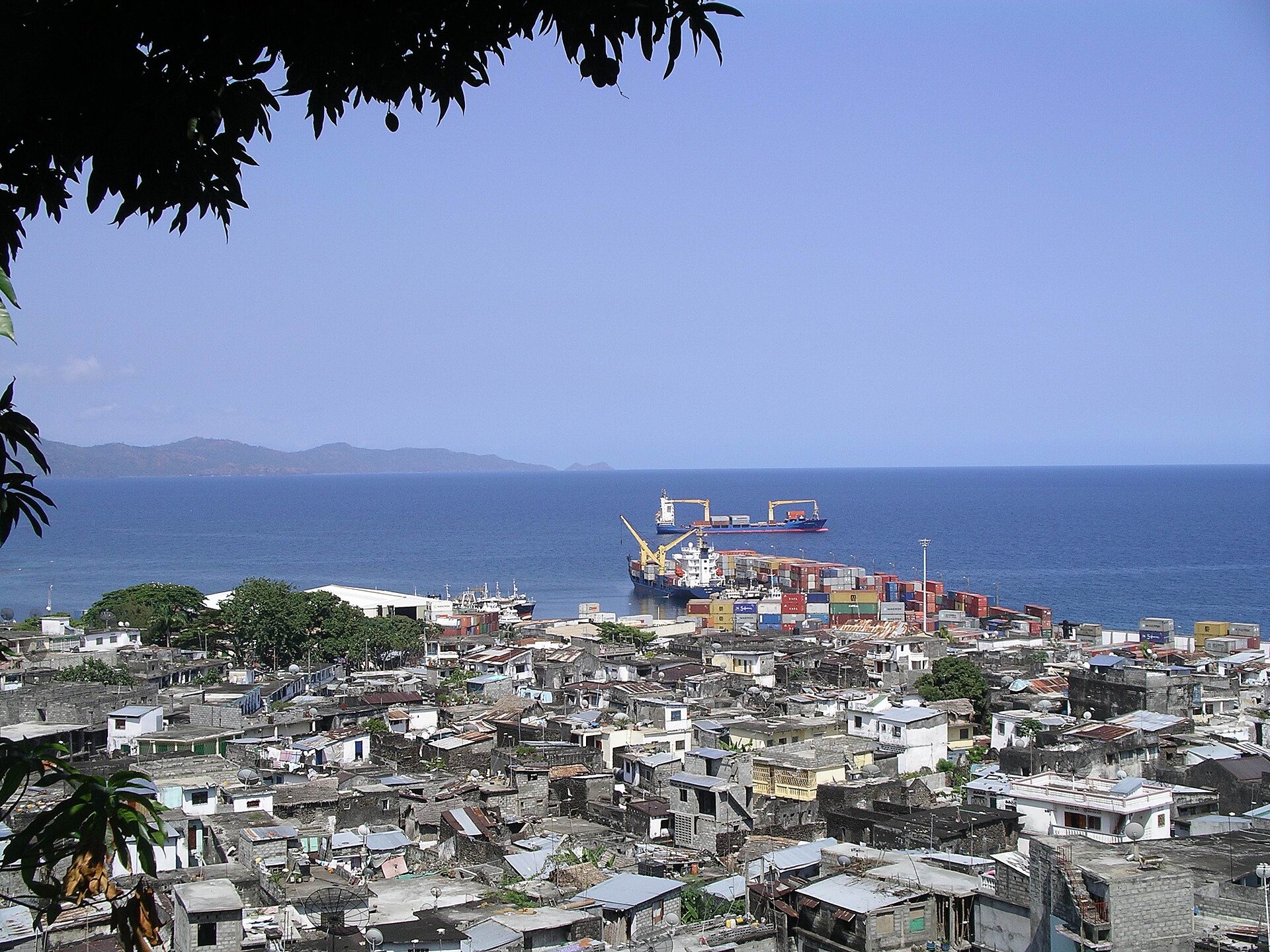
Search for a cheap online gambling licence and Anjouan comes up quickly. Anjouan is one of the three main islands of the Comoros, in the Mozambique Channel. Operators across the industry display its name on their websites.
The licences are issued in the name of the Anjouan Offshore Finance Authority, through an agent called Anjouan Corporate Services. A newer entity, Anjouan Licensing Services, established in 2023, operates what it calls the Anjouan Gaming Control Board. That board says it has issued more than 1,300 licences.
The commercial terms are the attraction. Marketing material advertises an initial application fee around €17,000, roughly US$18,000 to US$20,000, with renewal near €13,300 and an annual compliance charge around €1,700. It advertises no tax on gross gaming revenue, no value added tax and no corporate income tax. Turnaround is advertised at two to four weeks.
One licence is said to cover online casino, live casino, sports betting and virtual products, with cryptocurrency permitted. Compare that with Malta, where licensing is slower, dearer and carries ongoing tax, and the appeal is obvious.
What the Comoran State Says
The Central Bank of the Comoros does not recognise any of it. In an investigation broadcast at the end of 2025, the central bank described the issuing entities as fictitious, with no physical or legal existence, and said they operate illegally. A central bank official said they operate online through websites to defraud people.
The history behind that position is straightforward. Anjouan attempted secession in the late 1990s and returned to the union in 2008. The offshore finance authority that had operated during that period was stripped of regulatory status through banking legislation passed between 2013 and 2015. A former attorney general has called the current licensing entity illegal.
The claimed legal basis for the licences is a Computer Gaming Licensing Act said to date from 2005. We could not find that text in any official gazette. It is asserted by the sellers of the licences and by nobody else.
Verification is the practical problem. Licence-verification links published by the issuing body have returned errors, which means a player cannot independently confirm that an operator displaying the seal holds anything at all. That is the opposite of what a licence is for.
The Money Does Not Reach the Comoros
It is tempting to read this as an offshore industry propping up a small economy. The evidence does not support that reading.
The IMF completed an Article IV consultation on the Comoros in February 2026, alongside the fifth review of its lending programme. The resulting report runs to several hundred pages. It does not mention gaming, gambling, casinos or licensing anywhere.
That silence is informative. If licence revenue were reaching the Comoran treasury at any meaningful scale, it would appear in the fiscal accounts an IMF mission examines line by line. It does not appear because, on the state’s own account, the fees are collected by private parties issuing documents the state does not recognise.
An estimate published with the 2025 investigation put the possible annual revenue from the licences at around €22 million. Set against a national economy of about US$1.44 billion, that would be a visible sum. It accrues to the issuers, not to the country whose name appears on the paper.
What the Comoran Economy Actually Runs On
The real picture is in the IMF report. Growth was an estimated 3.8% in 2025, with 4.1% projected for 2026. Inflation fell to an estimated 3.5% in 2025 from 5.0%, having peaked at 7.3% in March 2025 before easing to 1.9% by October.
Remittances are the single largest external flow, at 18.9% of GDP in 2024 and 18.1% in 2025. The Fund expects that share to fall toward 12.7% by 2031. Nothing else comes close.
The export crops had a poor year. In the first three quarters of 2025 vanilla exports fell 57% and cloves fell 23%. Total goods exports still rose by around half, on a one-off surge in scrap metal.
Public debt was 32.9% of GDP in 2025, down from 35.1%. Reserves covered 8.4 months of imports. The Public debt was 32.9% of GDP in 2025, down from 35.1%. Reserves covered 8.4 months of imports. The Fund assesses the risk of debt distress as high, where a mechanical reading would say moderate. Its reasons are recurring external arrears and a narrow revenue base. The currency is pegged to the euro, which is the anchor of monetary policy. A four-year lending arrangement worth about US$43 million was approved in June 2023 and runs to 2027.
What Makes a Gambling Licence Worth Anything
It helps to be precise about what a licence does, because the word carries more weight than the document sometimes deserves.
A credible regulator does four things. It vets the people behind an operator. It requires segregated player funds, so that deposits are not spent as working capital. It runs a complaints route with some power behind it. And it maintains a public register a player or a bank can check in seconds.
The first three are invisible from the outside. The fourth is the one anybody can test, which is why verification failures matter so much. A register that does not resolve is not an administrative irritation; it is the only externally checkable part of the arrangement failing.
Cost tracks that. Established jurisdictions charge more because supervision costs money and because the licence carries value in the market. A licence priced far below the cost of supervising anyone is telling you something about how much supervision is being bought.
The Banking Problem Behind the Licence
Gambling operators need payment processing more than they need paper. Card networks, payment service providers and correspondent banks all run their own checks, and a licence is the first document they ask for.
That is where a disowned licence becomes an operational problem rather than a theoretical one. A compliance officer at a payment provider who reads a central bank statement describing the issuing body as fictitious has a straightforward decision to make. Processing relationships can be withdrawn at short notice, and operators that lose them lose the ability to take deposits.
The Comoros has been tightening its own financial rules independently of any of this. A new anti-money-laundering and counter-terrorist-financing law, drafted with World Bank support and aligned to international standards, was adopted by parliament and promulgated. The IMF records remaining gaps in the framework, and links them to the country’s broader supervisory capacity rather than to gambling.
For the country, the reputational exposure runs in one direction. The name on the licences is Anjouan, and Anjouan is in the Comoros. Whatever the legal position, the association attaches to the jurisdiction, which is one reason the central bank has spoken as plainly as it has.
What This Means If You Are Assessing the Risk
For an operator, the calculation is not about price. It is about whether a licence issued by a body the host state calls fictitious offers any protection at all.
A gambling licence does three things. It signals to players that someone is watching. It gives payment providers and banks a compliance answer. And it gives the operator recourse if a dispute arises. A document that the issuing country’s central bank publicly disowns struggles on all three counts.
For a player, the practical test is verification. If the licence number cannot be checked against a working public register, the licence is decorative.
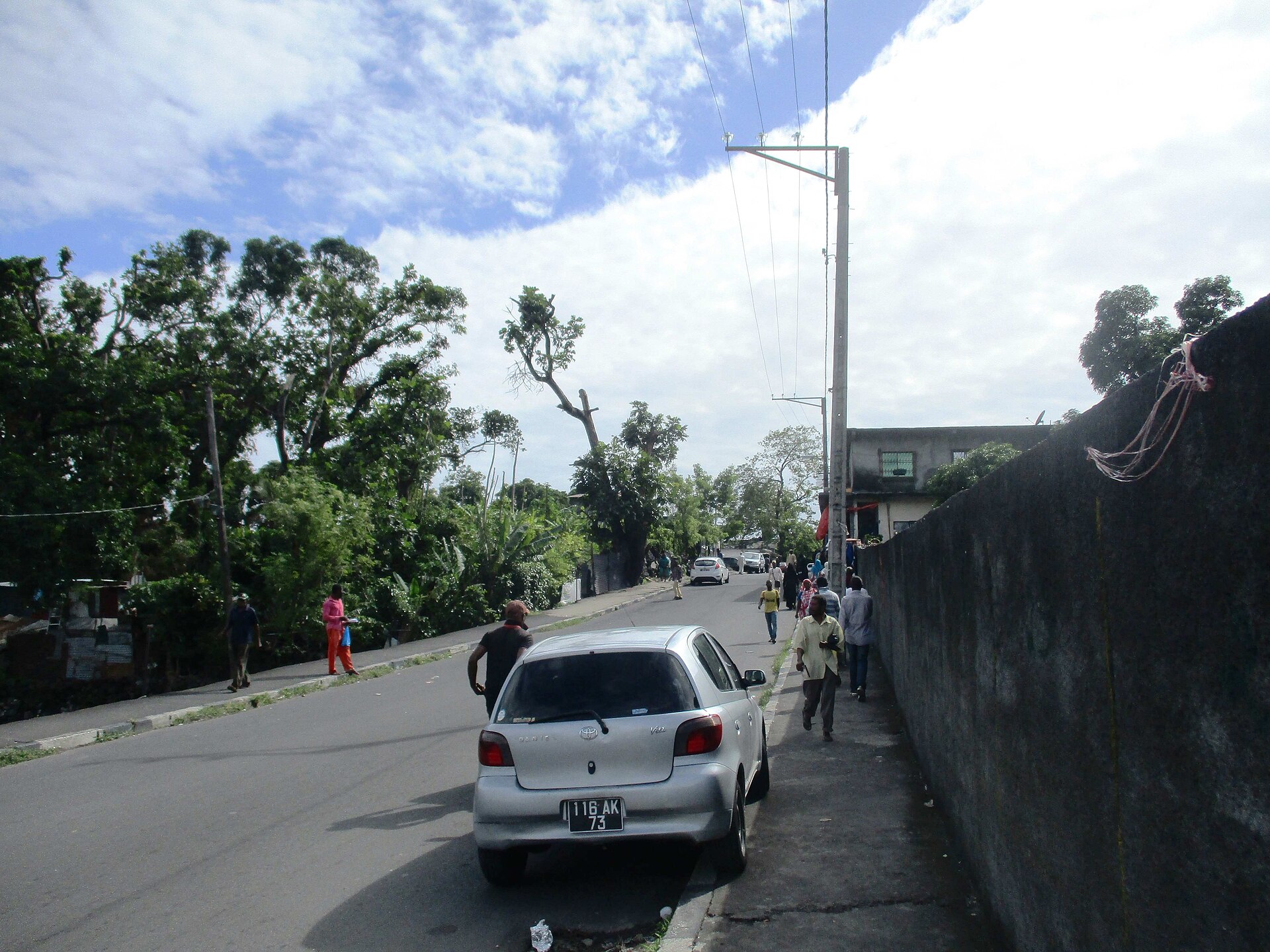
For anyone assessing the Comoros as an economy, the lesson is to keep the two stories apart. The licensing business is conducted in the country’s name. The country’s economy runs on remittances, cloves, ylang-ylang and vanilla, and is managed under an IMF programme that has never had cause to mention gambling.
What Is Not Known
Whether the Comoran government receives any revenue from the licences is not established. The central bank’s position implies it does not, but no accounting has been published.
Whether the 2005 legislation the sellers cite exists in an official gazette could not be confirmed.
How many of the claimed 1,300 licences correspond to active operators is not verifiable, because the register is not reliably accessible.
And whether any enforcement action has followed the central bank’s statements is not known. Describing an activity as illegal and stopping it are different steps.
Connected Coverage
- Taxes in Morocco for Expats 2026: The 37% Band Starts Early
- Kenya Residency Visa Requirements 2026: Class K Starts at 35
- Is Tanzania Safe for Expats in 2026: A Level 3 With One Hotspot
Sources
- IMF — Comoros 2025 Article IV consultation and fifth review, February 2026
- ABC News — investigation into Anjouan gambling licences, December 2025
- Focus Gaming News — Comoros central bank warning on Anjouan permits
Frequently Asked Questions
Is the Anjouan gambling licence legitimate?
The Central Bank of the Comoros describes the bodies issuing these licences as fictitious, with no physical or legal existence, and says they operate illegally. The issuers assert a 2005 gaming act as their legal basis, which we could not locate in any official gazette.
How much does an Anjouan licence cost?
Marketing material advertises an initial application fee of about €17,000, roughly US$18,000 to US$20,000, with renewal near €13,300 and an annual compliance charge around €1,700. It advertises no tax on gross gaming revenue.
Does the Comoros earn money from these licences?
There is no evidence that it does. The IMF’s 2026 Article IV report on the Comoros does not mention gaming or licensing anywhere, which is where such revenue would appear if it reached the treasury.
What does the Comoran economy actually depend on?
Remittances, at 18.1% of GDP in 2025, are the largest external flow. Cloves, ylang-ylang and vanilla are the main exports. The economy is about US$1.44 billion with a population near 866,000.
This article was produced by The Rio Times’ automated newsroom system. How we use AI · Report an error
Read More from The Rio Times