“Communities Are Being Poisoned in Brazil”, Denounces UN Rapporteur
RIO DE JANEIRO, BRAZIL – Baskut Tuncak, UN special rapporteur on toxic substances, concludes that impunity reigns when the issue is environmental crime in Brazil. At the end of his mission throughout the country, he alerts that Brazil is on a “tragic path of dismantling the environmental protection institutions”.
The expert was in the country for two weeks in December 2019 and he will present his final report before the UN Human Rights Council in the second half of 2020.

In an interview with a UOL columnist, the UN rapporteur presented some of his first observations on a report that promises to put strong pressure on the government.
During his trip, he said that authorities and bodies insisted on treating specific cases as “environmental crimes”. “But there is no punishment or criminal process,” he warned, without providing details on the cases he will address in his final report. “There was total impunity,” he said. According to him, there is “a perverse sense of impunity among the criminals who poison people, take their lands and destroy the environment”.
Concurrently, Tuncak alerts that there is a trend in Brazil to criminalize those who fight for the environment.
He also pointed out the increase in deforestation rates and the number of fires in the Amazon. In his opinion, such facts may have a “potential influence of government signals on changes in land-use regimes, in favor of accelerating and increasing the production of agriculture and mining”.
“It’s disheartening to see the authorities dismantling so many channels of cooperation and even trying to criminalize these players,” he said. “A radical change in the relationship between government and civil society is crucial to improving the difficult scenario I have observed,” Tuncak warned.
The expert stated that after the collapse of the Mariana and Brumadinho dams, the oil spill and an “epidemic of pesticide poisoning,” he hoped to find a government that was committed to adopting strict environmental control measures. “On the contrary, we see the opposite happening,” he said. In his view, the current behavior of Bolsonaro’s government is concerning.
“I asked for the visit on many occasions and it was finally accepted. I thought the delay was to allow the government to show what it had done since Brumadinho. But I was very disappointed,” he said. “It was a very difficult two weeks,” he insisted.
According to him, no Minister received him while the visit took place. He further said that after submitting his agenda to Brazil and his visits, the government only replied on the journey five days before the mission, in December.
Once in Brazil, the rapporteur says he received adequate support from the technical departments of Itamaraty and the Ministry of Human Rights. But he did not see the same commitment from the Ministry of the Environment.
Tuncak was in Brumadinho and says he had “difficult” conversations with residents and survivors. But what shocked him most was the authorities’ response and the fact that, a year later, the government still relies on data from the company responsible for the site, Vale.
According to him, although the government and companies have denied recognizing the situation for years, the impact of the population’s exposure to toxic sludge in Mariana is increasingly clear. “However, the companies responsible continue to abuse their power by preventing health and safety information from being published,” he said.
“Brazil is failing to comply with its constitutional obligation to protect human rights from exposure to toxic substances and hazardous waste, eliminating crucial ministries, restricting funding for essential operations, eliminating key programs, restricting instances of civic participation, and failing to enforce the laws and judicial decisions in place to protect human rights from toxic exposure,” he said at the end of the visit.
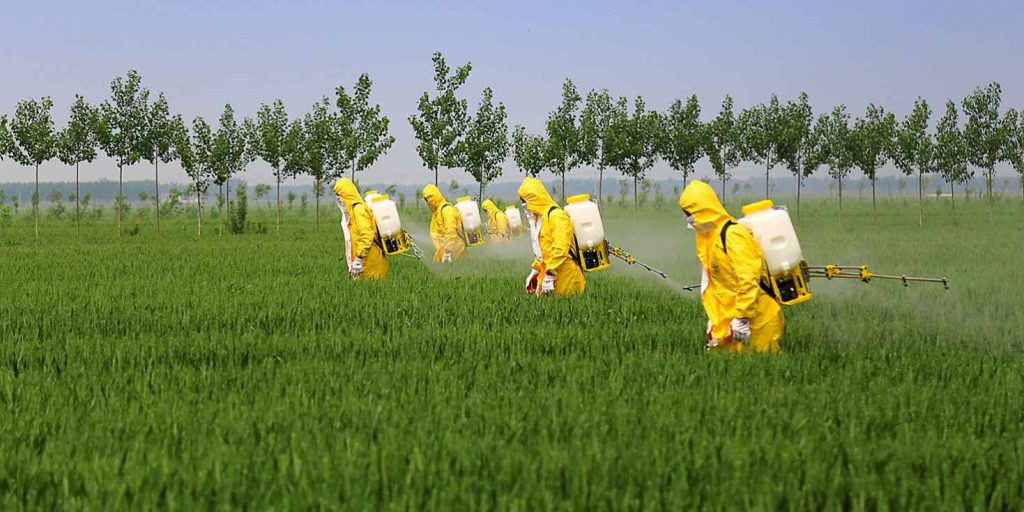
Another of the rapporteur’s findings refers to the approval of new pesticides by Bolsonaro’s government in 2019 and even in 2018. In total, he had received information that the total of new approvals would reach 800 products. According to him, explanations by the Ministry of Agriculture aimed to minimize the fact.
But the specialist said he met with doctors and community representatives who pointed out the existence of a serious issue. “There are poisoned communities,” he warned. “And members of the government have pointed out implicitly and even explicitly, at times, that they don’t have the resources to monitor this”, he regretted.
The rapporteur gave the example of the Piquiá de Baixo community in the state of Maranhão, which, according to him, “has been poisoned for decades”.
“Brazil continues to allow the use of dozens of highly dangerous pesticides, banned in many other countries,” he said. “The government’s actions or lack of action has released a catastrophic wave of toxic pesticides, deforestation, and mining that will poison future generations if urgent action is not taken to realign Brazil with the path of sustainable development,” he said.
More: Brazil news in English, every day from The Rio Times.
This article was produced by The Rio Times’ automated newsroom system. How we use AI · Report an error · Editorial responsibility: Matthias Camenzind, Editor-in-Chief
Brazil runoff, Sunday, October 25: Brazil runoff: date, poll closing times and when results start. Latest: Brazil runoff polls, Flávio 51%, Lula 49%.