Colombia’s Colectora Transmission Line to Finish in 2026
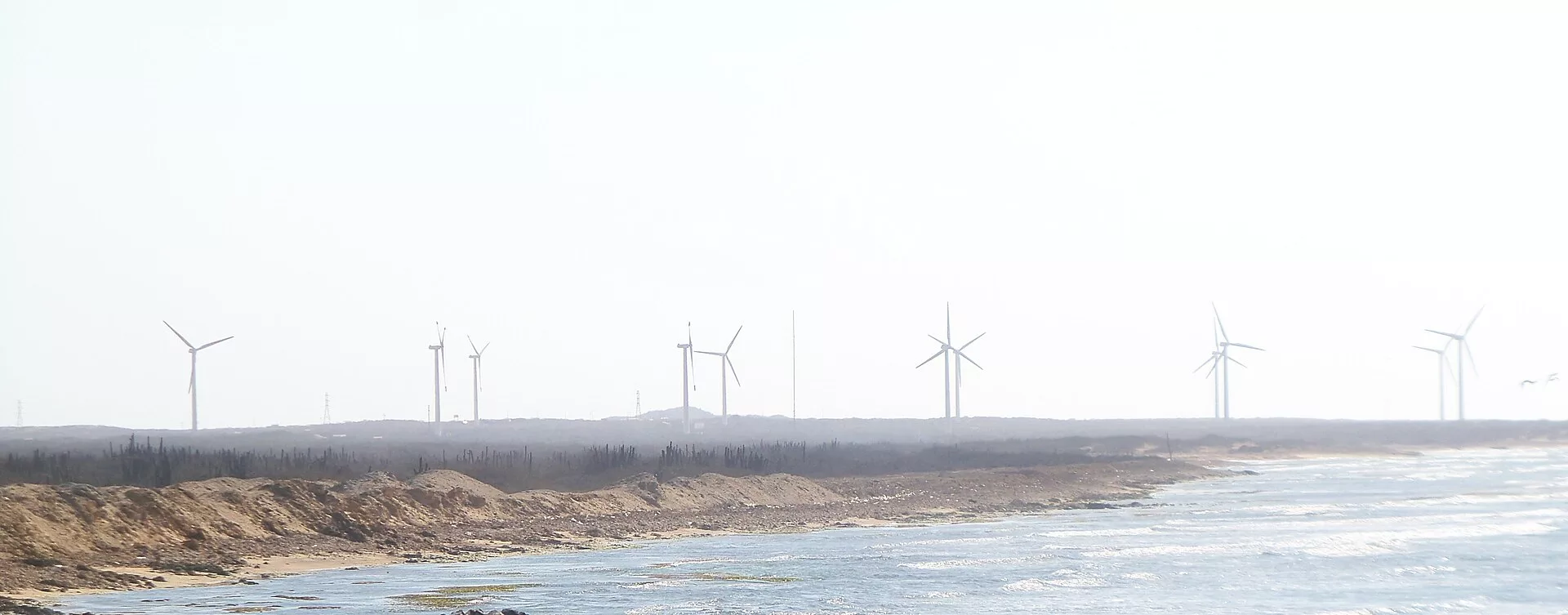
Energy Infrastructure · Colombia
Key Facts
—The project. Grupo Energía Bogotá’s Colectora line will connect wind and solar parks in La Guajira to Colombia’s national grid.
—Progress. The government said the project reached about 90% completion by June 2026 and is due to finish in 2026.
—Scale. The 228-kilometer line runs between the Colectora and Cuestecitas substations and requires 1,027 towers.
—Capacity. It is designed to carry about 1,050 megawatts from 15 wind parks and one solar park.
—Investment. The project represents an investment of close to US$300 million.
A transmission line four years in the making is finally nearing the finish in Colombia’s windy northeast. The Colectora project would unlock more than a gigawatt of stalled wind and solar capacity in La Guajira.
A long-delayed line nears completion
Colombia’s Energy Ministry and Grupo Energía Bogotá said the Colectora transmission project had reached about 90% completion by June 2026 and would be finished this year. The line had faced roughly four years of delays tied to permitting, the pandemic and more than 235 prior-consultation processes with local communities.
The 228-kilometer line connects the Colectora and Cuestecitas substations, with 1,027 towers projected across its two sections. It is one of the largest transmission works underway in the country.
Prior consultation is a right enshrined in Colombian law and international conventions that requires project developers to engage with Indigenous and Afro-descendant communities before work can begin on their lands. In La Guajira, home to the Wayúu people, this meant hundreds of individual dialogues that had to be completed before towers could rise or cables could be strung.
The sheer volume of these processes, layered on top of pandemic-era restrictions, explains much of the four-year wait.
Why La Guajira matters
The Colectora line is designed to carry about 1,050 megawatts from 15 wind parks and one solar park in La Guajira, a peninsula with some of the strongest and most consistent winds in South America. Without the line, those parks cannot deliver their output to Colombia’s National Interconnected System.
The project carries an investment of close to US$300 million. Officials describe it as a backbone linking the country’s renewable frontier to demand centers elsewhere in Colombia.
La Guajira’s geography makes it uniquely valuable for wind generation. Trade winds sweep across the flat, arid peninsula with speeds that are unusually high and steady compared with most inland sites.
That translates into capacity factors—the percentage of time a plant actually produces power—that can far exceed those of wind farms in less exposed regions. For a country that has historically leaned on hydroelectric dams, tapping this resource represents a structural shift in how electricity is sourced.
What completion would mean
Finishing the line would remove a key bottleneck that has held back Colombia’s wind build-out for years. Enlaza, the Grupo Energía Bogotá unit running the works, said the connected wind parks would enter operation one and a half to two years after construction is completed.
The rollout is central to Colombia’s goal of diversifying an electricity mix long dependent on hydropower, which leaves the grid exposed during dry spells and El Niño. Adding Guajira wind is meant to improve reliability and lower emissions over time.
A diversified grid matters because hydropower, while clean and cheap, is vulnerable to weather cycles. During strong El Niño events, rainfall drops and reservoir levels can fall sharply, forcing the country to fall back on more expensive thermal plants that burn gas or coal.
Wind from La Guajira tends to blow most strongly during the dry season, which means it can act as a natural hedge, filling the gap precisely when hydro output dips.
What to watch next is whether the wind parks themselves stay on schedule. Even with the transmission line in place, each park must complete its own financing, turbine installation and grid-connection tests.
Another open question is how the Wayúu communities, who participated in the prior consultations, will experience the project’s operational phase and whether the promised social investments materialize as expected. Finally, observers will be watching whether the Colectora line’s completion encourages regulators to approve additional transmission corridors in the region, which could multiply La Guajira’s contribution to the national grid.
More: Colombia news in English, every day from The Rio Times.
Sources
Connected Coverage
IDB Invest Lines Up US$80 Million Loan for Jamaica’s JPS Grid Recovery
Peru El Niño Costero 2026 Hits Mango, Coffee, Anchovy Supply
Sources: Colombia's Energy Ministry; Grupo Energía Bogotá.
This article was produced by The Rio Times’ automated newsroom system. How we use AI · Report an error · Editorial responsibility: Matthias Camenzind, Editor-in-Chief
Frequently Asked Questions
What is the Colectora project?
It is a 228-kilometer transmission line built by Grupo Energía Bogotá to connect wind and solar parks in La Guajira to Colombia’s national grid.
How far along is it?
The government said the project reached about 90% completion by June 2026 and is expected to be finished during 2026.
How much capacity will it carry?
The line is designed to move about 1,050 megawatts from 15 wind parks and one solar park.