Colombia Quits Global LGBTI Rights Group It Co-Chaired
Key Facts
Colombia’s new right-wing government has moved quickly to change the country’s foreign policy. It has now left a global LGBTI rights coalition it was co-chairing, without first giving a reason.
Colombia latest: Colombia news — latest coverage · Colombia's Gas Is Running Low. Three Firms Race for Its…
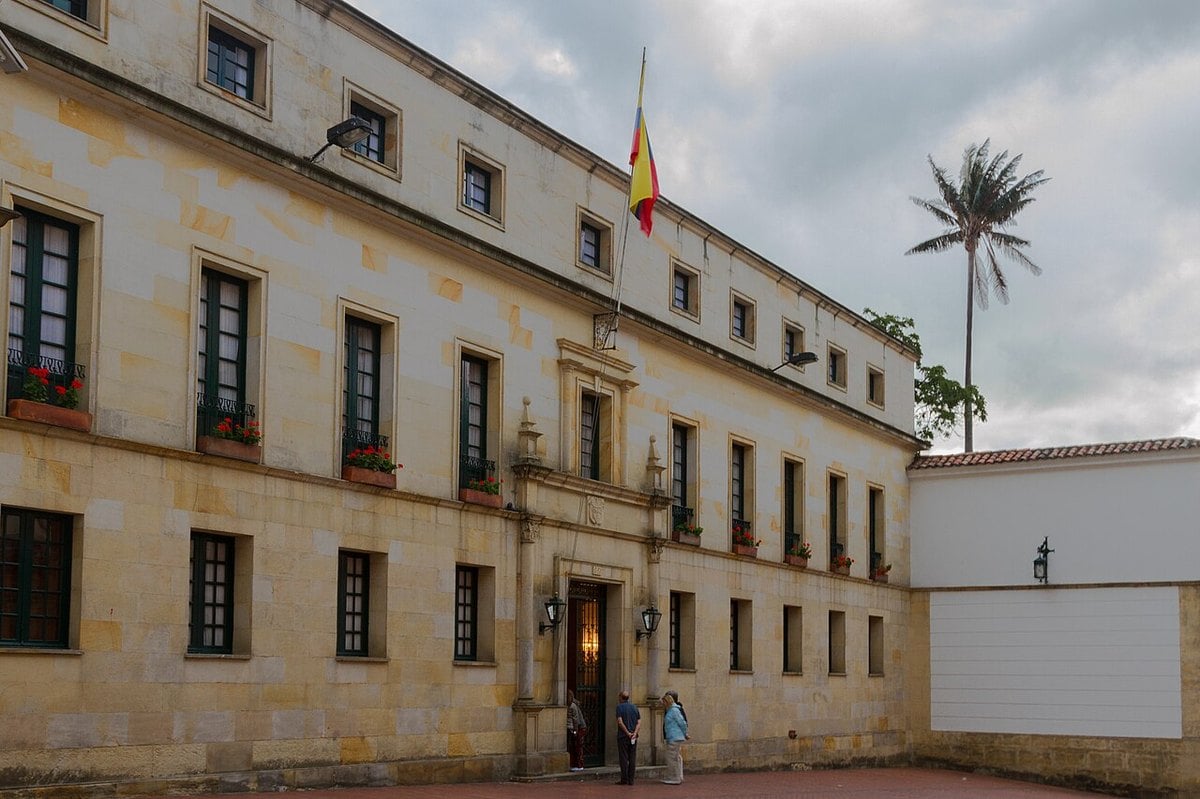
Colombia’s foreign ministry withdrew the country from the Equal Rights Coalition, a group of about 44 governments, on 17 September 2026. The note from the ministry gave no reason, and the exit took effect the same day.
Why This Matters Beyond Colombia
The Equal Rights Coalition is an intergovernmental body dedicated to protecting the rights of LGBTI people, El Tiempo reported. It was founded in 2016 in Montevideo, Uruguay, with Uruguay and the Netherlands leading its creation.
It has no treaty, no binding obligations on members and no enforcement power, so leaving is mainly a political signal. Colombia held one of its two government co-chair seats, alongside Spain.
El Espectador, a national newspaper, said no member state had previously left the coalition while holding the chair. The exit comes six weeks after Abelardo de la Espriella, a right-wing lawyer, became president on 7 August.
He beat left-wing senator Ivan Cepeda in the 21 June runoff with 49.66% to 48.70%, the narrowest margin on record. He opposes adoption by same-sex couples and says his politics rest on traditional Judeo-Christian values.
The move also fits a wider pattern that rights groups describe as a backlash against LGBTI diplomacy. In November 2025, the Council for Global Equality, a US advocacy group, accused Washington of undermining the coalition.
What the Foreign Ministry Did
The withdrawal went out as diplomatic note S-DVAMCP-26-024300, reported by the outlet Mi Oriente. It came from the vice-ministry for migration, consular affairs and international protection.
The text told the coalition’s executive committee that the government had decided to leave, effective the same day. Infobae, an Argentine news site, reported that the ministry also informed the government of Spain.
The Reason the Government Gave Later
A day after the note, Vice-Minister Pedro Agustin Roa recorded a video statement. He said Colombia has a very robust body of rights protected by the constitution, public policy and a set of rules.
He added that rulings of the Constitutional Court, Colombia’s highest court on constitutional rights, protect minorities on grounds of sexual orientation. El Heraldo quoted the ministry saying the exit does not in any way mean a step backwards on LGBTI rights.
El Universal reported the ministry’s position that taking part in the coalition was not a priority for this government. Caribe Afirmativo, a Colombian LGBTI rights group, told El Espectador its sources saw membership as a legacy of the previous government.
How the Chair Works and What Colombia Held
Two member states and two civil-society organisations share the chair for two-year terms. Colombia and Spain held the government seats, with Caribe Afirmativo and Spain’s Fundacion Triangulo alongside them.
El Espectador dated the start to 17 December 2024 and said the term ran to February 2027. Other outlets described the term as running from 2025 to 2027, so the end date is not settled.
Noticaribe reported that Colombia joined under Gustavo Petro, the left-wing president from 2022 to 2026. The same report said years of groundwork came earlier under presidents Juan Manuel Santos and Ivan Duque.
The coalition’s own pages carry both 43 and 44 member states, and one agency report said 45. Its work runs through five thematic groups, from diplomacy and national law to humanitarian protection.
How Spain and Civil Society Responded
Spain’s foreign ministry reaffirmed its commitment to the coalition on 18 September, Noticias SIN reported. It said Spain reaffirms the shared commitment to equality, human dignity and the universality of human rights.
Caribe Afirmativo held the civil-society half of Colombia’s chair and was not consulted in advance. Its director Wilson Castaneda told El Tiempo the move was an unfortunate decision.
He called it the clearest decision this government has taken against LGBTI rights, with an international impact. Speaking to La Silla Vacia, a political news site, he said it would have been healthier to wait for the chair’s end.
The group said it had counted 24 government actions in 40 days that it argues weaken LGBTI rights. Temblores, a Colombian human rights NGO, said the government must publicly explain its decision.
The Ombudsperson and Other Critics
Iris Marin, head of the Defensoria del Pueblo, the state’s human rights ombudsperson office, responded publicly. She said LGBTIQ+ people need the backing of the state.
And the state cannot stop giving it. She cited 68 killings of trans women between 2024 and April 2026, an attorney general’s figure.
She also cited 148 killings of LGBTI people during 2025, a figure from the forensic medicine institute. Anthropologist David J.
Luquetta told La Silla Vacia that public discourse shapes what a society treats as tolerable. Semana, a news magazine, reported that politicians from several sectors spoke against the decision.
What Colombian Law Still Says
A withdrawal from an intergovernmental coalition does not amend Colombian law. Same-sex marriage rests on Constitutional Court ruling SU-214 of 2016, issued on 28 April that year.
Adoption by same-sex couples rests on ruling C-683 of 2015, issued on 4 November 2015. That ruling held that a person’s sexual orientation cannot be confused with a lack of suitability to adopt.
Law 1482 of 30 November 2011 added article 134A to the penal code, punishing acts of discrimination. Sexual orientation is named among the protected grounds, with 12 to 36 months and a fine, as amended in 2015.
The Wider Policy Direction Since 7 August
On 10 August the new government recognised Israeli sovereignty over the Golan Heights, the second state to do so. It also restored ties with Israel and recognised Moroccan sovereignty over Western Sahara, MercoPress reported.
Colombia joined the United States anti-drug initiative known as Shield of the Americas. El Universal reported 85 extraditions in the government’s first 40 days.
What It Means If You Live or Invest in Colombia
For residents, nothing in the civil registry, marriage, adoption or criminal law changed on 17 September. Notaries and judges continue to apply the same rulings they applied the week before.
For employers, the anti-discrimination provisions of the penal code are unaffected by this decision. Company policies written to Colombian law need no revision because of this decision.
The change is diplomatic, affecting where Colombian officials sit and which joint statements they sign. Any shift in domestic entitlements would require Congress or the Constitutional Court, not the foreign ministry.
What Is Not Yet Known
The coalition’s secretariat had not published a response in the reports reviewed by The Rio Times. It is unclear who will complete the government half of the chair for the remainder of the term.
The ministry has not said whether Colombia will keep joining the coalition’s working groups as an observer. No figure has been published for what membership cost the Colombian budget.
Rights groups have asked publicly for the reasoning, and raised concern over the foreign ministry’s 2027 budget. The ministry had not answered that request at the time of writing.
More: Colombia news in English, every day from The Rio Times.
The big picture: Colombia explained — economy, politics, society and daily life in one read.
Frequently Asked Questions
Why does this matter?
Colombia was co-chairing the coalition, and El Espectador said no chair had left before. The exit signals a sharp change in foreign policy under the new right-wing government.
Does this change marriage or adoption rights in Colombia?
No. Those rights come from Constitutional Court rulings SU-214 of 2016 and C-683 of 2015, which are unaffected.
What reason did the government give?
The note gave none. The vice-ministry later said membership was not a priority and that constitutional protections already cover the population.
How did Spain respond?
Spain’s foreign ministry reaffirmed its commitment to the coalition on 18 September. The reports reviewed do not say who will share the chair with it.
Sources: Equal Rights Coalition, membership, co-chairs and working groups, El Espectador, the withdrawal note and the chair dates, El Heraldo, the foreign ministry’s explanation, El Universal, the vice-minister and the ombudsperson, El Tiempo, Wilson Castaneda’s response, La Silla Vacia, reactions and context, Noticaribe, Caribe Afirmativo and Temblores, Noticias SIN, Spain reaffirms support for the coalition, Wikipedia, Abelardo de la Espriella and the 2026 runoff, Council for Global Equality, call to action to the coalition, Constitutional Court, ruling C-683 of 2015 on adoption
This article was produced by The Rio Times’ automated newsroom system. How we use AI · Report an error · Editorial responsibility: Matthias Camenzind, Editor-in-Chief