Colombian Peso Slides as Dollar Hits 3,415 | Colombia Market Report, Nov 19
Key Facts
- Peso: The dollar closed at 3,415 pesos, 88 above the official daily rate, the biggest jump since August.
- Cause: Wall Street fear and US rate-rise talk hit emerging-market currencies as the S&P 500 fell 2.02%.
- Stocks: The 19 November close of the COLCAP, Colombia’s main stock index, was not yet verified at publication.
- Levels: The dollar is 11.6% below its December 2025 high of 3,864 and 12.4% above its August low.
- Prediction markets: Polymarket, a real-money prediction market, puts “no change” in Colombia’s December rate decision at 61.0% and a 0.25-point rise at 31.5% (US$44,000 traded, 7:39 p.m. ET, 19 November).
Today’s Focus
Colombia’s peso had one of its worst days in months. The dollar closed at 3,415 pesos on Thursday 19 November, 88 pesos above the official daily rate (TRM) of 3,327, the biggest one-day jump since August, according to Colombian press reports of the official close.
The cause was far from Bogotá. The S&P 500 fell 2.02% and the VIX, a gauge of investor nervousness, leapt 15.80% to 28.44, while minutes of the US Federal Reserve’s October meeting kept talk of a December rate rise alive.
This is a trend, not a blip. The dollar had already climbed through the week, and it is now 12.4% above its August low of 3,038, though still 11.6% below its December 2025 high of 3,864.
A note on stocks: we could not confirm the 19 November close of the COLCAP, the index of the largest companies on the Bogotá exchange, from the exchange or Colombian financial press in time, so we do not quote it.
What matters today. A weaker peso makes imports, foreign travel and dollar debts dearer in Colombia, while it helps exporters and anyone paid in dollars.
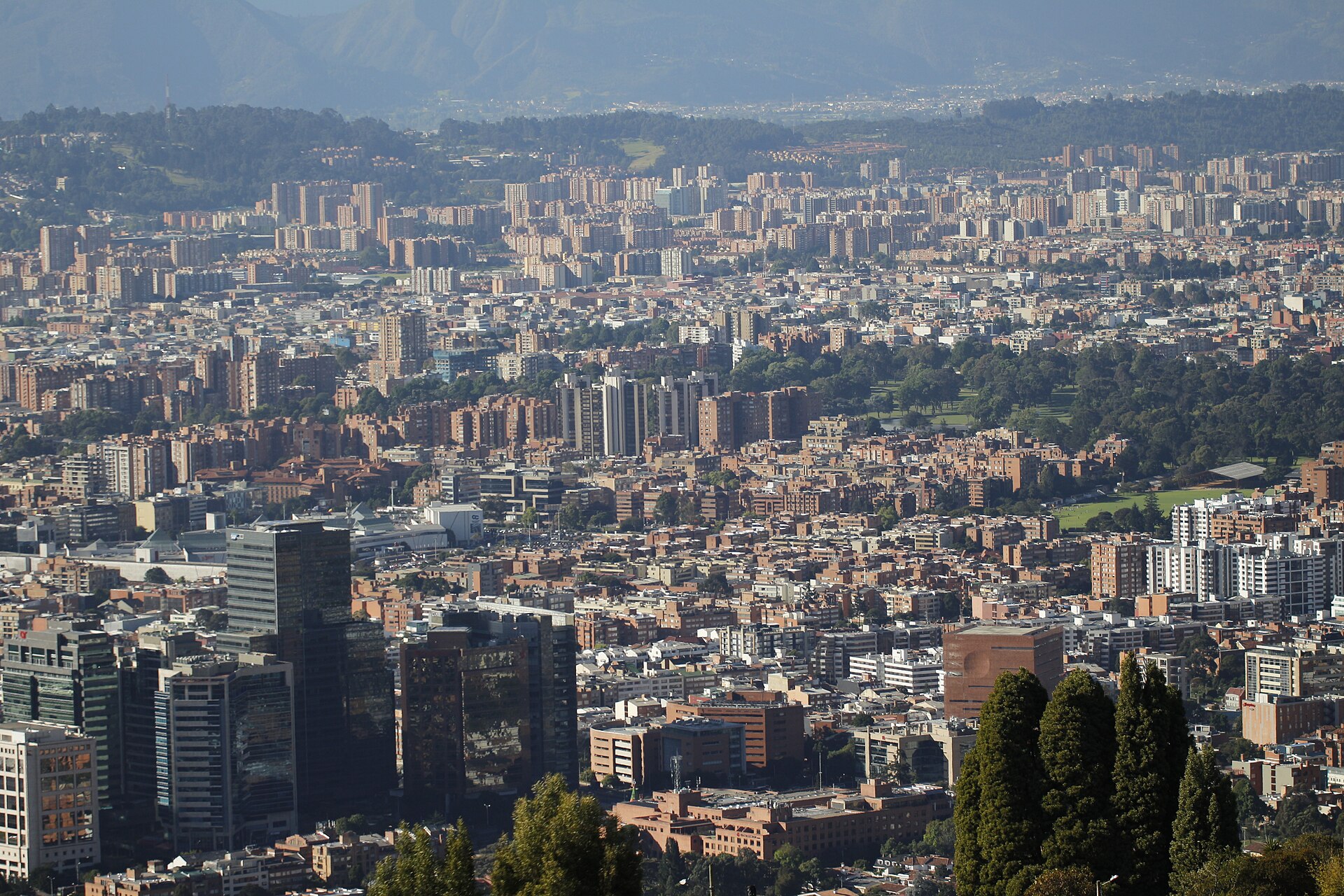
01 The session in one read
Think of Colombia’s market as a ship on a rough sea: the currency took the wave first. Our verified reading for the day is the peso, which lost sharply as investors bought dollars.
A dollar closed at 3,415 pesos, which means each peso buys less than before. During the day the dollar reached as high as 3,470 pesos and as low as 3,351.
The trigger was Wall Street. America’s S&P 500 index fell 2.02% to 7,176, and when US shares drop that hard, investors tend to sell currencies of emerging markets such as Colombia’s and buy dollars.
Fed minutes published on 18 November and comments by Fed governor Christopher Waller, who raised the possibility of a 0.5-point rate rise in December, added to demand for the dollar.
The evidence points to world risk appetite rather than Colombian news. The broad dollar index rose only 0.06%, so this was no general dollar rally; it was an emerging-market sell-off led by the peso.
Oil rose on the day, which normally supports Colombia, so global fear and rate worries clearly outweighed it. Our confidence is medium. The variable to watch is the VIX: while it stays near 28, the peso stays under pressure.
02 The day’s numbers
| Measure | Level | Change | Read |
|---|---|---|---|
| COLCAP index | — | — | 19 November close not verified at publication |
| Dollar range, 19 Nov | 3,351 to 3,470 | — | Wide trading band |
| USD/COP (pesos per US dollar) | 3,415 | +2.6% vs TRM | TRM, the official daily rate, was 3,327; peso weaker |
| 52-week positioning | 3,415 vs range 3,038 to 3,864 | — | 11.6% below the high, 12.4% above the low |
| Key technical level | 3,500 above; 3,400 and 3,300 below | — | Round numbers around today’s close |
The table tells a story of contrast. The dollar moved by more than 2.5% over the daily rate, which is a large day for a major peso.
In the 12-month picture the dollar is in the upper half of its range, below the December 2025 high of 3,864 but far above the August 2026 low of 3,038. In plain words, the peso has lost about a tenth of its strength since late summer. Rio Times · Live Market Intelligence
Live Market IntelligenceColombia — Live Market Board
Colombia — Live Market Board
Instrument Last Change YoY Prev. High Low Volume
COLCAP
2,452.46
—
—
—
—
—
—
USD/COP
3,427
+3.61%
-7.69%
3,307
3,427
3,422
—
BRENT
89.72
-2.43%
+41.27%
91.95
90.02
89.72
155
WTI
82.85
-0.49%
+39.38%
83.26
83.19
82.74
2,819
ECOPETROL
13.37
-4.98%
+32.11%
14.07
14.28
13.36
2,372,408
BANCOLOMBIA
83.28
-2.38%
+35.20%
85.31
86.73
83.20
321,320
GRUPO AVAL
3.60
-1.37%
-8.84%
3.65
3.73
3.58
169,410
TECNOGLASS
45.95
-0.91%
+0.04%
46.37
46.59
45.23
497,172
CREDICORP
342.48
-1.16%
+38.03%
346.51
353.84
341.98
427,898
BUENAVENTURA
21.22
-3.68%
-6.80%
22.03
22.39
21.22
1,938,292
SOUTHERN COPPER
141.52
-3.21%
+22.65%
146.21
148.88
141.29
1,216,426
03 Why it moved — Wall Street fear hit emerging-market currencies
First and heaviest, global risk aversion. The S&P 500 fell 2.02% and is down 5.49% over five sessions, while the VIX is up 52.09% over the same stretch; this is the classic recipe for a stronger dollar against Latin American currencies. Confidence: high.
Second, US interest-rate worries. Fed minutes showed officials seeing risks that inflation could persist, and prediction markets now price a 0.25-point rise in December at 92.5%. Higher US rates make dollars more attractive. Confidence: medium.
Third, oil did not rescue the peso. The oil fund USO rose 1.45% on the day, yet it is down 5.46% over five sessions, and Colombia earns much of its foreign income from crude. Official US data showed commercial crude stocks at 417.8 million barrels, up 3.4 million in a week (US Energy Information Administration, eia.gov), a reminder that supply is ample.
The usual drivers disagree with the move in two places: oil rose and the broad dollar index barely stirred. The best-supported reading, at medium confidence, is that fear of falling shares outweighed both.
04 The day’s movers
| Driver | Level / Move | Change | Note |
|---|---|---|---|
| S&P 500 (US shares) | 7,176 | −2.02% | The sell-off that set the tone |
| VIX fear gauge | 28.44 | +15.80% | Up 52.09% in five sessions |
| Oil fund (USO) | 138.09 | +1.45% | Down 5.46% in five sessions |
| Gold fund (GLD) | 335.18 | −1.76% | Even the safe haven fell |
| US dollar index | 103.92 | +0.06% | Broad dollar barely moved |
| US 10-year Treasury yield | about 5.0% | edged lower | Borrowing costs stay high |
The table instead shows the outside forces that shape Colombia’s market. We do not name individual Colombian companies because we could not verify their closes.
Notice that gold fell too, which tells us investors were raising cash rather than hiding in classic havens. A US 10-year yield above 5% also keeps money at home in America and pulls it away from places like Colombia.
05 The regional scoreboard
| Index | Country | Change |
|---|---|---|
| Ibovespa | Brazil | −0.69% |
| Merval | Argentina | −0.96% |
| IPC | Mexico | −0.64% |
| IPSA | Chile | −0.28% |
The dollar’s jump against the peso was the sharpest in the region. The live market board above carries the latest closes.
On currencies the peso was the weakest: the dollar rose more than 2.5% above the official daily rate in Bogotá, versus about 1% against Brazil’s real, 1.24% against Mexico’s peso, 0.68% against Chile’s peso and 0.36% against Argentina’s. For Colombian importers and families with dollar debts that hurts, while exporters and those paid in dollars gain.
06 The technical picture
On the chart, the dollar at 3,415 pesos has cleared 3,400 and faces its next test at the round number of 3,500, and beyond that the 12-month high of 3,864 from 18 December 2025.
On the downside, 3,400 and 3,300 are the nearest round-number supports, and the August low of 3,038 is the floor that matters. A close back below 3,400 would suggest the peso is recovering.
History is not a forecast, and a one-day jump can fade. The next signals are Wall Street’s mood and the Fed’s tone.
07 What to watch
- VIX fear gauge: Above 28 signals continued nerves; a sustained drop would ease pressure on the peso.
- 3,500 pesos per dollar: The next round-number resistance; a close above it would point towards a deeper peso slide.
- 3,400 and 3,300: The nearest supports; a close back below 3,400 would suggest the peso is recovering.
- Oil prices: A steadier crude price would help Colombia’s export income and its currency.
Background: Colombia Stocks Fall 2.2% as Peso Holds.
Background: Colombia Third Quarter Economy Shrinks 0.8%.
What Prediction Markets Say
Polymarket, where users bet real money, lists a market on the Central Bank of Colombia’s December decision, with US$44,000 traded as of 7:39 p.m. ET, 19 November 2026. It prices “no change” at 61.0%, a 0.25-point rise at 31.5%, a 0.5-point or larger cut at 3.8%, a 0.5-point or larger rise at 1.9% and a 0.25-point cut at 1.1%.
These prices are bets, not polls. A weaker peso adds to inflation pressure, which is one reason traders give a rate rise a real chance.
Why we show this: prediction markets turn real-money bets into a live probability that moves within minutes of the news, which is why investors, campaigns and newsrooms in the United States now follow them closely. We show them next to polls and official results, never instead of them.
Frequently Asked Questions
How did Colombia’s stock market close?
We could not confirm the 19 November COLCAP close from verified sources at the time of publication. Check the Bolsa de Valores de Colombia for the official figure.
What happened to the Colombian peso?
The dollar closed at 3,415 pesos, 88 pesos above the official daily rate of 3,327, which means the peso weakened sharply.
Why did the peso fall?
Mainly global fear after the S&P 500 fell 2.02%, together with talk of a US interest-rate rise in December.
Is the peso at a record low?
No; the dollar is 11.6% below its 12-month high of 3,864 and 12.4% above its low of 3,038.
Market data: The Rio Times; exchange figures from BVC
In depth
This article was produced by The Rio Times’ automated AI newsroom. Editorial responsibility: Matthias Camenzind, Publisher and Editor-in-Chief. The Rio Times also runs Ask Rio Times, which answers from 100,000+ of our own articles, the daily Latin America Power Map, and prediction-market odds on elections and markets.. How we use AI · Report an error
LatAm Markets: Live Signals → — real-time movers, turnover leaders and FX across Latin America.
Get The Rio Times delivered to your inbox — market intelligence, daily briefs, and breaking analysis across Latin America.
Start for US$1