Colombia Starts Building First Frigate, Ready by 2030

Colombia · Defense
Key Facts
—The first. Colombia’s COTECMAR shipyard has cut steel on the country’s first domestically built frigate.
—The design. The 107.5-metre warship is based on Damen’s SIGMA 10514, and would be the largest defence vessel Colombia has built.
—The timeline. Construction is at COTECMAR’s Cartagena yard, with delivery expected around 2030.
—Already afloat. The milestone follows the ARC 24 de Julio, a 93-metre ocean patrol vessel handed to the Navy in January 2026, the largest warship ever built in Colombia.
—The club. Colombia would become the third Latin American country able to build such a platform, after Brazil and Mexico.
Colombia is stepping up as a shipbuilder. Work has begun on the Colombia first frigate to be built on home soil, a project the Navy hopes will anchor a domestic naval industry rather than rely on foreign yards.
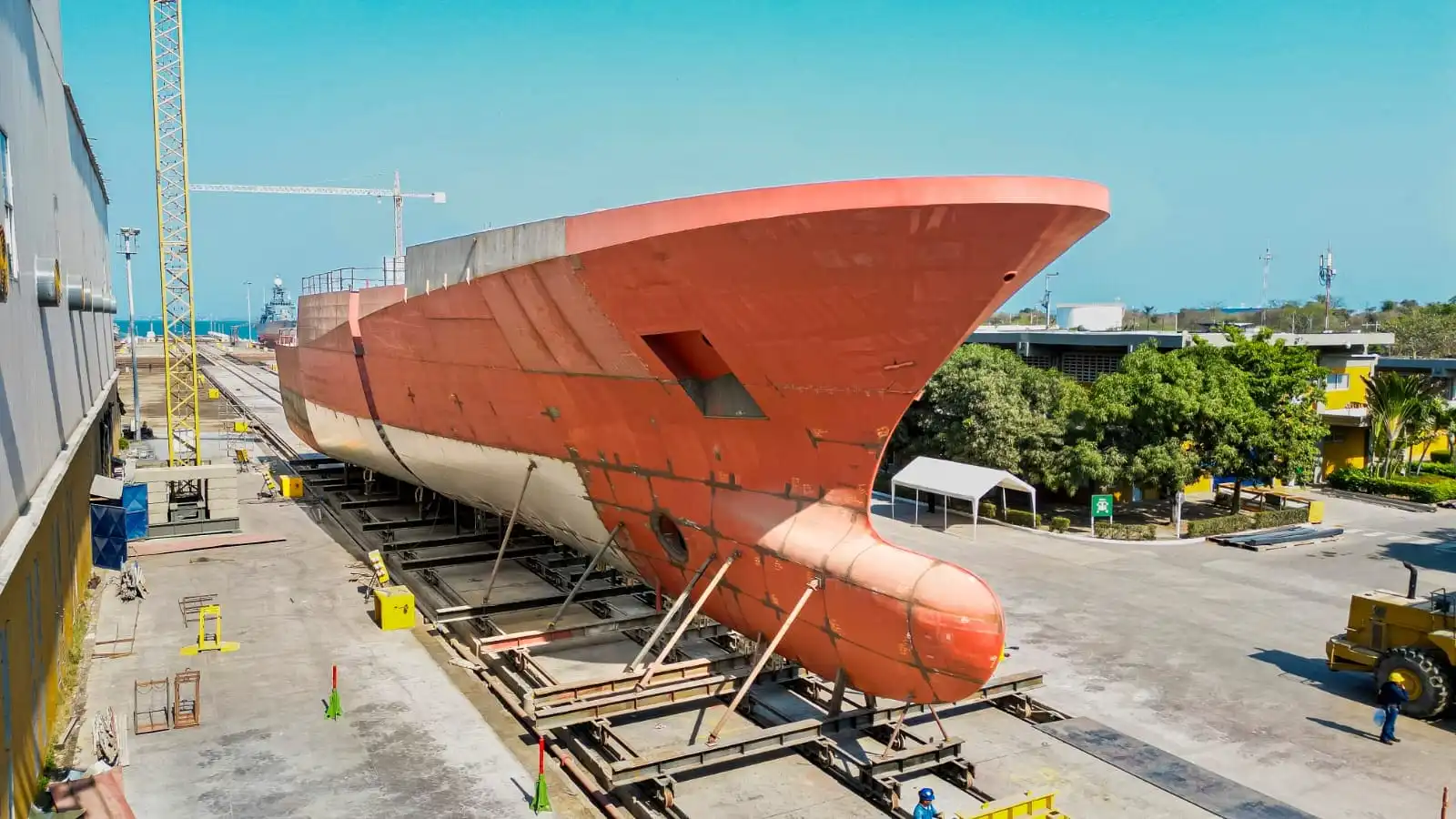
The state shipbuilder COTECMAR held the first steel-cutting ceremony for the frigate in February 2026, Naval News reported. The vessel, part of the Navy’s PES strategic-platform programme, is based on the Dutch SIGMA 10514 design from Damen.
A bigger, home-built warship
At 107.5 metres, the frigate would be the largest security and defence vessel Colombia has ever constructed. It is being built at COTECMAR’s yard in Cartagena, with delivery expected around 2030, and the wider programme envisages a class of Damen-designed frigates over the following years.
Building at home is the point. It keeps skilled shipyard jobs and industrial know-how in Colombia, and reduces dependence on foreign suppliers for the Navy’s most capable ships.
Building on a recent milestone
The frigate follows a proof of concept already in the water. In January 2026 the Navy took delivery of the ARC 24 de Julio, a 93-metre ocean patrol vessel that is the largest warship designed and built entirely in Colombia to date, also per Naval News. The patrol ship has since entered active service.
Together, the two projects mark a step change: from assembling foreign designs toward building large, capable warships locally.
Why it matters
Completing the frigate would put Colombia in a small group of Latin American states, alongside Brazil and Mexico, capable of building this class of ship. For a Navy that patrols two oceans and long Pacific and Caribbean coastlines against trafficking, that industrial capacity is strategic as well as symbolic.
The delivery date is years away, and naval programmes routinely slip. But the keel-laying marks a genuine ambition to build, not just buy.
More: Colombia news in English, every day from The Rio Times.
Frequently Asked Questions
When will Colombia’s first frigate be ready?
COTECMAR began construction in early 2026, with delivery of the first PES frigate expected around 2030 from its Cartagena shipyard.
What design is the frigate based on?
It is based on Damen’s SIGMA 10514. At 107.5 metres it would be the largest defence vessel ever built in Colombia.
What is the ARC 24 de Julio?
A 93-metre ocean patrol vessel handed to the Colombian Navy in January 2026, the largest warship designed and built entirely in Colombia before the new frigate programme.
Connected Coverage
This article was produced by The Rio Times’ automated newsroom system. How we use AI · Report an error
Read More from The Rio Times