Quake Leaves 548 School Sites at Risk
Colombia’s Education Ministry counts 5,738 damaged school sites after the 10 August quake, 548 near collapse, with no full rebuilding bill yet.

COLOMBIA · EARTHQUAKE RECOVERY
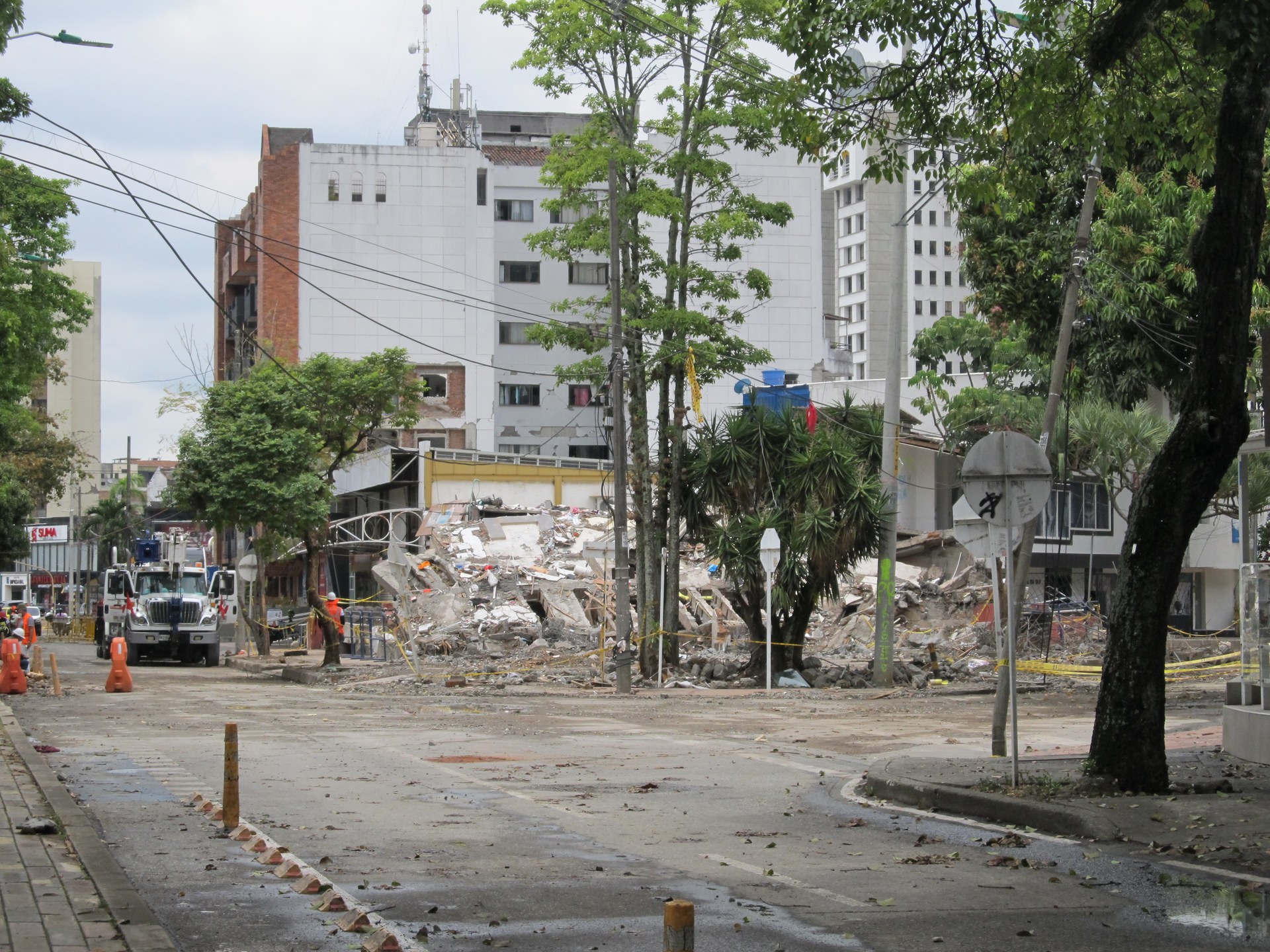
Colombia’s schools are still counting the damage from the earthquake that struck on Monday 10 August 2026. The Education Ministry reported in figures published on 18 November that 548 school sites are at imminent risk of collapse.
Another 68 sites were completely destroyed, the ministry said. Education Minister Ilva Myriam Hoyos presented the figures to the Sixth Commission, a Senate committee, in an oversight debate on the Fondo Milagro, the government’s earthquake reconstruction fund.
More than 1.2 million affected students have active service, the ministry reported by 18 November. That does not mean every school building has reopened.
Key Facts
- Who. Education Minister Ilva Myriam Hoyos presented the ministry’s earthquake recovery balance to the Senate.
- Damage. 5,738 school sites affected across 480 municipalities in 22 departments (regional governments).
- Worst hit. 68 sites destroyed, 548 at imminent risk of collapse, 1,073 seriously damaged; classes run at 5,539.
- Power Index. Colombia ranks 6th of 14 in The Rio Times Latin America Power Index, with 51.1 points (November 2026 edition).
- As of. 19 November 2026, 06:30 GMT
Colombia counts thousands of damaged schools and hundreds near collapse, with no full rebuilding bill or dates yet. Teaching continues, though the ministry says that does not mean every building has reopened.
Big Picture
The earthquake struck on Monday 10 August 2026, and the Education Ministry has since assessed school sites with the departments’ education secretariats. Departments are Colombia’s regional governments.
In figures published on 18 November the ministry reported 5,738 official school sites affected, across 480 municipalities in 22 departments. It said 1,073 have serious structural damage, 68 are completely destroyed and 548 are at imminent risk of collapse.
The ministry has also earmarked about COP 337 billion (Colombian pesos, about US$102 million at about COP 3,310 per US$) for 236 sites, 225 schools and 11 higher-education sites, according to its 10 November announcement. That programme is separate from the 20 Obras por Impuestos projects below.
The ministry’s September 2026 bulletin counted 5,537 sites with some damage in 434 municipalities, and 1,010 with serious damage or total loss. By 18 November the count of affected sites had risen by 201, but the September count of 1,010 combined serious damage and total loss, so it cannot be compared directly with 1,073 seriously damaged and 68 destroyed.
The government prioritised 20 school projects under Obras por Impuestos, which means works for taxes. Under this scheme, companies pay part of their income tax by building public works.
The projects are in Ibagué, Valle del Cauca, Risaralda, Armenia, Buenaventura, the Eje Cafetero coffee region, Chocó, Cali, Pereira and Jamundí. They also include the Universidad Tecnológica de Buenaventura, a university.
The ministry said 17 higher-education projects run with the Agencia Nacional Inmobiliaria Virgilio Barco Vargas, the national real-estate agency. School furniture is to go to 113,049 students, according to the ministry.
Why It Matters
Children and families in the quake zone carry the cost most directly. The ministry reported by 18 November that students of 5,539 sites in the emergency zone were receiving classes.
The ministry’s own count of affected sites rose from 5,537 in its September bulletin to 5,738 on 18 November. That is an increase of 201 sites, or about 3.6%.
The link to the United States is indirect, because Colombia is a key US partner. Under Obras por Impuestos, companies fund public works instead of paying part of their income tax.
Foreign and US-listed firms operating in Colombia may therefore take part in school works through the scheme. The ministry has published no per-project budgets for the 20 projects.
The ministry also said on 18 November that government austerity measures will not touch money for school recovery. The austerity bill, called the Economic Rescue Law, is the target of a national strike called for Thursday 19 November by the teachers’ federation Fecode and the CUT union federation, among others.
The earlier toll and cost estimates give the wider frame. See our report on the one-month mark after the quake and our earlier reconstruction cost estimate.
What to Watch
The ministry has published no dates for the 20 prioritised projects, so no checkpoint is confirmed. It says a delivery schedule exists and that a committee reviews progress weekly.
Updates would come from the Education Ministry and the UNGRD, Colombia’s national disaster-risk agency. In August, about 400,000 students moved to online classes, which shows how quickly the school picture has moved.
What Is Not Known
The ministry has earmarked COP 337 billion (about US$102 million) for 236 sites but has not published a full rebuilding bill. It has also not said how many of the 548 at-risk buildings are still in use.
Budgets and dates for the 20 prioritised projects are likewise unpublished. The ministry’s statement that classes continue does not show which buildings have reopened.
What It Means for You
For families with children in the quake zone, the ministry’s figures say lessons continue at 5,539 sites. They do not say that every building is safe or open.
For investors in Colombia, Obras por Impuestos may open a way to take part in school works, though no per-project budgets are public. Our wider Colombia coverage and the insurance payouts update follow the financial side.
Frequently Asked Questions
How many Colombian schools did the earthquake damage?
The Education Ministry reported in figures published on 18 November 2026 that 5,738 official school sites were affected. Of these, 68 were destroyed and 548 are at imminent risk of collapse.
Are children in the earthquake zone still getting lessons?
The ministry reported by 18 November that students of 5,539 sites in the emergency zone were receiving classes. Not every building has reopened.
What is Obras por Impuestos?
It means works for taxes, where companies pay part of their income tax by building public works. The government prioritised 20 school projects under it, the ministry reported by 18 November.
Will austerity cut school recovery money?
The ministry said on 18 November that government austerity measures will not touch money for school recovery. The austerity bill is the target of a national strike called for Thursday 19 November by the teachers’ federation Fecode and the CUT union federation, among others.
Connected Coverage
Colombia news hub · One month after the quake · Students move online · Reconstruction cost · Insurance payouts
This article was produced by The Rio Times’ automated AI newsroom. Editorial responsibility: Matthias Camenzind, Publisher and Editor-in-Chief. The Rio Times also runs Ask Rio Times, which answers from 100,000+ of our own articles, the daily Latin America Power Map, and prediction-market odds on elections and markets.. How we use AI · Report an error