Colombia Earthquake Kills Dozens as De la Espriella Faces His First Crisis
Colombia · News
Key Facts
- Magnitude 7.4 — struck 5 km east of San José del Palmar, Chocó, at a deep 107 km.
- Death toll — at least 69 people by midday Monday, and still rising.
- Cities hit — collapsed buildings in Cali, Pereira, Manizales and Quibdó.
- Airports closed — six, among them Pereira, Manizales and Quibdó.
- State response — the president ordered a Unified Command Post and cleared his agenda.
- Foreign help — the United States said it stands ready to assist.
- No tsunami — the quake was too deep to threaten the Pacific coast.
A magnitude 7.4 quake tore through western Colombia on Monday morning, killing dozens and handing a president just three days in office his first national emergency.
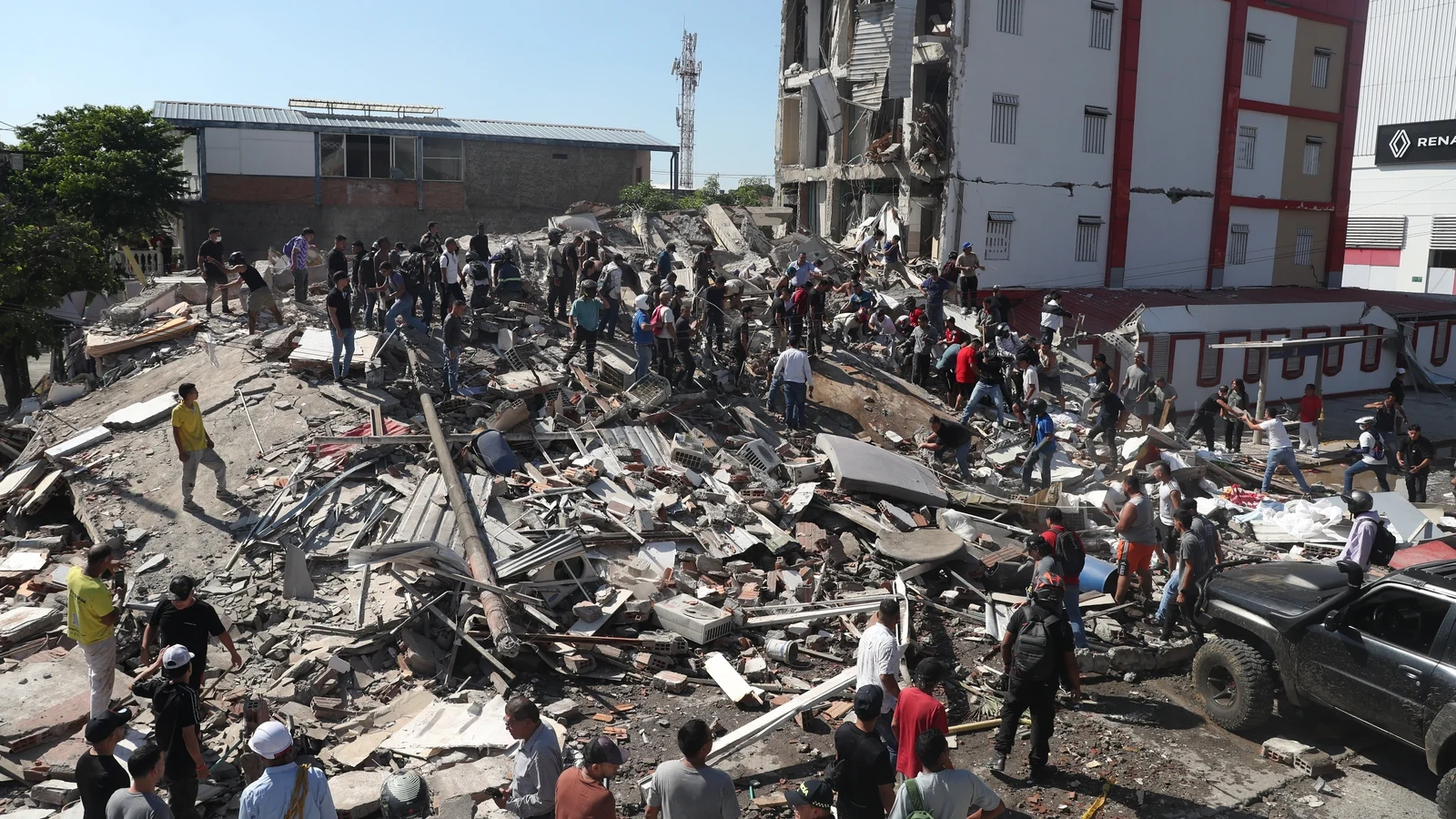
The Colombia earthquake that hit on Monday, 10 August 2026 was one of the strongest the country has felt in years. It struck at around 7:34 a.m. local time, and by midday the death toll had passed five dozen.
The tremor was centered about 5 kilometers east of San José del Palmar, a small town in the jungle department of Chocó. The United States Geological Survey put it at magnitude 7.4.
Because the quake was so powerful, it was felt across much of the country and into neighboring Ecuador and Panama. Buildings swayed hundreds of kilometers from the epicenter, and frightened residents ran into the streets.
What we know about the Colombia earthquake
The USGS measured the quake at magnitude 7.4 and placed its focus 107 kilometers below the surface. The European-Mediterranean Seismological Centre logged a slightly smaller magnitude of 7.2 at a similar depth.
That depth matters more than it sounds. A shallow quake concentrates its violence at the surface, while a deep one like this spreads the shaking over a much wider area but does less damage directly above.
It is the reason a monster 7.4 was felt from Quito to Panama City yet did not level whole towns. It is also why the Pacific Tsunami Warning Center ruled out any tsunami, saying the quake was too deep inside the Earth to move the sea.
The human toll
By the middle of Monday, local officials reported at least 69 deaths, and the number kept climbing as rescuers reached collapsed buildings. The dead included 40 in Risaralda, 27 in Valle del Cauca and two in Manizales.
Many more people were injured, and more than 20 municipalities reported damage. Collapsed or cracked buildings were confirmed in Cali, Pereira, Manizales and Quibdó.
Six airports suspended operations, including those in Pereira, Manizales, Quibdó, Armenia, Cartago and Buenaventura. The closures cut off some of the fastest routes into the worst-hit areas just as help was most needed.
A president three days into the job
The disaster is the first major test for Abelardo de la Espriella, who was sworn in as president on Friday, 7 August 2026. He took office in Cali, breaking with tradition, and now that same city counts damaged buildings.
De la Espriella said he would take personal charge of the response and ordered a Unified Command Post, the body Colombia uses to coordinate agencies in a crisis. He suspended his agenda in Bogotá and said he would travel to Pereira, near the epicenter.
De la Espriella told Colombians they were “not alone” and that “the state is present and taking action.” He had campaigned on a hard line on security, not on a natural disaster in his first week.
He succeeded Gustavo Petro only this month, and the quake now frames the opening of his term. How his young government handles the rescue and the rebuilding will shape early opinion of it.
Help from abroad
The United States was quick to respond. Secretary of State Marco Rubio said the Trump administration “stands ready to support the people of Colombia” and was closely monitoring the disaster.
The tremor was also felt in Ecuador and Panama, though both reported only minor damage. For a region that sits on the restless edge of the Nazca and South American plates, Monday was a reminder of how quickly the ground can turn.
What it means for residents and travelers
For anyone in the region, the first effect was on travel. Six airports were shut, grounding flights into Pereira, Manizales, Quibdó, Armenia, Cartago and Buenaventura and cutting the quickest routes into the disaster zone.
Big quakes are almost always followed by aftershocks, which can bring down walls already cracked by the first jolt. In the hardest-hit towns, damaged and leaning buildings were the main danger once the shaking stopped.
Colombia sits where the Nazca plate grinds beneath South America, which makes it one of the most seismically active countries in the region. A focus 107 kilometers down let the energy travel far, which is why the shaking reached Quito and Panama City.
More: Colombia news in English, every day from The Rio Times.
Frequently Asked Questions
How big was the Colombia earthquake and where did it hit?
The United States Geological Survey measured it at magnitude 7.4, centered about 5 kilometers east of San José del Palmar in Chocó, at a depth of 107 kilometers. It struck at around 7:34 a.m. local time on Monday, 10 August 2026.
How many people died in the Colombia earthquake?
Local officials reported at least 69 deaths by midday Monday, with 40 in Risaralda, 27 in Valle del Cauca and two in Manizales. The toll was still rising as rescue teams reached collapsed buildings.
Which airports closed after the earthquake?
Six airports suspended operations, including those in Pereira, Manizales, Quibdó, Armenia, Cartago and Buenaventura. The closures disrupted travel across western and central Colombia.
Did the earthquake cause a tsunami?
No. The Pacific Tsunami Warning Center said there was no tsunami threat because the quake was too deep inside the Earth.
Connected Coverage
Sources: U.S. Geological Survey; European-Mediterranean Seismological Centre; Pacific Tsunami Warning Center; Colombian departmental officials via The Associated Press; France 24; El Tiempo; Infobae; Portafolio; U.S. Department of State (Secretary Marco Rubio).
This article was produced by The Rio Times’ automated newsroom system. How we use AI · Report an error
Read More from The Rio Times